
It’s one of the most insidious diseases you’ve never heard of, but Chagas is here in California and 29 other states across the U.S.
It kills more people in Latin America than malaria each year, and researchers think roughly 300,000 people in the U.S. currently have it but are unaware.
That’s because the illness tends to lie dormant for years, only making itself known when its victim keels over via heart attack, stroke or death.
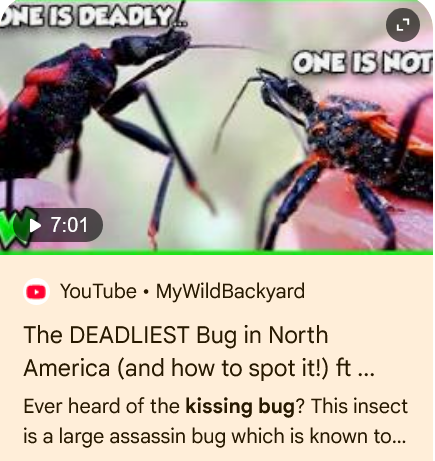
“This is a disease that has been neglected and has been impacting Latin Americans for many decades,” said Norman Beatty, a medical epidemiologist at the University of Florida and an expert on Chagas. “But it’s also here in the United States.”
California has the largest number of people in the U.S. infected with Chagas disease — between 70,000 and 100,000. That’s mostly because the state is home to so many people from countries where the disease is endemic. But it’s also because the parasite and vector live here, meaning some of those cases could be home-grown.
A small study by the state’s Department of Public Health, for instance, found that 31 of 40 human cases reported to the state between 2013 and 2023 — about 78% — were acquired in other countries. For the remaining cases, health officials couldn’t rule out local transmission.
Texas and Chagas – Texas A&M study
Texas has a significant number of Chagas disease cases, with estimates of hundreds of thousands of people potentially infected, primarily through imported infections from Latin America, though local transmission also occurs in the state due to the presence of the insect vectors. While many cases are acquired outside of Texas or the U.S., a notable number are contracted locally within the state, especially in Southern and Central Texas, and many people may be living with the disease without realizing it.
We recently hypothesized that Texas hunters may be at an elevated risk for contracting Chagas disease.7–11 Hunters spend an extended amount of time outdoors in areas where sylvatic transmission of Chagas is likely, tend to stay overnight in substandard structures, and have frequent contact with potential mammalian reservoirs.7 All of these activities could place this population at an elevated risk for contracting Chagas disease. To assess their risk of exposure to T. cruzi and the triatomine vector, known locally as “kissing bugs” or “conenose bugs” (Triatoma spp.), we initiated a statewide screening program in Texas.
From August 2016 to May 2018, we invited study participants with a history of hunting in the state of Texas to participate in our Chagas screening program. Recruitment was conducted at public hunting areas, community events, and hunting expositions across the state. Working in collaboration with Texas Parks and Wildlife, we recruited participants from deer and feral hog hunts open to the public in 10 wildlife management areas, state parks, or the state’s national areas. We also recruited from nine hunting expositions and seven community events (Figure 1A).
A total of 885 individuals, self-reported as hunters, participated in this study, representing 409 unique residential zip codes (Figure 1B). The cohort was predominately male (81%), and white (95.6%), non-Hispanic (86%), with an average age of 48 years (Table 1). We believe this cohort is demographically representative of the 1.1 million Texans who hold a hunting license in the state, which comprises 87.6% men and 85% Caucasians, with the majority aged between 35 and 55 years (53%).14
Among all participants, 18 had positive results for T. cruzi infection on the initial rapid test (2%). From our cohort, 71% (624/885) allowed us to take a full blood sample for additional testing, including all 18 participants who initially screened positive.