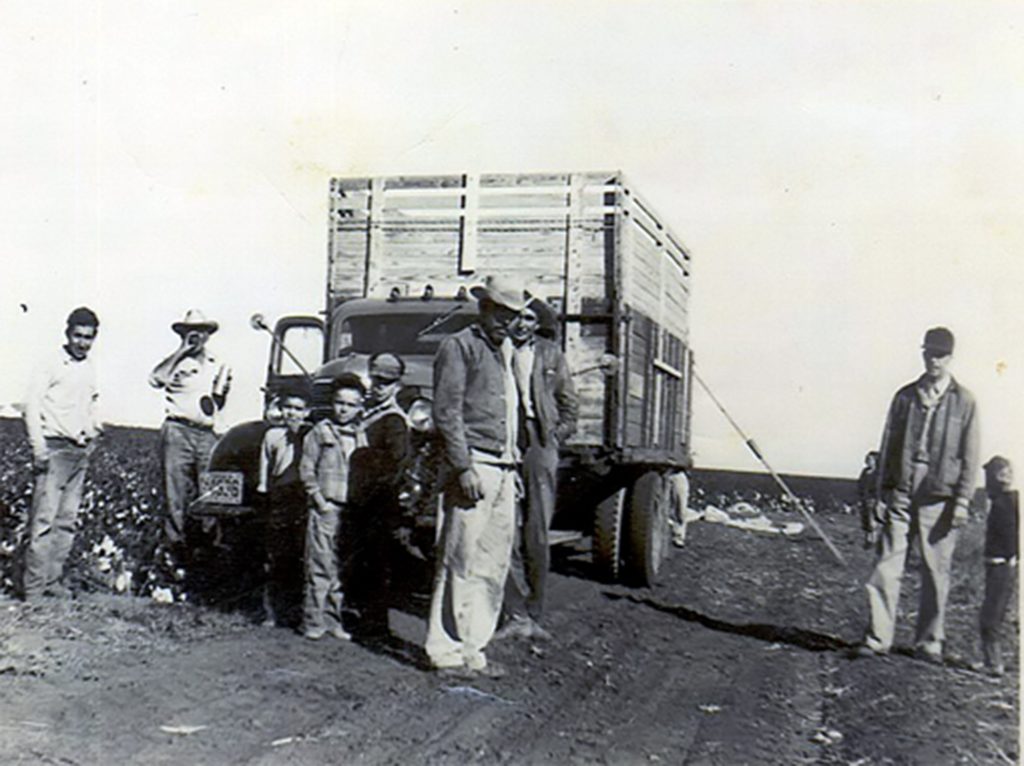
The image on the left shows my grandfather and uncles on my mother’s side of the family. While there are no women there, they also picked cotton. When we joined them, my mother and her sisters would be there side by side snapping cotton and dragging sacks weighing as much as a hundred pounds or more. We then had to carry the sack to the trailer, weigh it, and climb a ladder to dump it in.
I have been alive long enough to have lived through Operation Wetback, and I love to read and have read much of the history about the Tejanos, those who stayed here rather than go back across the border to Mexico after the land was taken from Mexico by the United States. I have seen a lot change from when I was born, from segregated schools and attempts to deny us education and jobs, even if we did manage to get a college degree. Undocumented persons who graduate from high school have more opportunities, and until very recently, help in getting into college. I was the first from my mother’s side of the family to finish high school. The first to get a college degree, and as far as I know, the only one who got a law degree (that includes my graduating class). I did that with very little help, and indeed no encouragement, from my teachers and counselor. Our counselor, when I asked for advice, told me not to waste my time going to college, because even if I got a degree, there wouldn’t be jobs for me in Corpus Christi, Texas. He was being honest, was he racist? I don’t think so. My mother’s side of the family was migrant workers. Some of my uncles were in the Farm Workers Strike in South Texas. Americans love cheap labor, which is why people come here. There were jobs; they came before there were benefits like food stamps. However, whenever a wave of these workers arrives, they either lose their jobs or accept less for their work.
When Ronald Reagan signed the Amnesty, we Americans were promised that all workers would have to be verified as legally here. How is that working out? I have been hurt by such workers who were here illegally. When I was in college, I had to work to pay for my tuition and living expenses. I worked construction during the summers, seven days a week unless it rained; some summers, it never rained. But sometimes, when I went to a job site looking for work, I would find crews who were all here illegally. I remember one such time when that happened: the crew chief called one of the older workers over and told him to run and fetch something for him. The forty-plus guy ran there and back. That crew chief asked me if I would do that. I told him no and left that site. A week later, he called me to see if I was still interested. Seems ICE raided his worksite.
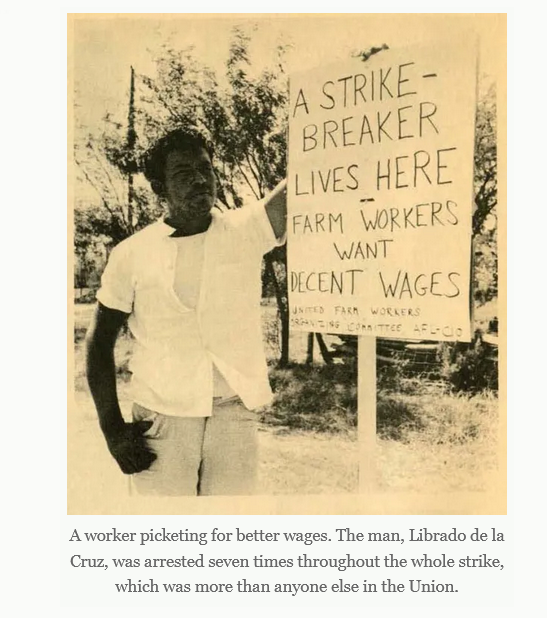
The photo below is of one of my uncles, who was involved in the farm workers’ strike in South Texas.
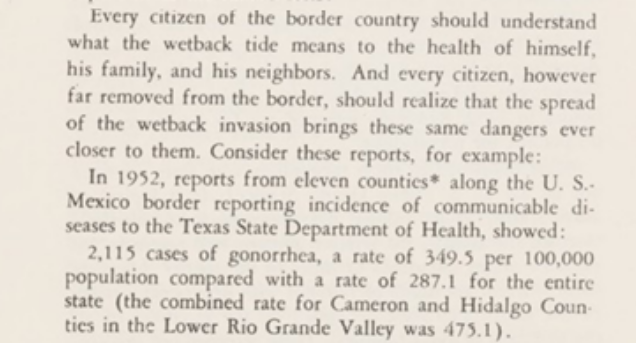
There are a lot of pages, too many for most people. But if you can get yourself to read, the words they used could be the ones that Stephen Miller or Donald Trump found to use for painting us all with a broad brush.
Click the image to view the Operation Wetback pamphlet.
.
The Farm Workers Song


