
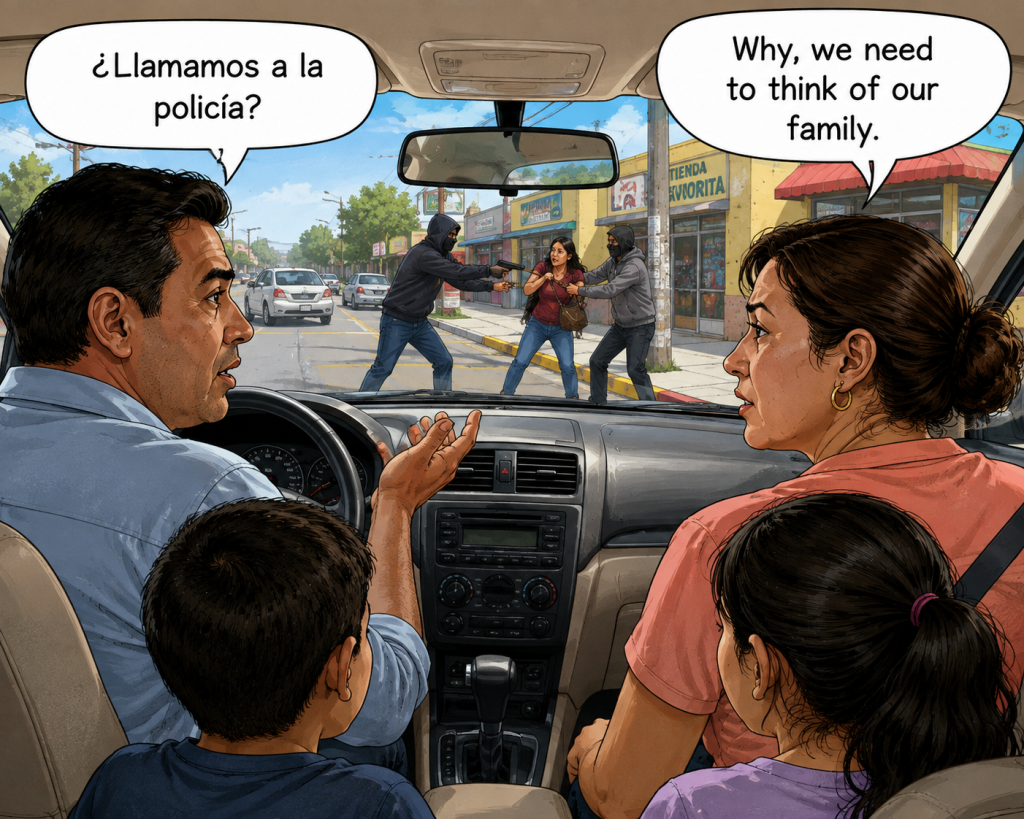
A new Texas Tribune story from San Antonio describes something that is becoming increasingly important across Texas: immigrants are changing the way they live because they fear that an ordinary encounter with police or government could end in detention or deportation.
The story follows undocumented immigrants who say routine activities — buying groceries, taking children to the park, driving to work — now carry risks they did not feel as sharply before. One Honduran mother told the Tribune that her family largely stopped going out because they believed immigration agents were looking for people like them.
San Antonio has become one of the places where that fear is especially visible. Local officials and community organizations have held hearings on how federal immigration enforcement is affecting families, businesses and neighborhoods. Texas Public Radio reported that speakers warned the effects go well beyond the people actually detained. Fear can keep workers and customers away from businesses and alter the economic life of entire neighborhoods.
But the most important long-term consequence may not be economic.
It may be whether people stop calling the police.
That is where San Antonio’s story comes directly back to Houston.
Harris County District Attorney Sean Teare said this week that there is anecdotal evidence that victims and witnesses in immigrant communities are becoming reluctant to contact law enforcement. He said calls for service involving domestic violence, aggravated robbery and other serious crimes have fallen dramatically.
That does not necessarily mean Houston has suddenly become safer.
It could mean fewer crimes are being reported.
There is historical evidence for that possibility. A recent Texas Tribune examination of declining Texas crime rates cited research finding that after the federal Secure Communities immigration program began, Hispanic victims became about 30% less likely to report crimes to police. The effect was not limited to undocumented immigrants; it also extended to citizens.
Houston has now provided a vivid example of why that fear could grow.
This week, a man who witnessed a shooting outside a Houston Home Depot called police, helped officers identify the suspected shooter, and then was arrested by ICE before HPD completed its investigation. HPD said it did not assist ICE in making the arrest.
Think about what the next immigrant who witnesses a shooting may remember.
He may not remember the legal distinction between HPD and ICE. He may simply remember that another man called the police and ended up in immigration custody.
That creates a public-safety problem for everyone.
Police solve crimes because people talk to them. Witnesses identify suspects. Victims describe attackers. Neighbors report suspicious activity. Families report missing relatives. None of that system works as well when an entire portion of the population believes that contacting government may expose them or someone in their family to immigration enforcement.
Houston officials have debated that problem for more than a year. In 2025, Police Chief Noe Diaz initially called fear that immigrants would hesitate to contact police a “false narrative,” while also acknowledging that HPD contacts immigration authorities under some circumstances involving active immigration warrants.
The situation has become more complicated since then.
ICE arrests in Houston have risen sharply. Federal data analyzed by the Texas Tribune showed about 1,660 ICE arrests in Houston in February 2026 alone. The proportion of those arrested who had criminal convictions had also declined compared with the previous administration.
That changes the calculation for someone deciding whether to call 911.
The federal government has a legitimate authority to enforce immigration law. Local police have an equally legitimate responsibility to solve crimes and protect the public. Those two government functions can collide when immigration enforcement makes witnesses afraid of local law enforcement.
San Antonio is showing us what that fear looks like inside families and neighborhoods.
Houston may be showing us what happens next.
If calls reporting domestic violence, robbery, and other serious crimes really are falling because people are afraid to contact police, the government should care deeply about it. A crime that is never reported does not disappear. It simply becomes a crime the police never had an opportunity to investigate.
There may eventually be other consequences as well. Houston routinely deals with missing persons and unidentified bodies recovered from bayous and other isolated locations. It would be irresponsible to claim that immigration fear is causing those cases; there is no evidence yet establishing that connection.
But the underlying question is legitimate.
What happens when people become afraid to tell government that a relative has disappeared, that they witnessed violence, or that they know something about a body the police are trying to identify?
San Antonio is documenting the fear.
Houston now needs to determine whether that fear is changing the numbers.
The most useful evidence will not come from speeches by politicians on either side of the immigration debate. It will come from HPD itself: calls for service, crime reports and witness cooperation in Houston neighborhoods with large immigrant populations.
If those numbers are dropping significantly while other indicators of crime remain unchanged, Houston may be facing a problem far more serious than an argument over immigration policy.
It may be losing the eyes and ears of part of the city.


