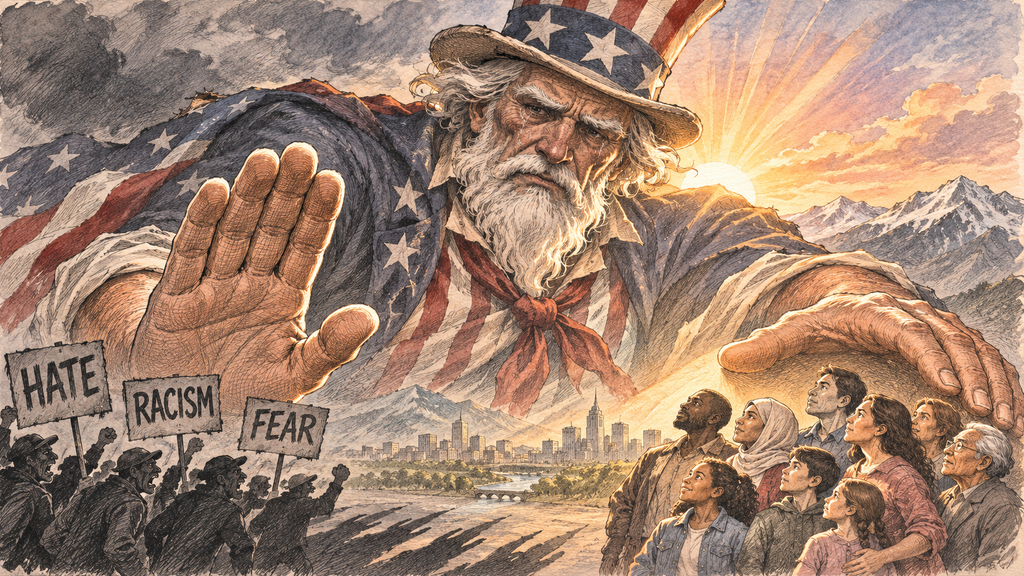
Last night will stay ingrained in my brain, like John F. Kennedy’s election over Nixon. I was eleven years old, and I stayed up all night with my father watching the election returns. John F. Kennedy’s win mattered because he was the first Catholic president, and he made an effort to win support from Americans with Spanish last names.
Gina Hinojosa winning the governorship may be the closest I get to seeing what I have always longed for. An American like me who is of Indigenous descent, a la Mexicanos in a position of power. It has always bothered me that when, in sixth grade, the teacher asked us what we wanted to be, I responded, “President of the United States.”
I still recall her response to me: “There will never be a Mexican who will be President.” So unless something wonderful happens and some Mexicano Americano wins in the next few years, I will not see it. One thing remains certain in life: if we are born, we will die. I am far enough along in life to know there are not that many years left. I don’t mean Hispanic, such as Puerto Rican, or Cuban, or any other; I mean the Mexicano who is about 50% Indigenous (Native American). Mexico is a unique country for its mestizo DNA.
So what did the giant know as America see after its decades of slumber? It found a nation being divided by hate by a small minority of people, most gabachos (white). There was so much hate that they were running out of groups to hate. They hated the Blacks; they hated the Mexicans; they hated the Indians; from Indian, they hated the Muslims; they hated the gays; they hated the transgenders; they hated anyone who did not look and think the same way they did.
There will always be hate in the world as long as there are humans; look no further than Dr. Seuss’s The Sneetches.
.
Last night, the giant woke up and sent a message to those that preach hate: stop; your time is up. We will not follow the path many other countries have taken. Hitler claimed a 1,000-year-old Reich and got less than two decades. Rome lasted about 1,000 years, but it did not do what Hitler did: eliminate everyone who was not Roman. They conquered, and the conquered became part of the empire and could rise to the top.
People from conquered territories, and their descendants, could become Roman citizens, senators, generals, and emperors. That usually required time, connections, wealth, or military success.
The Gauls are a clear example. Rome conquered Gaul, largely modern France, but in AD 48 Emperor Claudius supported admitting leading Gallic citizens to the Senate despite opposition from senators who considered them outsiders. They gained a place in the government of the empire that had conquered their people. Lugdunum Museum and Roman theatres
Septimius Severus reached the very top. Born in Leptis Magna, in present-day Libya, he had a father’s family of Punic ancestry and a mother’s family from Italy. He became emperor in AD 193. Roman identity could therefore extend beyond Italian birth or ancestry. English Heritage
This was no guarantee of equality: conquest could bring enslavement and dispossession. But Rome did create pathways for former outsiders to become insiders. Being descended from a conquered people did not permanently disqualify someone from power. Claudius defended that principle; in Tacitus’s account, he criticized states because “they spurned from them as aliens those whom they had conquered.”
The above is from a search by Open AI.
Now we don’t need those who suddenly came to power to overthink what occurred; they were in the right place at the right time. The consultants didn’t win it for you.
Democrats have a way of being the anti-Trump, finding ways for people to dislike them for different reasons.
Finally, I will hear Republicans start yelling again about the deficit. Which does require looking at.
I have never forgotten what my sixth-grade teacher told me. I still hope to live long enough to see a Mexicano Americano become president of the United States. Just maybe, that dream can still come true.