
I have not tried them; I was just reading about them this morning. It seems to be plug-and-play.
The ‘plug-and-play’ revolution
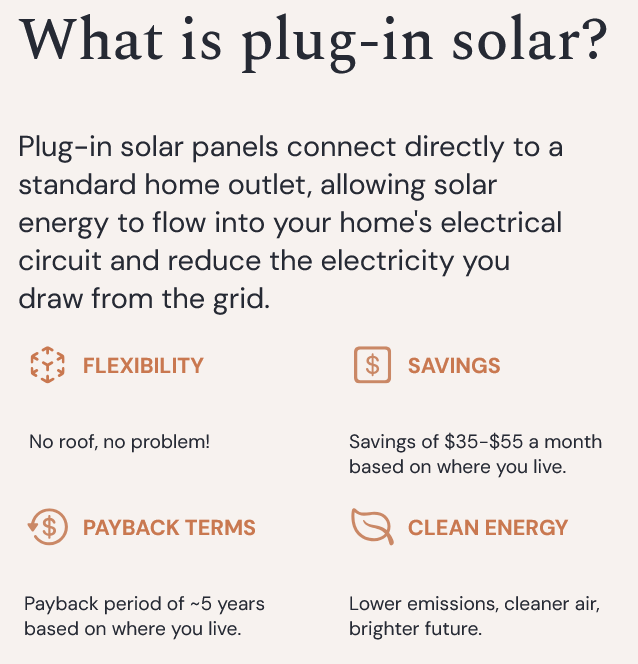
Unlike traditional rooftop solar, which requires thousands of dollars in upfront costs, specialized mounting hardware and professional electricians, this system is designed for the everyday consumer. It’s a $400 kit from Bright Saver, a non-profit advocating for “plug-and-play” solar that works for renters and homeowners alike.
The setup is deceptively simple: you hang the panel on a balcony or prop it up in a back yard and plug it directly into a standard wall outlet.
The magic happens behind the scenes. Once plugged in, a small inverter syncs the solar energy with the home’s existing electrical infrastructure. It took about 15 minutes to get it all set up. Bright Saver’s Rupert Mayer then pointed to a light on the inverter: “Ah here it is, it’s blue.”
“This is it. Easy,” Curtis replied. Within minutes, he was generating his own clean energy. He estimates it will be enough to power an appliance like his refrigerator.
Cora Stryker, co-founder of Bright Saver, believes this technology is key to democratizing the green energy transition. It not only cuts an individual’s planet-warming pollution but also their electric bill.
“Clean energy actually is the cheapest form of energy around,” Stryker said, “and we the consumers should be benefiting from that.”
While these panels won’t take a home entirely off the grid, Stryker says the units can trim monthly costs by 10% to 25% depending on how many panels a user installs. More savings can be had if the panels are paired with batteries that can store excess solar energy.
“They cover a part of your energy bill and then you do need to draw the rest from the grid as you do now,” Stryker said.
While the technology is just gaining a foothold in the US, it is already a cultural phenomenon in Europe. In Germany, these systems are so common they have a specific name: Balkonkraftwerk, or “balcony power plant”.
An estimated 4m balcony solar units are installed in Germany. The US, however, has been slower to adopt the tech, largely due to a patchwork of utility regulations and bureaucratic red tape. Utilities in some states have pushed back against the use of these systems, citing potential hazards to the safety of the grid and line workers.
“And that is patently ridiculous for these little systems,” Stryker said. “Those laws were intended for rooftop systems five to 20 times as large.”
.