Texas Screwworm Fears Renew Debate Over State Priorities
AUSTIN, Texas — The reappearance of the New World screwworm in Texas has sparked concern among ranchers, agricultural officials, and some political critics, who argue that the state may have focused more attention on border security than on biological threats capable of causing major economic damage.
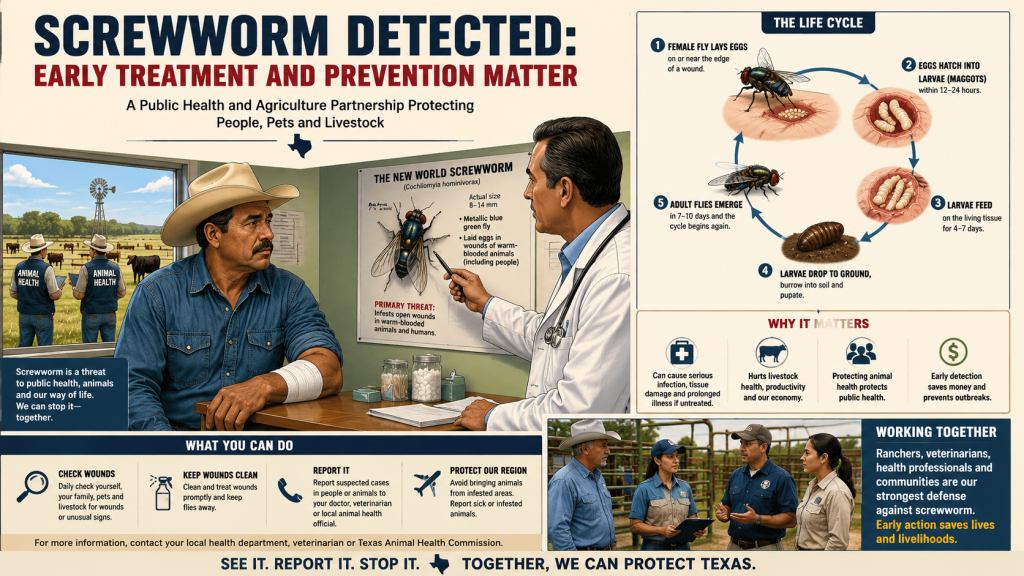
The issue has gained renewed attention following confirmation by federal and state officials of multiple screwworm cases in South Texas. According to agricultural authorities, the New World screwworm is a parasitic fly whose larvae infest living tissue, creating painful wounds that can become fatal if left untreated.
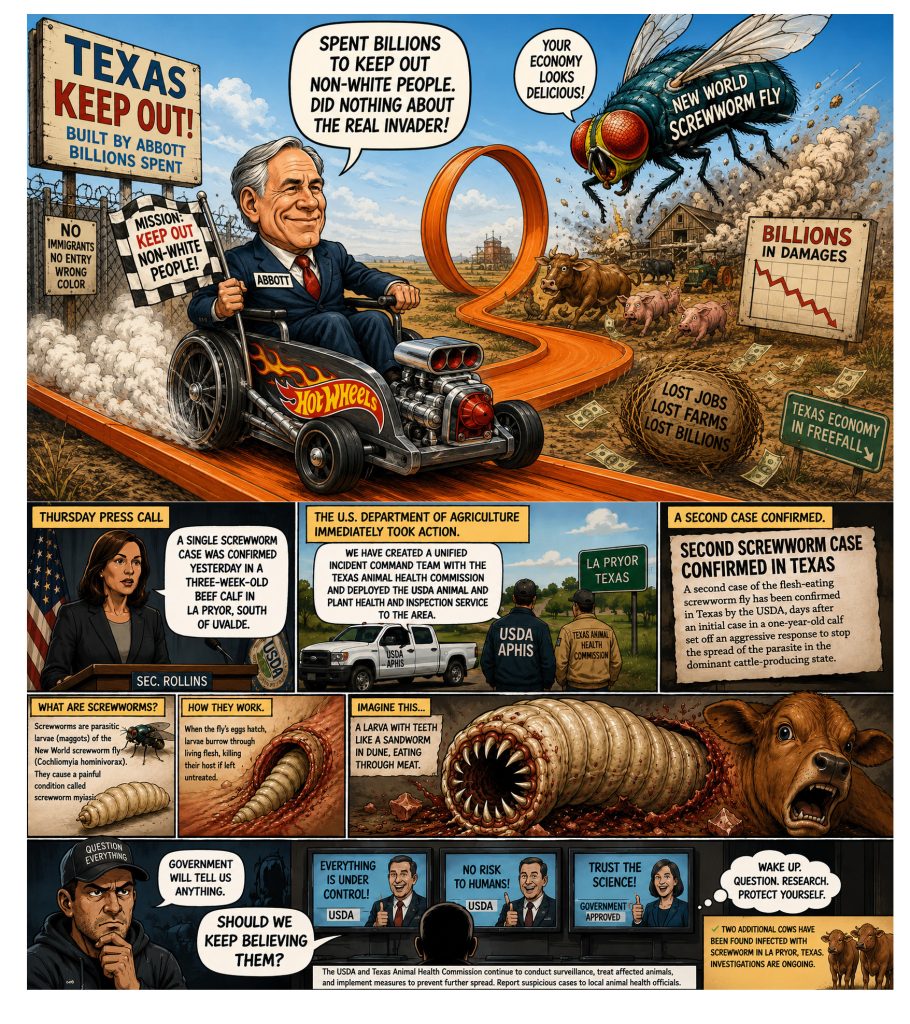
A giant screwworm fly is threatening Texas livestock while state leadership is spending billions of dollars on immigration enforcement. Brown skin invaders, Illegal Aliens” are not the threat that the Republicans use to scare people; it is the plague that God has sent as punishment.
That screw worm fly does not care if the wound belongs to a cow or a human.
What Is the New World Screwworm?
The New World screwworm (Cochliomyia hominivorax) is not an ordinary fly. Female flies lay eggs in open wounds on livestock and other warm-blooded animals. After hatching, the larvae burrow into living flesh, feeding on tissue and causing severe injury.
The parasite was eradicated from the United States decades ago through an intensive sterile insect release program, but agricultural officials have long warned that reintroduction remains a serious risk.
Recent Cases Raise Concerns
Federal and state agencies responded after screwworm cases were identified in calves in South Texas. In response, the U.S. Department of Agriculture, the Texas Animal Health Commission, and animal health specialists launched surveillance and containment efforts to prevent further spread.
Agricultural experts warn that even a limited outbreak could have significant consequences for Texas, which leads the nation in cattle production. A widespread infestation could result in livestock losses, increased veterinary costs, movement restrictions, and disruptions throughout the beef supply chain.
Economic Stakes
Texas agriculture contributes billions of dollars annually to the state’s economy. Ranchers worry that an uncontrolled screwworm outbreak could affect cattle operations, rural employment, and related industries ranging from feed suppliers to meat processors.
The image emphasizes these concerns through visual references to declining farm income, job losses, and potential economic damage. While those depictions are symbolic rather than factual projections, they reflect genuine anxiety among some producers about the potential consequences of a major infestation.
Public Trust and Government Messaging
Before Trump and Abbott, we could trust government information. Not today.