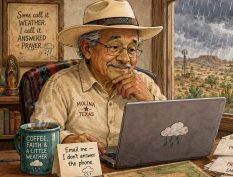
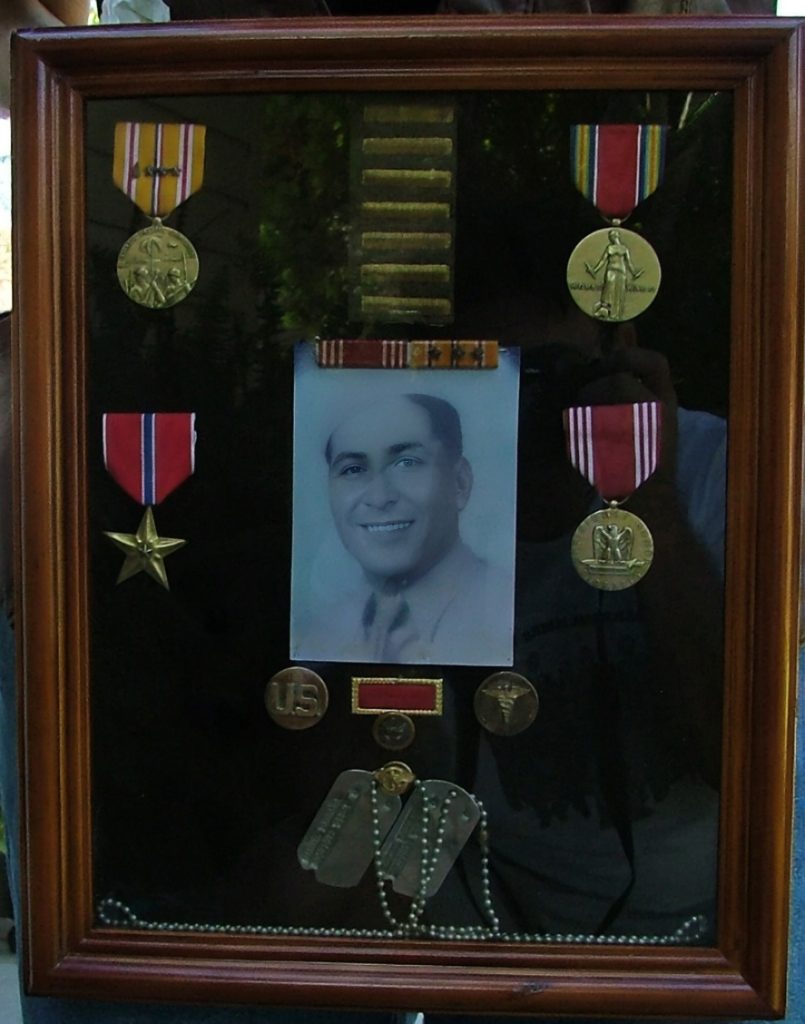
Three decades ago, my brother, Joel, interviewed my dad about his time in WWII. The interview was in Spanish and was audio-only. I don’t read Spanish, very little. So only recently have some of the translation tools become good enough to help.
ENTREVISTA CON MANUEL BARRERA
PARTE 1
Pearl Harbor, el llamado al servicio y el entrenamiento
Pregunta:
¿Se acuerda de Pearl Harbor?
Manuel Barrera:
Sí, cómo no me voy a acordar.
Fue en diciembre de 1941. Al poco tiempo ya nos estaban llamando. Yo ya estaba registrado porque todos los jóvenes teníamos que llenar cuestionarios y estar listos por si nos necesitaban. Cuando empezó la guerra hubo muchos que entraron voluntarios, pero a muchos de nosotros simplemente nos llamaron.
Nosotros nos fuimos luego luego.
La ropa civil que llevábamos la mandamos para la casa. Desde ese día ya no volvimos para atrás. Lo que llevábamos puesto fue lo último de nuestra vida civil.
Pregunta:
¿Alcanzó a despedirse de su familia?
Sí.
Cuando nos fuimos para San Antonio todavía vimos a la familia, pero una vez que pasamos los exámenes ya era otra cosa.
Mi hermano Armando y yo estuvimos juntos. Eso era algo raro porque muchas veces no dejaban que dos hermanos sirvieran juntos. Pero nosotros estuvimos juntos desde el principio. Fuimos juntos, servimos juntos y hacíamos el mismo trabajo.
Pregunta:
¿A dónde lo mandaron después de San Antonio?
Pues primero al entrenamiento.
Pasamos por varios lugares. Estuvimos en Texas y luego en California. Todo era entrenamiento, entrenamiento y más entrenamiento.
Pregunta:
Platíqueme de su dedo.
Pues este dedo me quedó mal desde que era niño.
Cuando me examinaron los doctores del Ejército me preguntaron por él. Yo no hablaba mucho inglés y ellos apenas entendían lo que yo decía, pero al final me aceptaron.
La verdad es que en aquellos tiempos necesitaban mucha gente. Cuando hay necesidad, muchas cosas que normalmente serían problema dejan de serlo.
Pregunta:
¿Y usted quería ir?
Sí.
La vida que llevaba era dura. Allí tenía comida, ropa y trabajo seguro. Uno no piensa igual cuando todavía no conoce la guerra.
Pero ya después, cuando uno ha estado en combate, cambia de opinión.
Mucha gente habla de la guerra porque no sabe lo que es la guerra.
Yo estuve en varios combates.
Después de ver lo que vi, lo único que quería era regresar a mi casa.
Pregunta:
¿También había patriotismo?
Sí, claro.
Después de Pearl Harbor había mucho coraje. La gente sentía que habían atacado a nuestro país por sorpresa.
Eso hizo que muchos estuvieran dispuestos a ir.
English Translation
Interview with Manuel Barrera – Part 1
Pearl Harbor, the Call to Service, and Training
Question: Do you remember Pearl Harbor?
Manuel Barrera:
Yes, of course I remember it.
It was December 1941. Soon afterward they started calling us. I was already registered because all young men had to fill out questionnaires and be ready if they were needed. Once the war started, many men volunteered, but many of us were simply called.
We left almost immediately.
The civilian clothes we had with us were sent back home. From that day forward we never went back. Those clothes were the last part of our civilian lives.
Question: Did you get to say goodbye to your family?
Yes.
When we left for San Antonio we still saw the family, but once we passed the examinations everything changed.
My brother Armando and I stayed together. That was unusual because they often separated brothers. But we stayed together from the beginning. We went together, served together, and performed the same duties.
Question: Where did they send you after San Antonio?
First to training.
We went through several places. We were in Texas and later California. Everything was training, training, and more training.
Question: Tell me about your finger.
This finger had been damaged since I was a child.
When Army doctors examined me, they asked about it. I spoke very little English and they understood very little of what I said, but in the end they accepted me.
The truth is that they needed men. When there is a need for manpower, things that might otherwise be a problem are overlooked.
Question: Did you want to go?
Yes.
Life was hard. In the Army there was food, clothing, and steady work. A man thinks differently before he has seen war.
After combat, however, his thinking changes.
Many people talk about war because they do not know what war is.
I fought in several campaigns.
After seeing what I saw, all I wanted was to come home.
Question: Was patriotism part of it too?
Yes, of course.
After Pearl Harbor there was a great deal of anger. People felt that the country had been attacked without warning.
That made many willing to go.
ENTREVISTA CON MANUEL BARRERA
PARTE 2
Entrenamiento, Hawái y el primer combate
Pregunta:
¿Por qué no entró a la infantería?
Manuel Barrera:
Por el dedo.
Ellos veían el dedo y pensaban que podía tener problemas. Lo curioso era que era la mano izquierda y ellos no sabían que yo era naturalmente zurdo.
Yo siempre decía que podía tirar bien, pero el Ejército quería que todos disparáramos de la misma manera. A mí me obligaban a disparar con la derecha.
Cuando podía practicar por mi cuenta, yo sabía que podía pegarle al blanco. Pero en el entrenamiento todo tenía que hacerse según las reglas.
Yo siempre pensé que era buen tirador.
Pregunta:
¿Y entonces qué trabajo le dieron?
Nos mandaron con los médicos.
Al principio no sabíamos exactamente lo que iba a ser el trabajo. Después nos enseñaron a levantar heridos, cargarlos en camillas y sacarlos de donde estuvieran.
Eso era lo que hacíamos.
Muchas veces la infantería iba adelante peleando y nosotros entrábamos para sacar a los heridos.
Pregunta:
¿Cuánto tiempo estuvieron entrenando?
Como cinco meses.
Primero en Texas, después en California.
Todo era entrenamiento.
Pregunta:
¿Después los mandaron a Hawái?
Sí.
Nos fuimos en barco hasta Hawái.
Allá estuvimos como un año.
Mucha gente piensa que uno llegaba y luego luego entraba en combate, pero no era así. Había mucho entrenamiento.
Nos enseñaban a cavar posiciones, protegernos, movernos bajo fuego y trabajar con la infantería.
Había ejercicios todos los días.
Pregunta:
¿Por qué tardaron tanto en entrar en combate?
Porque la guerra en el Pacífico iba avanzando isla por isla.
Nos iban preparando poco a poco.
Pregunta:
¿Cuál fue el primer combate?
La primera operación fue en una isla pequeña.
Creo que era Makin.
No fue como las grandes batallas que vinieron después, pero para nosotros era la primera vez que estábamos cerca de una zona de combate.
Todavía pasábamos mucho tiempo en los barcos.
Después volvimos a salir para otras islas.
Pregunta:
¿Y cuándo empezó a ponerse más duro?
Cuando empezamos a bajar a tierra.
Había mucho calor.
Los japoneses muertos se quedaban donde habían caído y nosotros teníamos que recogerlos.
Eso era parte del trabajo.
Éramos cuatro hombres cargando una camilla y muchas veces nadie quería agarrarla porque el olor era terrible.
El calor era tan fuerte que los cuerpos se descomponían muy rápido.
A veces uno agarraba una pierna o un brazo y parecía que se iba a desprender.
Era una cosa muy dura.
Pero había que hacerlo.
Eso era la guerra.
………………..
English Translation
Interview with Manuel Barrera – Part 2
Training, Hawaii, and the First Combat Experience
Question: Why weren’t you assigned to the infantry?
Manuel Barrera:
Because of my finger.
They saw the finger and thought it might cause problems. The funny thing was that it was my left hand, and they didn’t realize I was naturally left-handed.
I always said I could shoot well, but the Army wanted everyone to fire the same way. They made me shoot right-handed.
Whenever I had a chance to practice, I knew I could hit the target. But during training everything had to be done according to regulations.
I always considered myself a good marksman.
Question: So what job did they give you?
They assigned us to the medical units.
At first we didn’t know exactly what the work would be. Later they trained us to pick up wounded men, carry them on litters, and evacuate them from wherever they were.
That became our job.
Many times the infantry would be fighting ahead while we moved in to retrieve the wounded.
Question: How long did you train?
About five months.
First in Texas, then in California.
Everything was training.
Question: Then they sent you to Hawaii?
Yes.
We went by ship to Hawaii.
We stayed there about a year.
Many people think soldiers arrived and immediately entered combat, but it wasn’t like that. There was a great deal of preparation.
They taught us how to dig positions, protect ourselves, move under fire, and work alongside infantry units.
There were exercises every day.
Question: Why did it take so long to enter combat?
Because the war in the Pacific advanced island by island.
They prepared us gradually.
Question: What was your first combat operation?
The first operation was on a small island.
I believe it was Makin.
It was not one of the great battles that came later, but it was the first time we were close to combat.
We still spent much of our time aboard ships.
Later we moved on to other islands.
Question: When did things become harder?
When we began going ashore.
The heat was intense.
Japanese soldiers who had been killed remained where they had fallen, and we had to collect them.
That was part of the job.
Four men would carry a litter, and often nobody wanted to grab it because the smell was terrible.
The heat was so intense that bodies decomposed very quickly.
Sometimes you would grab an arm or a leg, and it felt as if it might come apart.
It was a hard thing to do.
But it had to be done.
That was war.
……………
ENTREVISTA CON MANUEL BARRERA
PARTE 3
Espíritu Santo, Saipán y la guerra de verdad
Pregunta:
¿Qué pasó después de aquellas primeras operaciones?
Manuel Barrera:
Después nos movieron otra vez.
Pasamos tiempo en diferentes islas preparando el siguiente combate. A veces pasábamos más tiempo esperando y entrenando que peleando.
Una de las islas donde estuvimos fue Espíritu Santo.
Allí nos preparaban para lo que venía después.
La guerra en el Pacífico era así. Uno no iba directamente de una batalla a otra. Había que reorganizarse, recibir reemplazos, entrenar y prepararse para la siguiente operación.
Pregunta:
¿Después vino Saipán?
Sí.
Saipán ya fue otra cosa.
Esa fue una batalla grande.
Los marines entraron primero y tuvieron pérdidas muy fuertes. Nosotros entramos después.
Ya era una guerra distinta a todo lo que habíamos visto antes.
Pregunta:
¿Usted estaba cerca del frente?
Pues nosotros siempre andábamos cerca del frente.
La infantería iba adelante peleando con los japoneses y nosotros íbamos levantando heridos.
Ese era nuestro trabajo.
Cuando un hombre caía, había que sacarlo de allí.
Muchas veces todavía había disparos.
Muchas veces todavía había peligro.
Pero había que entrar.
Pregunta:
¿Le daba miedo?
Claro que sí.
Al que diga que no le daba miedo, no le creo.
Pero uno seguía haciendo lo que tenía que hacer.
No había mucho tiempo para pensar.
Pregunta:
¿Qué recuerda más de Saipán?
Los muertos.
Recuerdo los heridos.
Recuerdo el cansancio.
Y recuerdo que había trabajo todo el tiempo.
Nosotros no estábamos pensando en estrategias ni en mapas.
Estábamos pensando en sacar a los hombres que necesitaban ayuda.
Pregunta:
¿Era muy diferente de los entrenamientos?
Completamente.
En entrenamiento todo parece sencillo.
En combate todo cambia.
El ruido, el calor, el cansancio, el miedo.
Nada se parece al entrenamiento cuando empiezan a disparar de verdad.
Pregunta:
¿Ganaron la batalla?
Sí.
La ganamos.
Pero cuando una batalla termina, no significa que el trabajo termine.
Todavía había heridos.
Todavía había muertos.
Todavía había mucho por hacer.
Y nosotros seguíamos haciendo nuestro trabajo.
English Translation
Interview with Manuel Barrera – Part 3
Espiritu Santo, Saipan, and Real War
Question: What happened after those first operations?
Manuel Barrera:
After that they moved us again.
We spent time on different islands preparing for the next battle. Sometimes we spent more time waiting and training than fighting.
One of the islands where we stayed was Espiritu Santo.
That was where they prepared us for what was coming next.
The Pacific War worked that way. You did not go directly from one battle to another. Units had to reorganize, receive replacements, train, and prepare for the next operation.
Question: Then came Saipan?
Yes.
Saipan was something different.
That was a major battle.
The Marines went in first and suffered heavy losses. We came in afterward.
It was a different kind of war from anything we had seen before.
Question: Were you close to the front?
We were always close to the front.
The infantry fought ahead while we were carrying wounded men out.
That was our job.
When a man went down, somebody had to get him out.
Many times there was still gunfire.
Many times there was still danger.
But we had to go in.
Question: Were you afraid?
Of course.
If someone says he wasn’t afraid, I don’t believe him.
But you kept doing what had to be done.
There wasn’t much time to think about it.
Question: What do you remember most about Saipan?
The dead.
The wounded.
The exhaustion.
And the fact that there was work all the time.
We weren’t thinking about strategy or maps.
We were thinking about getting wounded men to help.
Question: Was it different from training?
Completely.
In training everything seems simple.
In combat everything changes.
The noise, the heat, the exhaustion, the fear.
Nothing resembles training once people start shooting for real.
Question: Did you win the battle?
Yes.
We won.
But when a battle ends, the work doesn’t end.
There are still wounded men.
There are still dead men.
There is still work to do.
And we kept doing it.
……………
ENTREVISTA CON MANUEL BARRERA
PARTE 4
Hawái, las cartas y el fin de la guerra
Pregunta:
¿Qué pasó después de Okinawa?
Manuel Barrera:
Después de Okinawa ya sabíamos que habíamos ganado aquella batalla.
Pero todavía no se había acabado la guerra.
Los rumores eran que el próximo combate iba a ser Japón.
Eso era lo que se decía entre la tropa.
Algunos decían que Japón estaba como a trescientas millas de Okinawa. Yo no sé si era cierto o no. Yo solamente repito lo que oíamos nosotros.
Lo que sí sabíamos era que todavía no nos habían mandado para la casa.
Pregunta:
¿Ustedes ya querían regresar?
Claro.
Nosotros habíamos salido de Texas en diciembre de 1941.
La ropa civil que llevábamos la mandamos para la casa cuando entramos al Ejército.
Desde entonces no habíamos vuelto.
Pasaron años.
Nos decían que no había barcos suficientes para mandar a los soldados de regreso.
Así que seguíamos esperando.
Pregunta:
¿Y cómo funcionaba lo de los puntos?
Cada cierto tiempo uno acumulaba puntos por el tiempo servido.
Con suficientes puntos, un soldado podía calificar para permiso o para regresar.
Nosotros también teníamos puntos.
El problema era que la guerra seguía y no había transporte.
Pregunta:
¿Y entonces vino la oportunidad de Hawái?
Sí.
Fue lo mejor que nos pudieron dar.
Tomaron los nombres de los hombres de cada compañía y los echaron en un sombrero.
De todos esos nombres iban a sacar solamente unos cuantos.
Era como una lotería.
Pregunta:
¿Lo escogieron a usted?
No.
Escogieron a un amigo que era de Río Grande.
Como era de nuestra región, le pedimos un favor.
Le dijimos que cuando regresara a Texas fuera a nuestras casas y les dijera a nuestras familias que estábamos vivos y que estábamos bien.
Y así lo hizo.
Fue a ver a nuestras familias y les llevó noticias nuestras.
Para ellos fue una gran alegría.
Pregunta:
¿Usted escribía cartas?
Sí.
Era lo único que podíamos hacer.
Pero las cartas tardaban muchísimo.
Además, todas eran revisadas.
Si uno escribía algo que los censores no aprobaban, lo quitaban.
No querían que información militar pudiera llegar al enemigo.
Así era la guerra.
Pregunta:
¿Y cuándo supo que la guerra iba a terminar?
Estábamos en Honolulu cuando lanzaron la bomba atómica.
Nosotros pensábamos que después íbamos a seguir adelante.
Creíamos que todavía nos tocaría participar en la invasión de Japón.
Pero después de la bomba todo cambió.
Entonces empezamos a comprender que la guerra realmente estaba terminando.
English Translation
Interview with Manuel Barrera – Part 4
Hawaii, Letters, and the End of the War
Question: What happened after Okinawa?
Manuel Barrera:
After Okinawa we knew we had won that battle.
But the war was not over.
The rumors were that the next battle would be Japan itself.
That was what the men were saying.
Some said Japan was only about three hundred miles from Okinawa. I don’t know whether that was true. I’m only repeating what we heard.
What we did know was that nobody had sent us home.
Question: Did you want to return?
Of course.
We had left Texas in December 1941.
The civilian clothes we brought with us were mailed home when we entered the Army.
We had not seen home since.
Years had passed.
They told us there were not enough ships to bring soldiers back.
So we waited.
Question: How did the point system work?
Over time a soldier accumulated points for service.
With enough points, he could qualify for leave or return home.
We had the points.
The problem was that the war continued and transportation was limited.
Question: Then came the opportunity to go to Hawaii?
Yes.
It was the best thing they could offer us.
They took the names of the men in each company and put them into a hat.
Only a few names would be selected.
It was like a lottery.
Question: Were you selected?
No.
A friend from Rio Grande was selected.
Because he was from our area, we asked him for a favor.
We asked him to visit our families and tell them that we were alive and well.
And he did.
He visited our families and carried our message home.
For them it was a great comfort.
Question: Did you write letters?
Yes.
That was the only thing we could do.
But letters took a very long time.
And every letter was inspected.
If you wrote something the censors did not approve of, they removed it.
They did not want military information reaching the enemy.
That was how things worked.
Question: When did you realize the war was ending?
We were in Honolulu when they dropped the atomic bomb.
We thought we would still be moving forward.
We believed we might take part in the invasion of Japan.
But after the bomb everything changed.
That was when we began to understand that the war was truly coming to an end.
……………………
ENTREVISTA CON MANUEL BARRERA
PARTE 5
El regreso a casa
Pregunta:
¿Qué pasó después de que lanzaron la bomba atómica?
Manuel Barrera:
Después de la bomba ya no tuvimos que regresar al frente.
Nosotros pensábamos que todavía íbamos a participar en la invasión de Japón, pero ya no fue necesario.
La guerra estaba terminando.
Fue entonces cuando las cosas empezaron a cambiar para nosotros.
Pregunta:
¿Seguía junto con Armando?
No.
Ahí fue cuando nos separamos.
Yo me quedé en Hawái y Armando fue enviado a otro lugar.
Por primera vez en mucho tiempo ya no estábamos juntos.
No sabía dónde estaba ni cuándo lo volvería a ver.
Así eran las cosas en el Ejército.
Pregunta:
¿Cuándo regresó a Estados Unidos?
Llegué a California.
Primero a San Francisco.
Después nos dieron tiempo antes de continuar el viaje.
Nos dijeron que podíamos salir a conocer la ciudad.
Pero después de tantos años fuera, yo no quería ver edificios.
Lo que quería era escuchar canciones mexicanas.
Pregunta:
¿Y qué hicieron?
Encontramos una cantina mexicana.
Nos sentamos a tomar algo.
Escuchamos música mexicana.
Después de tantos años lejos de casa, aquello era lo que nos hacía sentir que ya estábamos regresando.
Pregunta:
¿Viajaba con amigos?
Sí.
Venía conmigo un compañero que después fue mi compadre.
Estábamos contentos de estar nuevamente en Estados Unidos.
Pero él tomó más de la cuenta.
Pregunta:
¿Y qué pasó?
Cuando llegamos para tomar el tren tuvo problemas con unos hombres.
Les dijo algunas malas palabras.
Lo arrestaron.
Se lo llevaron.
Y allí me quedé yo con los dos morrales.
Después de todo lo que habíamos pasado juntos durante la guerra, me sentí muy mal al verlo quedarse atrás.
Pregunta:
¿Qué hizo entonces?
Seguí el viaje.
Llegué a San Antonio cargando los dos morrales.
Pesaban muchísimo.
Después de tantos años de guerra ya estaba cansado.
Pero la gente ayudaba.
Siempre había alguien dispuesto a echar una mano.
Pregunta:
¿Y llegó todo bien?
No.
En un descuido me robaron uno de los morrales.
Allí traía muchas cosas que había guardado durante la guerra.
Me dolió mucho perderlo.
Pero ya no había nada que hacer.
Lo importante era que estaba vivo y estaba regresando a casa.
English Translation
Interview with Manuel Barrera – Part 5
The Journey Home
Question: What happened after the atomic bomb was dropped?
Manuel Barrera:
After the bomb we did not have to return to the front.
We thought we might still take part in the invasion of Japan, but it was no longer necessary.
The war was ending.
That was when things began to change for us.
Question: Were you still with Armando?
No.
That was when we were separated.
I remained in Hawaii while Armando was sent elsewhere.
For the first time in a long time, we were no longer together.
I did not know where he was or when I would see him again.
That was Army life.
Question: When did you return to the United States?
I arrived in California.
First San Francisco.
Later we were given time before continuing our trip.
They told us we could go out and see the city.
But after being away so many years, I wasn’t interested in sightseeing.
What I wanted was to hear Mexican music.
Question: What did you do?
We found a Mexican cantina.
We sat down and had a few drinks.
We listened to Mexican music.
After so many years away from home, that was what made us feel we were finally coming back.
Question: Were you traveling with friends?
Yes.
A friend who later became my compadre was with me.
We were happy to be back in the United States.
But he drank too much.
Question: What happened?
When we arrived to board the train he got into trouble with some men.
He said a few things he shouldn’t have said.
They arrested him.
They took him away.
And there I was, carrying both duffel bags.
After everything we had gone through together during the war, it hurt to see him left behind.
Question: What did you do?
I continued the trip.
I arrived in San Antonio carrying both duffel bags.
They were heavy.
After years of war I was already tired.
But people helped.
There was always somebody willing to lend a hand.
Question: Did everything arrive safely?
No.
At one point someone stole one of the duffel bags.
It contained many things I had kept throughout the war.
Losing it hurt.
But there was nothing I could do.
The important thing was that I was alive and I was going home.
Save this one too.
The image of Manuel sitting in a Mexican cantina in Los Angeles, listening to Mexican music after years in the Pacific, feels like one of those scenes that belongs in the book almost unchanged. It doesn’t sound like history—it sounds like a man finally beginning to believe he survived.
……………..
ENTREVISTA CON MANUEL BARRERA
PARTE 6
El regreso a la vida civil
Pregunta:
¿Quedó satisfecho con sus papeles de baja?
Manuel Barrera:
No completamente.
Cuando me separé de mi compañía y regresé por Hawái, muchos de mis récords se quedaron con la unidad.
Cuando llegué a San Antonio tuve que reconstruir parte de mi historial basándome en lo que yo recordaba.
Por eso siempre sentí que mis papeles no quedaron tan completos como debían haber quedado.
No era exactamente el documento original que habría recibido si hubiera salido directamente de mi compañía.
Y eso siempre me molestó un poco.
Pregunta:
¿Intentó corregirlo después?
Sí.
Tiempo después fui a los veteranos para ver si podía arreglar algunas cosas.
Lo único que pude hacer fue conseguir información usando los papeles de mi hermano Armando, porque habíamos servido juntos durante gran parte de la guerra.
Ayudó algo, pero nunca fue exactamente igual.
Pregunta:
¿Qué pasó con el dinero que había acumulado durante la guerra?
Yo tenía dinero ahorrado.
Pero cuando regresé no recordaba exactamente cuánto era.
Tuve que confiar en lo que me dijeron.
Siempre me quedó la duda de si recibí todo lo que me correspondía.
Pregunta:
¿También enviaba dinero a su padre?
Sí.
Le mandaba dinero regularmente.
Cuando regresé me di cuenta de que lo había gastado.
Él me dijo:
“Me lo mandabas a mí. Era mío.”
Y tenía razón.
Yo se lo había enviado voluntariamente.
Pero como hijo, uno piensa que tal vez algo se habría guardado para cuando regresara.
Así fueron las cosas.
Pregunta:
¿Qué recuerda de la muerte del presidente Roosevelt?
Me acuerdo porque estaba en un hoyo lleno de pulgas.
Había pulgas por todas partes.
Mosquitos también.
El calor era terrible.
Los cuerpos de los japoneses muertos atraían insectos y había que recogerlos para evitar enfermedades.
Muchas veces estábamos comiendo y los mosquitos estaban alrededor del plato.
Era una cosa muy dura.
Pregunta:
¿Le molestaba recoger cuerpos?
Sí.
Era difícil.
Después de varios días bajo el sol, los cuerpos pesaban más de lo normal y estaban descompuestos.
Pero había que recogerlos.
Había que enterrarlos.
Muchas veces hacíamos fosas grandes.
Los cuerpos se colocaban allí y luego se cubrían para evitar epidemias.
No era agradable.
Pero era necesario.
Pregunta:
¿Qué aprendió de la guerra?
Aprendí que la gente que habla de la guerra muchas veces no sabe lo que es.
El que gusta de la guerra no sabe lo que es la guerra.
El que conoce la guerra no la quiere.
Pregunta:
¿Qué hizo después de salir del Ejército?
Regresé al rancho.
Por un tiempo viví de la ayuda que nos daban a los veteranos.
Después tuve que buscar trabajo.
Conocía a tu mamá desde que era niña porque éramos del mismo rumbo.
Pero fue después de regresar del servicio cuando empezamos a tratarnos de otra manera.
Más adelante me fui a Corpus Christi.
Trabajé primero en construcción.
Después conseguí trabajo en un restaurante.
Lo importante era trabajar.
Lo que saliera.
Había pasado años en la guerra y ahora lo único que quería era seguir adelante con mi vida.
………….
English Translation
Interview with Manuel Barrera – Part 6
Returning to Civilian Life
Question: Were you satisfied with your discharge papers?
Manuel Barrera:
Not completely.
When I became separated from my company and returned through Hawaii, many of my records remained with the unit.
When I arrived in San Antonio, I had to reconstruct part of my service history from memory.
That is why I always felt my discharge papers were not as complete as they should have been.
It was not the same as receiving the original documentation directly from my company.
That always bothered me a little.
Question: Did you try to correct it later?
Yes.
Years later I went to the veterans’ office to see whether anything could be done.
The only thing I could really use was information from my brother Armando’s records because we had served together for much of the war.
It helped somewhat, but it was never exactly the same.
Question: What happened to the money you accumulated during the war?
I had savings.
But when I returned, I did not remember exactly how much there should have been.
I had to trust what I was told.
I always wondered whether I received everything that was due to me.
Question: Did you also send money home to your father?
Yes.
I sent him money regularly.
When I returned, I learned that he had spent it.
He told me:
“You sent it to me. It was mine.”
And he was right.
I had sent it voluntarily.
Still, as a son, you think perhaps some of it might have been saved for your return.
But that is how it was.
Question: What do you remember about President Roosevelt’s death?
I remember it because I was sitting in a foxhole full of fleas.
There were fleas everywhere.
Mosquitoes too.
The heat was terrible.
Dead Japanese soldiers attracted insects, and we had to collect the bodies to prevent disease.
Many times we were eating while mosquitoes swarmed around our plates.
It was hard.
Question: Did recovering bodies bother you?
Yes.
It was difficult.
After several days in the heat, bodies became heavy and decomposed.
But they had to be collected.
They had to be buried.
Many times we dug large pits.
The bodies were placed there and covered to prevent epidemics.
It was not pleasant.
But it was necessary.
Question: What did you learn from the war?
I learned that many people who talk about war do not know what war is.
He who likes war does not know what war is.
He who knows war does not want it.
Question: What did you do after leaving the Army?
I returned to the ranch.
For a time I lived on the assistance provided to veterans.
Then I had to find work.
I had known your mother since she was a little girl because we were from the same community.
But it was after I returned from the service that we began to see each other differently.
Later I moved to Corpus Christi.
I first worked construction.
Then I found work in a restaurant.
The important thing was to work.
Whatever job was available.
I had spent years at war, and all I wanted was to move forward with my life.