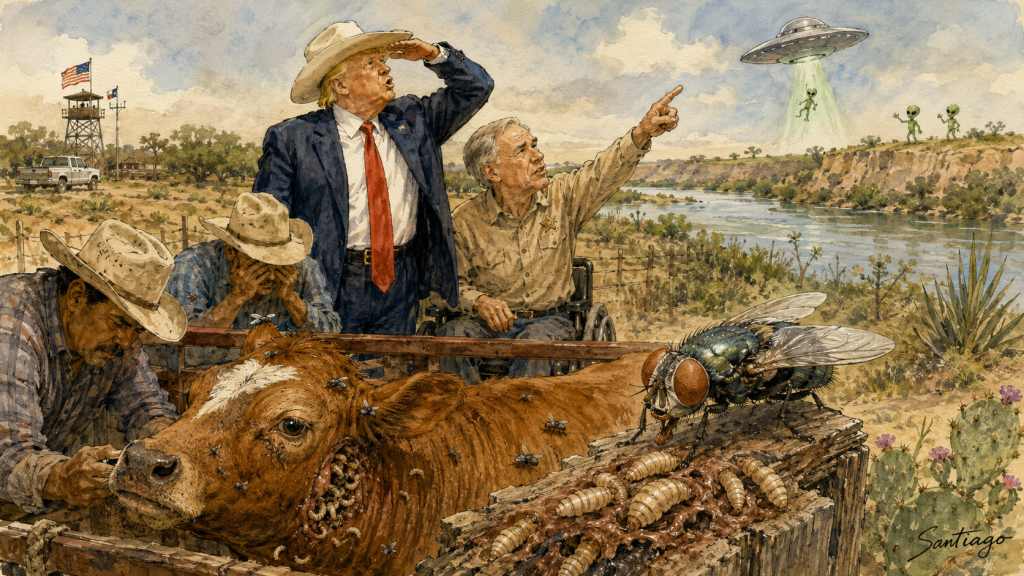
New World screwworm update — Texas and U.S.
As of 6 p.m. Central Time on July 10, 2026, USDA had confirmed 35 animal infestations in the United States: 34 in Texas and one in New Mexico. The newest case was a goat in Crockett County. That is a sharp increase from the first Texas detection on June 3, so this can no longer be described as one isolated calf.
Texas
The Texas Animal Health Commission reports confirmed cases on 26 premises in 13 Texas counties. Because each quarantine zone extends roughly 12 miles around a detection, movement restrictions now reach into portions of 22 counties, including Starr, Webb, Zapata, Zavala, La Salle, Uvalde, Medina, Crockett, Edwards, Val Verde and Brewster counties. Starr County is therefore inside the broader restricted-zone system, although that does not mean every part of Starr County—or Fronton itself—has a confirmed animal case.
Warm-blooded animals inside an infested zone cannot be transported outside it without inspection, required treatment and authorization from the Texas Animal Health Commission.
Rest of the United States
The only confirmed case outside Texas remains a dog in Lea County, New Mexico. The dog recovered and the individual case was declared inactive on June 16, but the surrounding infested zone remains until surveillance requirements are completed. No other state has reported a confirmed domestic infestation.
There have been no confirmed locally acquired human cases and no confirmed wildlife cases in the United States. CDC says the public-health risk remains low and emphasizes that screwworm does not spread directly from animals to people, between animals or from person to person—the fly must lay eggs in a wound or body opening.
What authorities are doing
USDA and Texas are releasing sterile flies by air and ground, trapping wild flies, inspecting livestock and wildlife, and maintaining quarantine zones around detections. All southern U.S. ports of entry remain closed to livestock trade. USDA says this is not a food-safety problem and that the commercial meat supply remains safe.
What to watch for
Check livestock and pets for wounds that enlarge instead of healing, bloody or foul-smelling drainage, swelling, visible maggots, pain, loss of appetite or unusual isolation. Do not try to identify the adult fly—many sterile flies are deliberately being released. Concentrate on wounds and larvae.
For suspected livestock cases in Texas, contact a veterinarian or call the Texas Animal Health Commission at 1-800-550-8242. Suspected pet cases should go directly to a veterinarian.
The plain conclusion: the outbreak is expanding geographically and deserves serious attention, particularly in South and West Texas, but it remains an animal-health outbreak—not a general human epidemic.