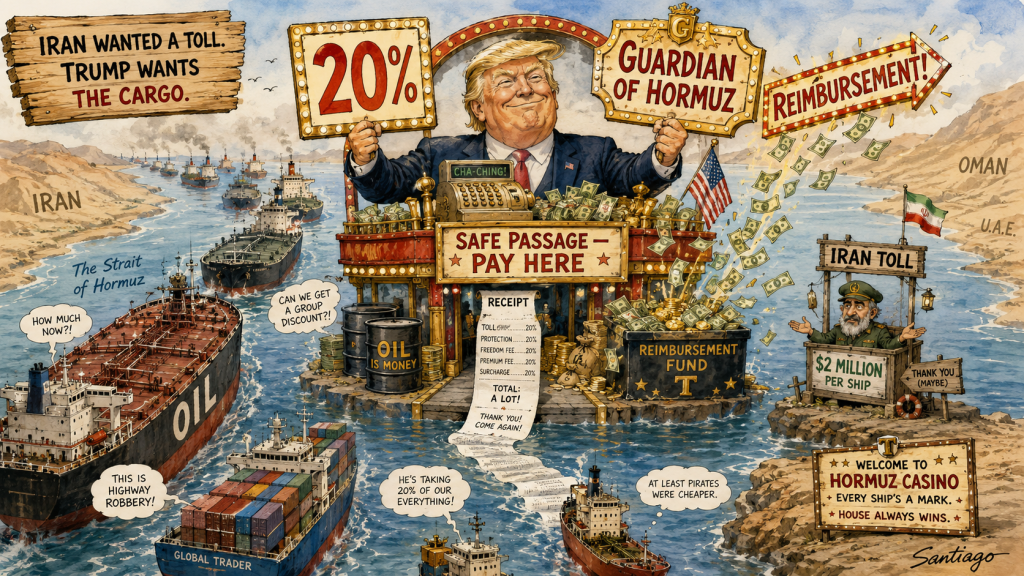
Trump is proposing a much larger charge than the one associated with Iran. – Most people would call it Protection Money.
Iran never published one clear universal rate. It said fees would vary according to the vessel, cargo, and conditions. Reuters reported that at least one ship was believed to have paid about $2 million for passage.
Trump is now saying the United States should collect 20 percent “on all cargo shipped.” Reuters says he offered no explanation of how that 20 percent would be calculated or collected.
Taken literally, the difference is enormous. A large tanker carrying two million barrels of oil, worth $80 per barrel, would carry cargo worth roughly $160 million. Twenty percent would be $32 million—about sixteen times the reported $2 million Iranian charge.
And the charge would eventually fall on the purchasers of oil, manufactured goods, and other cargo—not merely on wealthy foreign governments. Shipping companies would add it to their costs, and consumers would pay for it through higher gasoline, electricity, and product prices.
The political irony is difficult to miss. In May, the U.S. Treasury warned shipping companies that paying Iran for safe passage could expose them to American sanctions. Washington’s position was that Iran had no right to demand money for passage. Now Trump is proposing that the United States collect an apparently much larger fee for providing essentially the same thing: safe passage through the strait.
The distinction Trump would make is:
Iran called it a toll.
Trump calls it reimbursement.
But to the ship—and ultimately to the consumer—it is still money demanded for passage.
Iran wanted to operate a tollbooth. Trump apparently wants 20 percent of everything in the truck.