“Our Ancestors Fled” Does Not End the Argument
Two Democratic politicians visited a Cuban-American bakery in South Florida, and a political controversy followed. CAO Bakery in Pinecrest faced criticism after welcoming House Democratic Leader Hakeem Jeffries and congressional candidate Eliott Rodriguez. The owners explained that hosting the visit did not constitute an endorsement and that customers were welcome regardless of political affiliation.
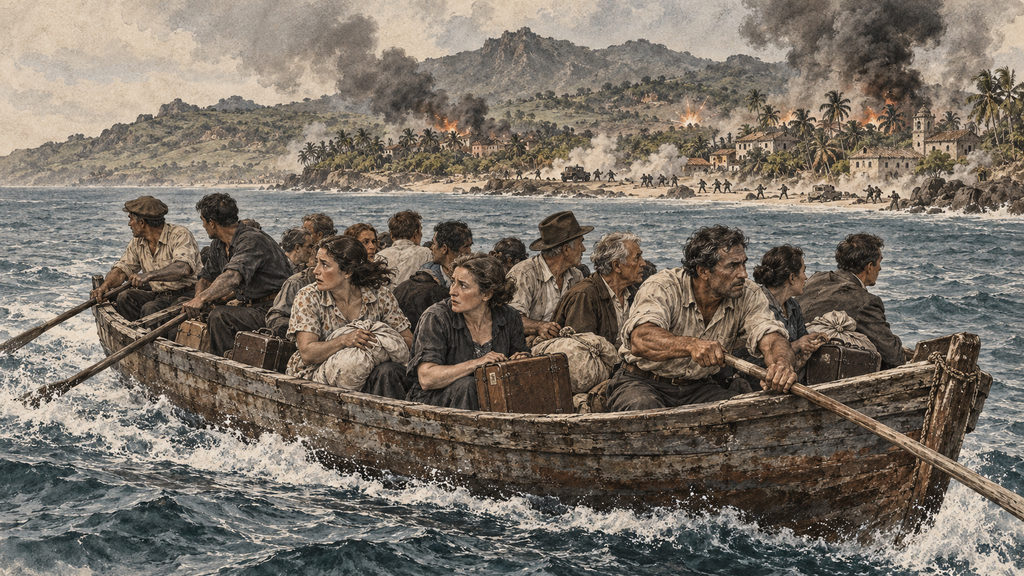
What caught my attention was the familiar appeal to the experience of people who fled Cuba. Their families’ suffering deserves to be heard. But invoking that history does not settle every political argument, and it certainly does not establish that welcoming a Democrat betrays anyone’s ancestors.
Remember Those Who Resisted
History also belongs to people who stayed and resisted oppression, often against overwhelming odds.
The Indigenous Seediq people of Taiwan provide one example. In 1930, Mona Rudao led an uprising against Japanese colonial rule, an episode portrayed in Warriors of the Rainbow: Seediq Bale. Their struggle deserves a place in our understanding of resistance, alongside the better-known stories of European resistance movements.
Leaving, protecting one’s family, resisting from exile, and remaining to fight are different experiences. We should examine those differences honestly. We can recognize refugees’ suffering while giving particular recognition to those who accepted the dangers of resistance.
What I question is the use of an inherited exile story as a political credential that others are expected to accept without discussion.
The Help That Made a Difference
Cuban arrivals received substantial federal assistance. The Cuban Refugee Program provided financial support, food, medical care, employment services, professional retraining, educational assistance, and help relocating. The Cuban Adjustment Act of 1966 created a special route to permanent residence for qualifying Cuban immigrants.
They were treated better than Americans and their families who had fought for this country.
That assistance matters when discussing how communities established themselves in this country. A success story should acknowledge the public institutions and government decisions that helped make success possible.
Nor was Miami’s reception uniformly friendly. The National Park Service documents rental signs declaring, “No Children, No Pets and No Cubans.” Federal support existed alongside local prejudice and resentment. Remembering both gives us a more honest history.
Which Cuba Do We Remember?
The Cuba before the revolution also deserves examination. National prosperity concealed deep inequalities. In 1953, rural illiteracy stood at approximately 42%, compared with approximately 12% in urban areas. A World Bank case study documented substantial improvements in access to education and health care after the revolution, especially among poorer communities.
For someone who gained access to schooling or medical treatment, the revolution could carry a different meaning than it did for someone whose property was taken. Those experiences belong in the same history. Recognizing social improvements does not require excusing political repression.
Americans did not initially respond to Castro with uniform hostility, either. The United States recognized the new Cuban government on January 7, 1959. Ed Sullivan’s interview with Castro aired four days later, following Sullivan’s trip to Cuba. The diplomatic rupture came afterward.
Freedom Includes Political Disagreement
People have every right to criticize Democratic politicians, oppose their policies, or spend their money elsewhere. The bakery owners have an equal right to welcome those politicians.
My objection concerns the claim that a community’s history makes ordinary political participation an insult. Nobody inherits the authority to decide which lawful political views an entire community may entertain.
If freedom is the principle being defended, it must include the bakery owner’s freedom to open the door—and the customer’s freedom to disagree without being declared a traitor to the past.