
Chala Vato C/S. that will not happen, we survived the pinche rinches, we will survive, Trump’s goons.
“Chala vato” is a casual Spanglish phrase, combining “chale” (or “chala,” meaning “nah/no way/come on”) and “vato” (a slang term for “guy/dude/man”), roughly translating to “No way, dude!” or “Come on, man!” expressing surprise, disbelief, or friendly banter, popular in Chicano/Mexican-American culture.
Con Safos C/S”
● C/S literally translates to “with safety” (also interpreted as “with respect”)
● It is not a traditional Mexican symbol, but one unique to the Chicano movement
● “It was meant as a safety precaution, a barrio (barrio: “the Spanish-speaking quarter of a
town or city, especially one with a high poverty level”) copyright, patent pending. No one
else could use or dishonor the graffiti. It was an honorable code of conduct, a literary
imprimatur. Like saying “amen,” it ended discussion. Above all, it meant, “anything you
say against me will bounce back to you.”—Jose Antonio Burciaga’s Drink Cultura
Some of us Tejanos, the ones they call the other white race, that is another story, were here to greet your protestant ancestors when they landed on the shores of what is now the United States.
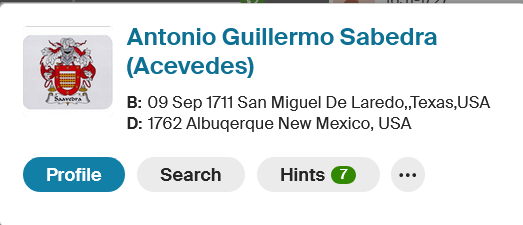
The image in the top-left corner shows the name, birth, and death of the Seventh Great-Grandfather on my mother’s side of the family. Born in 1711 in Laredo, Texas, USA, and died in 1762 in Albuquerque, New Mexico, USA. The history goes much further back to the early 1600s. That would be my European ancestors.
Based on my DNA, I am 32 percent Indigenous, Indian, for the uneducated.
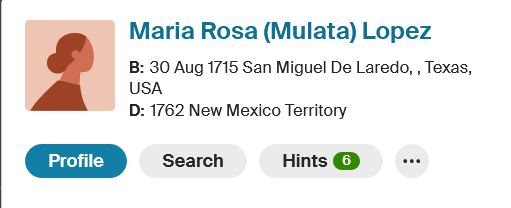
Well, it seems that Antonio, my 7th GG-Grandfather, married a Mulata. Typically, someone called Mulata is of mixed European and Black ancestry. It appears that the Spaniards referred to a particular tribe of Native Americans as Mulato Indians,
In 18th-century Spanish Texas, “mulato” referred to people of mixed African and European descent, but also confusingly to the Mulato Indians, a Coahuiltecan group who migrated from Tamaulipas to Texas missions like San José by the 1780s; these mixed-race individuals, including artisans and founders, were part of the evolving casta system, often skilled laborers who could sometimes gain status despite racial hierarchy, contributing significantly to early settlements like San Antonio de Béxar.
Coahuiltecan Indios
The Coahuiltecan lived in the flat, brushy, dry country of northern Mexico and southern Texas, roughly south of a line from the Gulf Coast at the mouth of the Guadalupe River to San Antonio and westward to around Del Rio. They lived on both sides of the Rio Grande. Their neighbors along the Texas coast were the Karankawa, and inland to their northeast were the Tonkawa. To their north were the Jumano. Later, the Lipan Apache and Comanche migrated into this area. Their indefinite western boundaries were the vicinity of Monclova, Coahuila, and Monterrey, Nuevo Leon, and southward to roughly the present location of Ciudad Victoria, Tamaulipas, the Sierra de Tamaulipas, and the Tropic of Cancer.