
3 billion tax break for data centers and higher energy prices for residents of Texas, MAGAS is fooling their sheeple all of the time. But there are a bunch of Democrats also in on the take, so don’t expect things to change; our citizens voted for the fool on the hill (Trump).
.
Texas will lose out on $3.2 billion in sales tax revenue over the next two years thanks to an exemption for the state’s booming data center industry, according to the comptroller’s office.
That figure is likely a vast underestimate given the explosion of new facilities being built, but already makes the tax break one of the state’s costliest incentive programs and soon to be the most expensive of its kind in the nation.
.
Republicans are nickel-and-diming us into poverty with their giveaways to the billionaire contributors to their campaigns. How else may the politicians be getting fat off of us?
To cover the investments needed to accommodate the surge in interconnection requests, many utilities are passing on the costs to their consumers through higher monthly utility bills. Utilities requested more than $29 billion in rate increases in the first half of 2025, double the amount requested in the first half of 2024. Electric rate increases were expected to affect 40 million customers nationwide last year. This is in addition to the rate increases granted by state energy commissions over the previous couple of years.
Before 2019, electricity prices had been flat at around 13 cents per kilowatt-hour (kWh) for more than a decade—in part thanks to energy efficiency policies that reduced energy consumption as the overall domestic economy grew. By the end of 2025, however, average electricity prices in the United States increased to 19 cents per kWh, about 27% more than in 2019. In states with a high concentration of data centers like Virginia, electricity prices have increased by up to 267% over the last five years. Such spikes are due to utilities needing to quickly deploy infrastructure, such as power lines and transformers, and pay extra for market-rate energy.
.
Not only are they getting tax breaks as we pay more for electricity, but they are also taking much of the water that we will soon need for ourselves.
John Steinbach was shocked to receive a $281 electricity bill in January 2026—a huge spike from the roughly $100 he’d paid the previous month. “It’s just so far beyond any bill that I’ve ever had,” he says. Steinbach, who has lived in his Manassas, Va., home for nearly 40 years, worries his rates will keep climbing as the outsized electricity demand from AI data centers grows. “They’re building them like it’s ‘Field of Dreams’—build it and the electricity will come—but we don’t see how that’s going to happen.”
The contribution of AI data centers to higher bills is just one of the ways the development boom is affecting consumers. The facilities also compete for critical resources like water and land, and they can lower air quality and increase traffic, often while benefiting from changes to zoning laws and huge tax breaks.
… While the size of the facilities is startling, their energy use is even more dramatic. A January 2026 report by Bloom Energy, an on-site energy company, predicts that U.S. data centers’ total combined energy demand—how much electricity they may use when up and running—will nearly double between 2025 and 2028, jumping from 80 to 150 gigawatts (GW). That’s like adding a country with the energy needs of Spain in just three years.
More data centers can mean higher costs. That same Bloomberg analysis found that areas with high concentrations of data centers saw electricity prices jump 267 percent over the past five years. And John Steinbach isn’t the only Virginia resident to see a connection: Nearly three-quarters of voters in the state blame the facilities, largely clustered in Northern Virginia’s Data Center Alley, for rising electricity costs, according to a January 2026 survey conducted by Global Strategy Group and the Chesapeake Climate Action Network Action Fund.
… Large data centers’ rows upon rows of stacked servers and other hardware operate around the clock to power intensive computing tasks like generative AI and cryptocurrency mining—and they run hot. To prevent the machines from overheating, the facilities have historically relied on constantly circulating water to cool their equipment.
In the process, a data center can use up to 5 million gallons of water every day, as much as 16,000-plus average U.S. households, according to Environmental Protection Agency estimates. That’s just direct usage for cooling. Generating the electricity to keep data centers powered up requires additional millions of gallons of water, even more than the water used for cooling.
Related
.
.
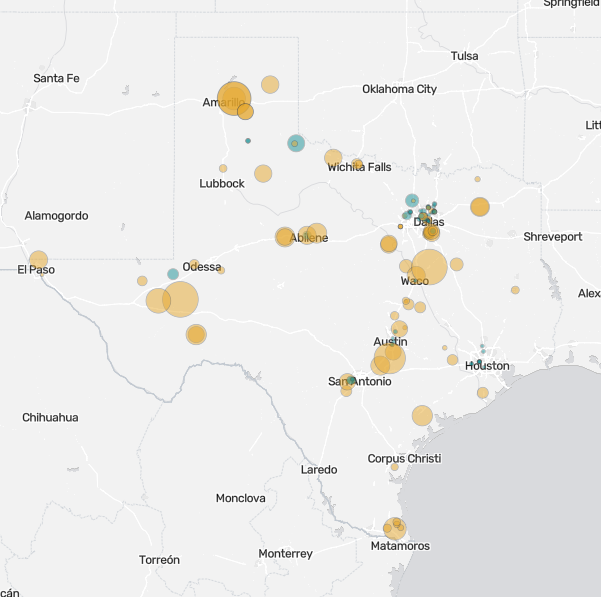
In conservative Hood County in North Texas, close to Paxton’s home base, a flood of applications for the construction of data centers has drawn opposition among residents who worry the facilities, which require large volumes of water and electricity and often stretch across thousands of acres, will deplete the region’s water supplies and drive up power prices.
“The concern most people have is this new type of development is going faster than the speed of information coming to the public,” said state Rep. David Cook, a Mansfield Republican. “People are looking for assurances that our water and power supplies are not going to be wiped out here.” Source
.