
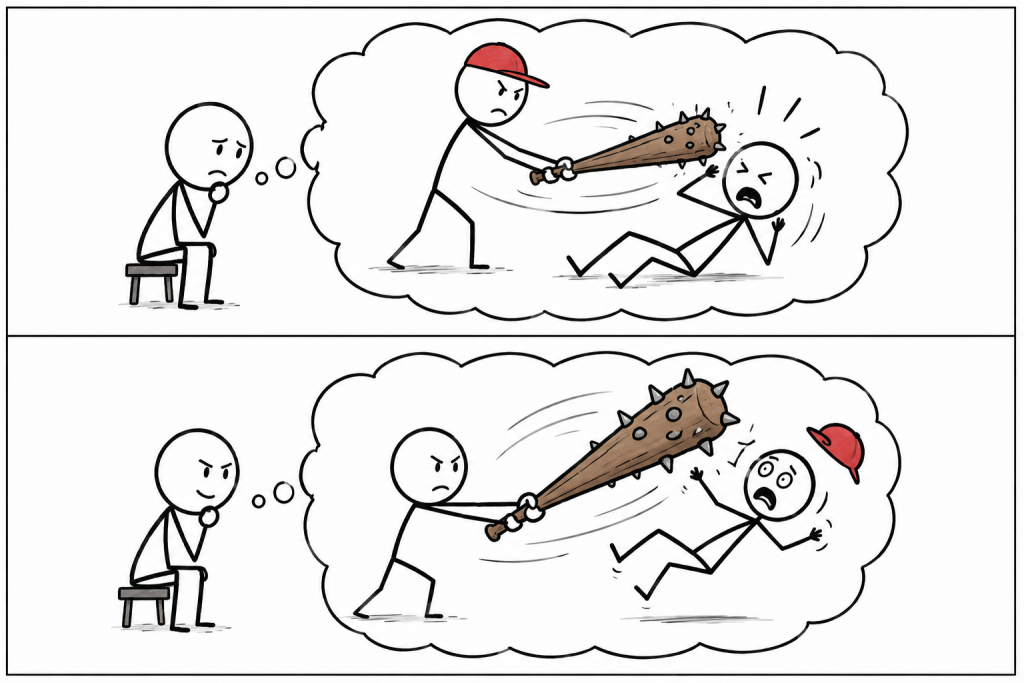
Listen to Republican leaders today, and a common warning emerges. If Democrats regain power, they will use the courts, federal agencies, and the machinery of government to punish their political opponents. Investigations will multiply. Executive authority will expand. Political retribution will become the order of the day.
The warning raises an interesting question.
Why are they so certain?
One possible answer is that they believe the left is uniquely vindictive. Another is more unsettling: they assume others will use power the same way they have come to view its use.
Human nature has long recognized a simple pattern. When people believe they have been wronged, many conclude that justice means returning the favor. The Golden Rule is replaced by another principle: they did it to us, so we’ll do it to them.
Republicans frequently argue that Democrats seek revenge. But perhaps what they really fear is the precedent they themselves believe has been established.
Politics has changed. Practices that once would have been considered extraordinary are now defended as necessary. Executive orders grow broader. Investigations become more aggressive. Long-standing norms are abandoned whenever they stand in the way of political objectives. Each side insists its actions are justified because the other side either started it or would have done the same.
The problem with precedents is that they do not disappear when power changes hands.
Every tool created by one administration becomes available to the next. Every expansion of authority becomes part of the political toolbox. Every justification becomes an argument waiting to be used again.
Republicans often describe a future in which Democrats use every available lever of government against them. That prediction may reveal less about Democratic intentions than about Republican expectations of how political power works once restraints have been abandoned.
If you spend years arguing that extraordinary measures are justified whenever your side faces an extraordinary threat, it becomes difficult to argue that your opponents should suddenly exercise restraint when they inherit those same powers.
Perhaps that is the real source of Republican anxiety.
It is not simply that Democrats may return to power.
It is that the precedents created today will belong to whoever holds power tomorrow. And if Republicans truly believe Democrats will use those precedents without hesitation, they may be revealing the political world they themselves have come to expect.


