I started reading a new book, and when it mentioned the Skinning War, I was surprised to find a war I hadn’t heard of, especially since it was in South Texas, in the Corpus Christi area.
In 1875, South Texas was already a dangerous place to be Mexican.
The violence that year began with real raids. Armed men crossed from Mexico into the Nueces Strip, robbed stores and ranches, stole horses and cattle, killed people, and moved south toward the Rio Grande. At Nuecestown, near Corpus Christi, several people were killed. The same band later appeared near Roma, apparently hoping to rob the customhouse before escaping back across the river.
Those crimes were real.
What followed was something different.
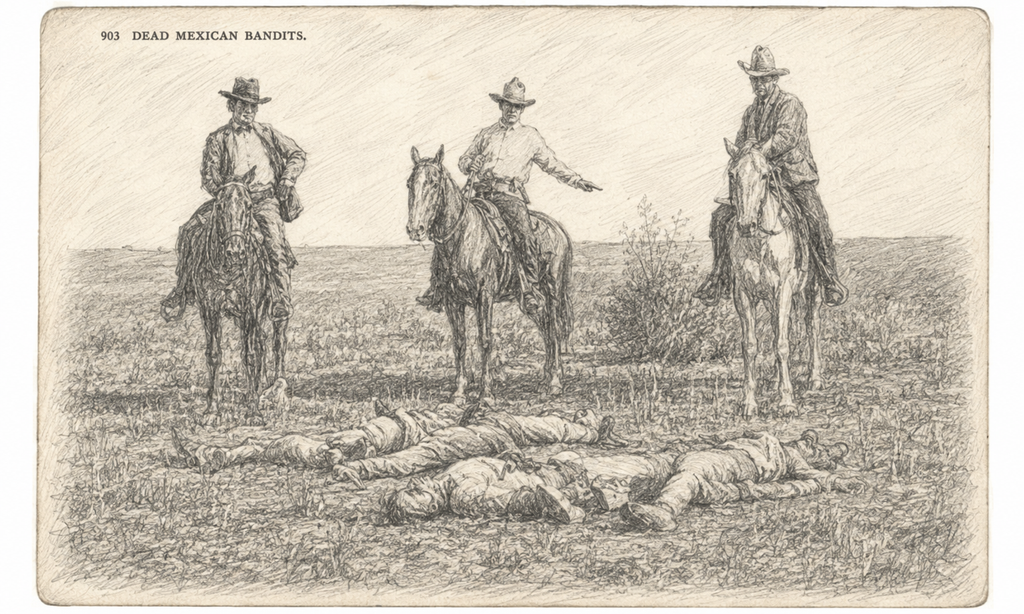
Anglo posses and vigilante companies began riding through the Nueces Strip looking for the men responsible. But the retaliation did not remain confined to identified raiders. Mexican ranchers, shepherds, and merchants became targets simply because they were Mexican. Homes were burned. Property was taken. Men were killed. Families fled.
To understand how that could happen, it helps to read what American newspapers were saying about the Mexican population of South Texas at the very moment the killing began.
The San Francisco Daily Morning Call told its readers that the country between the Nueces and Rio Grande belonged to the United States but was inhabited chiefly by Mexicans or people who “would be Mexican” if they lived on the other side of the river. It described them this way:
“They are Mexicans by descent, many of them Mexicans by birth, and all of them Mexican in sentiment.”
Then it went further:
“Four-fifths of them are squatters—deserters from the Mexican army, fugitives from justice, and banditti by instinct.”
The newspaper described them as:
“Ignorant and lazy”
and claimed they possessed a deep aversion to work. It said they believed Americans were:
“a race of vigorous barbarians”
who would seize Mexico if they were not restrained.
That was not an isolated newspaper.
The Chicago Inter Ocean was even more explicit. Its April 26, 1875 article carried the headline:
“Armed Bands of Greasers all Along the Rio Grande Frontier.”
Then its correspondent described the Mexican population living north of the Rio Grande:
“Of this Mexican population about four-fifths are squatters—deserters from the Mexican army, refugees from justice, adventurers, and the FILTH AND SCUM OF A DEMORALIZED NATION.”
It continued:
“They are Mexicans in every sense of the word.”
And then:
“Like their countrymen on the other side of the Rio Grande, they abhor America, and hate everything over which the stars and stripes float.”
Finally, the paper told its readers:
“They are the spies and companions of the raiders.”
Those words matter because they did more than accuse particular men of committing crimes. They accused an entire ethnic population of being naturally criminal, lazy, disloyal, and hostile to the United States. A Mexican rancher did not have to be seen riding with the raiders. According to this way of thinking, his ancestry already made him suspicious.
Once people begin believing that, the distinction between “Mexican raider” and “Mexican” becomes dangerously small.
That appears to be what happened during the reprisals that became known as the Skinning War. Vigilantes swept through the Nueces Strip, attacking people who had never been shown to have participated in the original raids. Some Mexican ranchers and shepherds were murdered. Others abandoned their homes and property.
At La Atravesada Ranch, later accounts say all the adult Mexican men were killed.
The violence was not simply lawmen chasing criminals. It became racial retaliation.
The newspapers help explain the atmosphere that made that possible. If readers were repeatedly told that Mexican residents were “banditti by instinct,” “filth and scum,” enemies of the American flag and secret accomplices of raiders, then a Mexican man riding through the brush country could easily become guilty before anyone asked his name.
He did not necessarily have to be one of the raiders.
He only had to look like one.
And that is the part of the Skinning War that should matter to Tejano history.
Mexican families had been living in South Texas before the Rio Grande became an international boundary. Their ranches, cattle, communities, and relatives often existed on both sides of the new line. Yet by 1875, newspapers hundreds and thousands of miles away were describing those same people as foreigners occupying American land.
The raid at Nuecestown killed innocent people, and nothing about that should be minimized. But the retaliation created another class of victims: Mexican Texans who had committed no demonstrated crime at all. Some were robbed, some were driven from their homes, some lost their land, and some were killed.
The violence became so indiscriminate that even the Texas Rangers, hardly known in that era for excessive tenderness toward Mexicans, said it had gone too far. Captain Leander McNelly wrote that “the acts committed by Americans are horrible to relate.” He reported that ranches had been plundered and burned, people murdered or driven away, and that one armed party admitted killing eleven men on its previous raid.
Former Ranger N. A. Jennings later remembered arriving in Corpus Christi and finding armed white vigilantes roaming the countryside, committing what he called “the most brutal outrages” and murdering peaceful Mexican farmers and stockmen who had lived in Texas all their lives. He said some white men used the panic following the Mexican raid as an opportunity to “settle up old scores with the Mexican residents.”
That is where the words printed in the newspapers become more than ugly language. Mexicans in South Texas had been described as “banditti by instinct,” “ignorant and lazy,” enemies of America, and the “filth and scum of a demoralized nation.” Then armed men rode through Mexican ranches deciding for themselves who was guilty.
Even the Texas Rangers looked at what followed and called it horrible.
For some of the men doing the killing, apparently the only evidence necessary was the same evidence the newspapers had already supplied:
They were Mexican.