
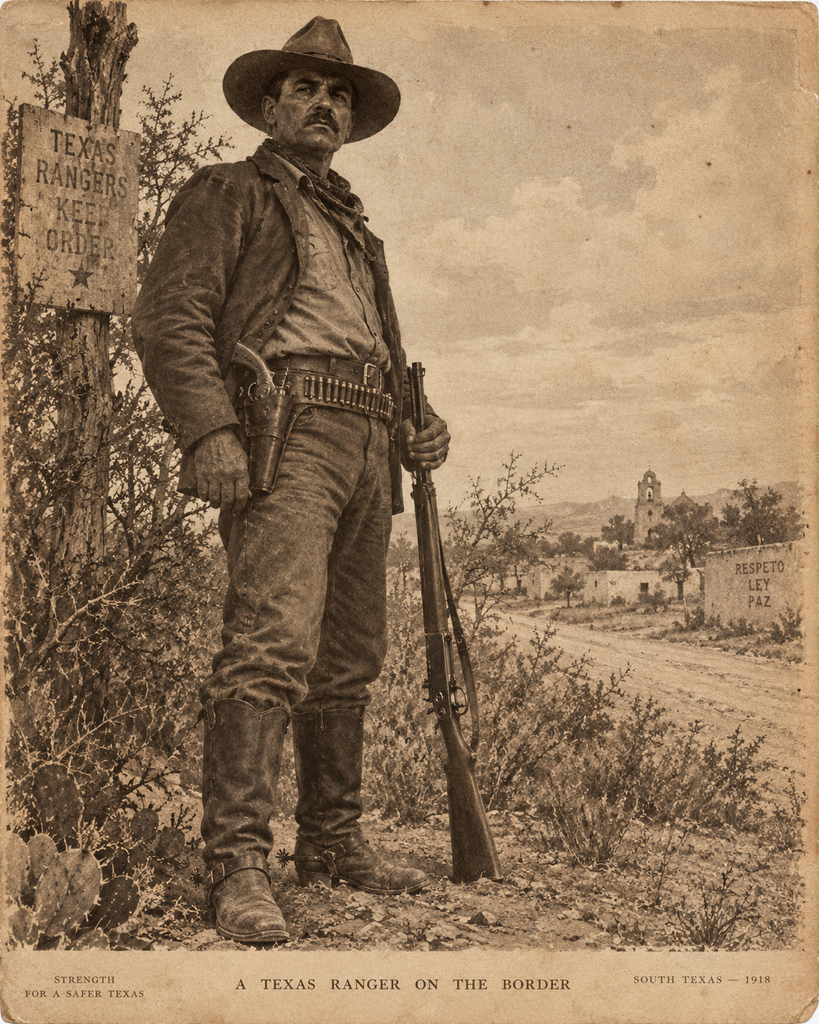
Backing the White Texans were the “Pinche Rinches,” killing any “Mexican” who stood up for their women or their rights. The Texas Rangers the monsters of South Texas.
By their own words, some white farmers were boasting that a Mexican woman’s refusal did not matter.
White farmers bragged that they could “do anything [they] want” with Mexican women, even though the women “will never say yes”; they said a white man “just [had] to go ahead.”
Stone, in which he seemed to revel in coercing Mexican and African American women into sex, further revealing the dehumanization necessary to rationalize this kind of social system: We favor a Mexican more than we do a negro. You can get more work out of a negro, but a Mexican is a better citizen. You never heard of a case of rape by a Mexican; it happens all the time with the negroes. And a Mexican respects a white man; you can do anything you want with their women; their men won’t attack you; of course some of the better educated Texas-Mexicans would just as soon go after you. With the negro women you can do anything you want if you just get them off from the rest; the Mexican women will never say yes; you just have to go ahead or you’ll get left. Some of the Mexican men seem to feel it an honor that a white man will pay that much attention to their women.
Source: From South Texas to the Nation: The Exploitation of Mexican Labor in the Twentieth Century (The David J. Weber Series in the New Borderlands History)
In Brazoria County, the Taxpayers Union openly stated its purpose was to preserve “the fact that this is a White man’s country and that White supremacy must obtain.” The organization dominated county politics from the 1890s into the twentieth century. (Texas State Historical Association)
During the South Texas violence of the 1910s, one newspaper said there was “a serious surplus population there that needs eliminating” when referring to Mexicans in the Brownsville region. That language is not subtle; it treats Mexican residents as excess population. (Ballí Family Organization)
Anti-Mexican signs and campaigns used phrases such as “Keep out the Mongrel Mexicans” and “Lock the Back Door,” while Mexicans were described as “the most undesirable of all peoples.” (Wikipedia)
A white Anglo recalling the Ranger era later summarized their power this way: “all the Rangers had to do was get a suspicion on somebody, any little thing, and they would take ’em out and shoot ’em down.” That is unusually blunt testimony about how casually Mexican lives could be treated during La Matanza. (Wikipedia)
The Dallas lynching of Allen Brooks produced one of the ugliest surviving pieces of everyday evidence. A postcard showing the lynching carried the handwritten message: “This is a token of a great day we had in Dallas.” The writer then matter-of-factly described a Black man being hanged. The killing had become a souvenir. (Wikipedia)
And Dallas’s Ku Klux Klan later sent the Black-owned Dallas Express a threatening letter describing Dallas as a “white man’s country.” The newspaper defiantly published the threat instead of submitting to it. (Wikipedia)
The quote from Stone remains especially revealing because it joins the racial hierarchy to sexual exploitation. He says Mexicans were preferable workers and citizens to Black people, then boasts that a white man could “do anything you want with their women” and that Mexican women “will never say yes” but the man should simply proceed anyway.
Stone does not sound like an isolated lunatic. He sounds like one unusually candid voice from a society in which people openly spoke of “white supremacy,” “a white man’s country,” “mongrel Mexicans,” and a Mexican “surplus population” that needed eliminating.
White people and white-run newspapers made the Rangers heroes; they were bandits with a badge. Many MAGAs are no different from those white people.


