
Listen to the story
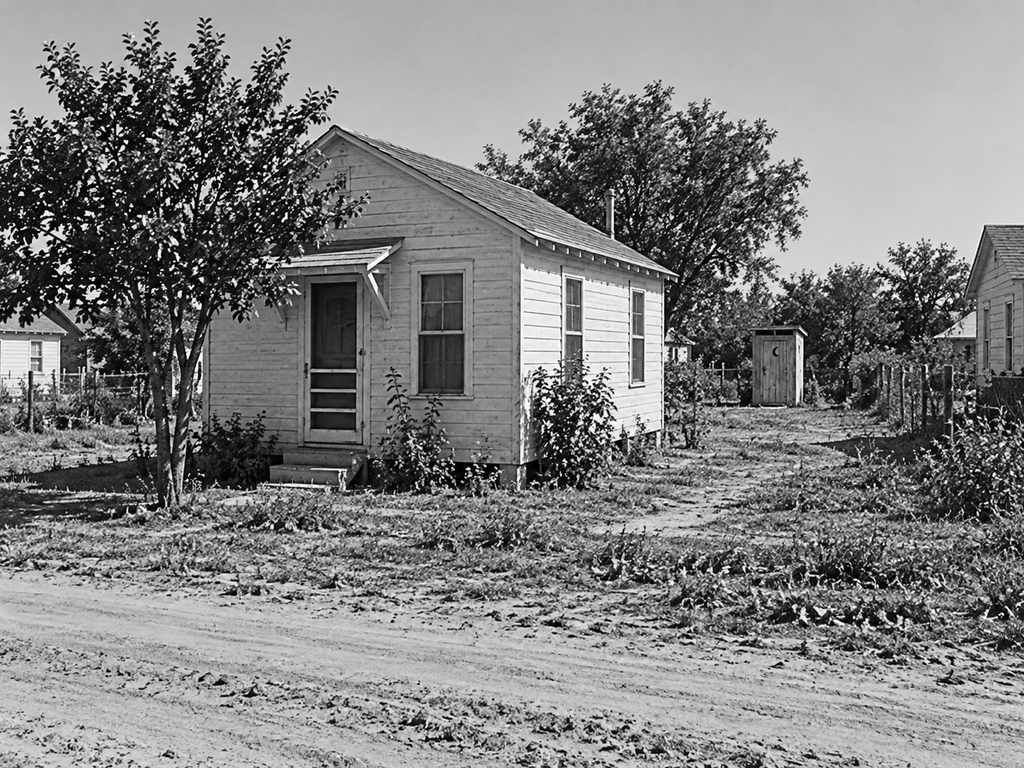
In December 1961, Molina finally got something the City of Corpus Christi had promised years earlier: sewer service.
For families in Molina, that meant much more than another city utility. It meant the end of the outdoor toilets many families had grown up using. City officials called them “pit privies.” We simply knew them as outdoor toilets.
The city had begun a campaign against outdoor toilets in 1951. Officials called them a health menace and pressured homeowners to install indoor plumbing. But Molina had a serious problem: families were being told to modernize their homes before the city had provided the sewer system they needed.
Some families saved. Others borrowed money. Some mortgaged their homes to pay for plumbing improvements. And, as the earlier newspaper evidence shows, some homeowners became so deeply indebted that they lost their houses before sewer service had even reached Molina.
That is the part of the story that should not be forgotten.
Poor families were being required to meet city plumbing standards while the city itself had not yet built the infrastructure necessary to serve them.
Dr. Hector P. Garcia became one of Molina’s strongest advocates. He helped organize a voluntary savings plan so homeowners could put money aside for plumbing improvements without having to fall into the same kind of debt that had already hurt other families. Local plumbing contractors agreed to a special rate of about $170 for indoor plumbing installation.
The plan worked because Molina families wanted indoor plumbing. They were not resisting improvement. They were trying to find a way to afford it.
But they still needed sewer lines.
A later newspaper article reported that an estimated 500 outdoor toilets remained in Molina and Laguna Acres, and that there were still no sewer lines available to serve them.
Garcia went before the Corpus Christi City Council and asked when the city would finally begin the improvements Molina had been waiting for.
By then, about 50 Molina families had joined the savings organization. They were putting away money so they could connect to the sewer system when it arrived.
But the wait dragged on so long that seven or eight families withdrew from the program. They decided they could make better use of their savings than leave the money sitting there while the city continued to delay.
Garcia reminded the council that he had helped persuade Molina residents to accept annexation.
“I helped push the annexation of Molina, and now they are asking me why the city has not made improvements.”
Then he asked the simplest question of all:
“When will the ditch be dug?”
The mayor answered that construction should begin within six to eight months.
And Molina kept waiting.
Finally, in December 1961, the newspaper announced:
“Molina Gets Sewers After 7-Year Wait.”
The opening sentence was almost an admission:
“The city can now offer to residents of the Molina area what it started out to give them seven years ago — sewer service.”
By then, 229 Molina houses had tied into the new sewer system, and another 693 houses could be served.
Even then, the work was not free. The city installed sewer laterals along the streets, but homeowners still had to pay to connect their houses. The newspaper estimated the average cost at about $140, including a $40 tap fee.
Of the first 229 customers, 80 paid cash and 149 used the city installment plan.
That explains why Molina families had been saving money years earlier.
My own family was among those waiting for the outdoor toilet to disappear.
For years, I remembered that I was probably around twelve when we finally stopped using ours. After more than sixty years, I was not sure whether that memory was accurate.
Then I found the December 1961 newspaper article.
I would have been about twelve.
My father did much of the work himself. We dug the trench from our property out to the city easement and laid the concrete sewer pipe. One of my younger brothers, born in 1954, has always claimed that he helped my father dig that trench.
I used to doubt him.
If our connection came in 1961 or shortly afterward, he would have been six or seven years old.
So, damn it, he may have been telling the truth all these years.
There is something almost absurd about describing sewer service as a Christmas present. Indoor plumbing should not have been a luxury in an American neighborhood in 1961.
But Molina families had been pressured to get rid of their outdoor toilets, had saved their own money, had watched neighbors borrow money and even lose homes, and had waited year after year for the city to keep its promise.
So when the sewer lines finally arrived near Christmas 1961, they really were a present.
The only problem was that Corpus Christi delivered it about seven years late.