A few people get rich or richer; a few more get some of those good-paying jobs; the rest of the people get to pay for that and maybe skip a bath or two. Greg Abbott gets to boast about bringing jobs to Texas. The article says people are coming in for those jobs, not local people.
Corpus Christi welcomed industrial growth and sold water to the companies that came with it. The jobs were real. So was the expectation that new water supplies would arrive in time. Then a long drought drained its reservoirs while those supplies lagged.
Brownsville is making its own plans for growth. It should ask what happens if its water projects run late.
The Corpus Christi Warning
In January 2026, Corpus Christi reported that Choke Canyon and Lake Corpus Christi had fallen to a combined 10% of capacity, their lowest recorded level. The city still had water from other sources, but it was under Stage 3 drought restrictions. Roughly 20 large industrial customers consumed as much as 60% of the city’s supply, according to local officials. (www.corpuschristitx.gov)
Corpus Christi is working to add water now. That work takes time, and residents have had to live with restrictions while it proceeds. A city can approve an industrial customer much faster than it can build a dependable new water source.
One River, Two Cities
Brownsville currently gets roughly 70% of its water from the Rio Grande. Matamoros, across the river, also pumps from the Río Bravo for drinking water. Both cities depend on the river system, even though Texas and Mexico account for their stored water separately. (www.texastribune.org)
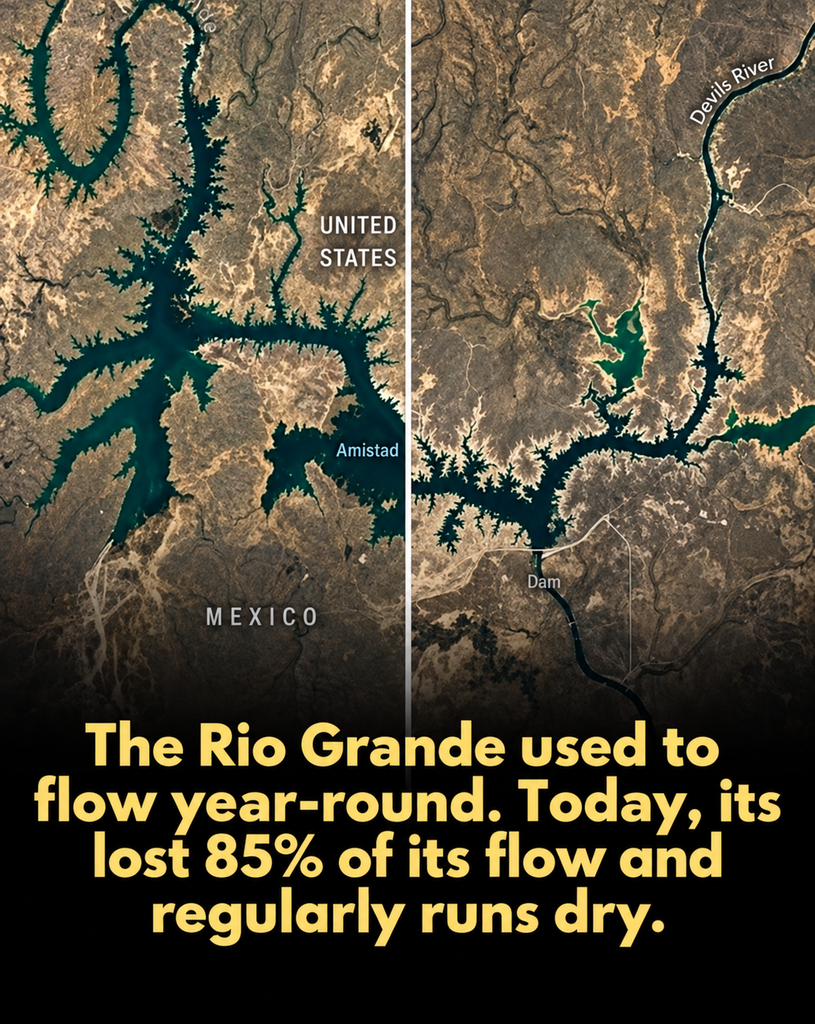
As of September 24, Falcon Reservoir held only 20.1% of the Texas share of its usable capacity, down from 23.7% a month earlier. When water fails to reach the river’s mouth, people downstream can see how thoroughly this river is being used. New demand deserves more than an assurance that future projects will take care of it. (www.waterdatafortexas.org)
What Lies Beneath Brownsville
Brownsville already treats brackish groundwater at the Southmost Regional Water Authority plant. The utility plans to improve its existing wells and equipment by 2027, then add 20 wells and other facilities to expand production by 2030, if funding is secured. Separately, Brownsville says a proposed wastewater reuse project could add about 8 million gallons a day. The city describes the larger projected gains as planning-level potential—water that is not yet available. (www.bpub.com)
Groundwater may help, but it is not an unlimited supply hidden beneath the city. A Texas Water Development Board study found that increased pumping in the lower Rio Grande Valley can draw water from the river and canals as well as from underground storage. The study also identified land subsidence—sinking ground—as a possible result of pumping. Its authors said local measurements were needed to estimate that risk accurately. (www.twdb.texas.gov)
The danger is especially serious to consider near the coast. The National Weather Service identifies storm surge as a threat to the Port of Brownsville and nearby communities. Sinking land would leave less elevation between those places and floodwater. A historic survey found one benchmark in southern Cameron County about five inches lower between 1917 and 1951, but it did not establish that groundwater pumping caused the change. That old measurement cannot tell us what the proposed wells will do. (www.weather.gov)
Grow at the Speed of the Water Supply
SpaceX could contribute up to $220 million toward Brownsville water and wastewater projects. That is substantial funding. It does not make the projects operational today, and the city says the agreement does not purchase SpaceX a guaranteed share of water capacity. Meanwhile, the Port of Brownsville is working to secure additional water for industrial use. (www.brownsvilletx.gov)
Before taking on each major new demand, Brownsville should publish how much water it will require, which existing source will supply it during drought, and when its use would be cut. For the well-field expansion, residents also deserve the groundwater and subsidence measurements, the projected effect on river flow, and a plan for monitoring those effects after pumping begins.
Jobs matter. So do the homes, businesses, and neighboring city that already depend on this water. Corpus Christi shows what can happen when demand arrives before supply. Brownsville can grow, but it should measure the water—and the ground beneath its feet—before promising either away.
Risk big, die quick is no way to manage a river.