Deport the Witness, Protect the Criminal
A government cannot credibly promise to protect Americans while frightening crime victims and witnesses away from the police. Trump’s approach to immigration enforcement creates that danger. When cooperation can lead to detention or deportation, silence becomes a means of self-preservation—and criminals can benefit.
KPRC’s October 8 investigation shows what is at stake. Harris County District Attorney Sean Teare sought U visa certifications for three witnesses to the fatal ICE shooting of Lorenzo Salgado Araujo in Magnolia Park. According to Rep. Sylvia Garcia, agents lacked body cameras, and dash cameras did not capture the shooting. Losing those witnesses could seriously damage the investigation. click2houston.com
The report also describes the father who discovered his murdered 11-year-old daughter. Despite receiving a U visa certification, he was nearly deported following a DUI arrest. Teare said the father was needed to authenticate evidence. Whatever immigration action might otherwise be appropriate, prosecutors also have a murder case to prove. click2houston.com
Congress created U visas for qualifying crime victims who suffer substantial physical or mental harm and assist law enforcement. The program serves a public purpose: helping authorities investigate and prosecute crimes. But the annual limit is only 10,000 principal U visas, and certification is merely one step toward approval. Applicants can spend years waiting. Being a witness alone does not automatically qualify someone. www.centerforhumanrights.org
In January 2025, the Trump administration rescinded earlier policies restraining immigration enforcement against people seeking victim-based protections. A federal judge granted preliminary protections for covered classes in May 2026. Yet attorneys interviewed by KPRC report uneven implementation. Protection that people cannot confidently rely upon does little to encourage them to step forward. www.centerforhumanrights.org
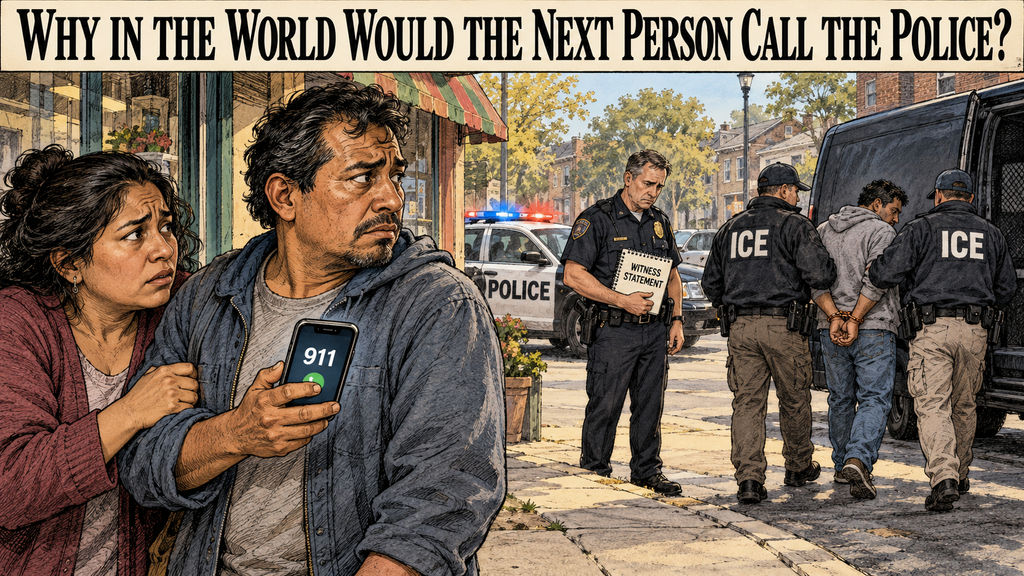
The consequences extend beyond visa applicants. KPRC reports that Juan Francisco Monroy Turuy called 911 about a Bellaire shooting, gave police a statement, and was then detained by immigration officials. Teare said that the case did not qualify for his office’s U visa certification. He nevertheless asked the essential question: “Why in the world would the next person call the police?” click2houston.com
We depend on people to report violence, identify attackers, and testify. If they reasonably fear that helping the police could separate them from their families, we should expect some to stay silent. An immigration policy that discourages cooperation can leave American citizens vulnerable alongside their immigrant neighbors.
My objection is straightforward: deporting a necessary witness can weaken a prosecution; frightening the next witness can prevent one from beginning. Arrest totals do not tell us whether neighborhoods are safer. A policy that helps criminals escape accountability fails the public safety test, whatever its supporters call it.


