
Are we protecting someone’s profits or our country? With the current man in charge of the country, our country may soon find itself in the same position as Russia, a country with a lot of nuclear weapons and not much else except dreams of what it used to be.
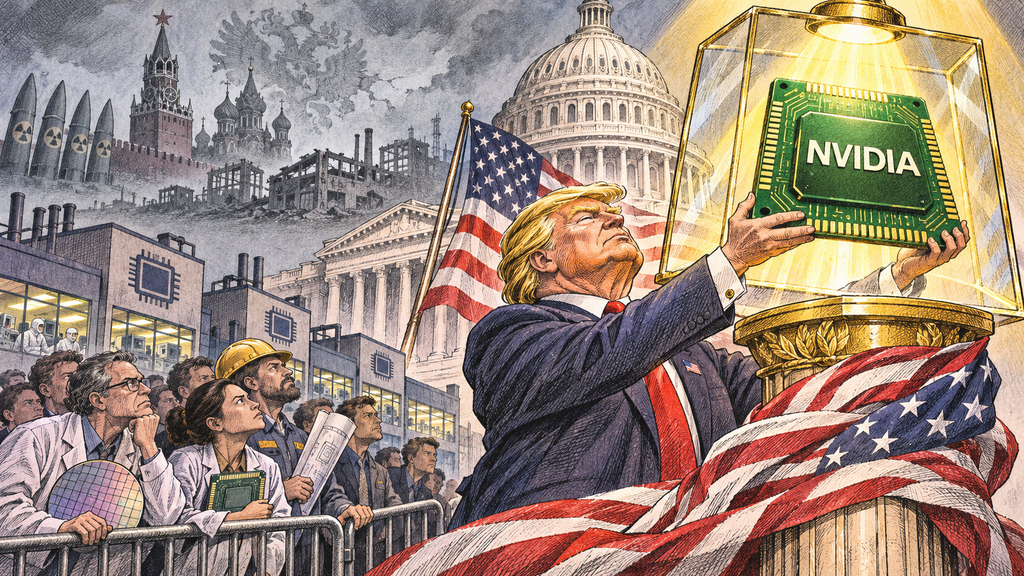
America’s interest is not NVIDIA’s interest. When government leaders treat one company—or one CEO—as indispensable to the country, they risk protecting that company’s power at the expense of the competition that could make the country stronger.
Robert Reich’s “too big to fail” question became more than a metaphor when NVIDIA’s board reinstated Jensen Huang as CEO after his brief resignation. The company said it had received input from senior levels of the U.S. government before deciding Huang’s return posed no national security risk. That episode raises a troubling question: when did one company’s leadership crisis become a matter for government intervention? nvidianews.nvidia.com
NVIDIA is a remarkable American company. Huang helped build a powerful combination of chips, software, and systems that has put NVIDIA at the center of the AI boom. But the company itself recognizes that it faces competition from AMD, Intel, and cloud companies designing their own chips. AMD is building its own data-center AI accelerators and systems. Those rivals need room to compete, attract customers, and improve their products. s201.q4cdn.com
The danger is that “national security” becomes a reason to treat NVIDIA’s dominance as a national necessity. If government policy, public contracts, political attention, and access to decision-makers increasingly revolve around one company, competitors start the race from farther behind. The country may get a stronger NVIDIA in the short run while becoming more dependent on a single supplier in the long run.
A resilient country should want several capable chipmakers, more than one software ecosystem, and a deep supply chain that can keep producing when one company stumbles. That means supporting research, skilled workers, manufacturing, and fair competition across the industry. It does not mean guaranteeing that NVIDIA keeps its lead, or that Huang remains at the controls.
If NVIDIA is too important for America to let it stumble, then America has allowed its own technology future to become too dependent on one company. The answer is not to protect that dependence. It is to build enough competition that no company—and no CEO—has to be treated as indispensable.
Are we protecting someone’s profits or our country? With the current man in charge of the country, our country may soon find itself in the same position as Russia, a country with a lot of nuclear weapons and not much else except dreams of what it used to be.


