
Houston Residents Deserve Results, Not Metrics
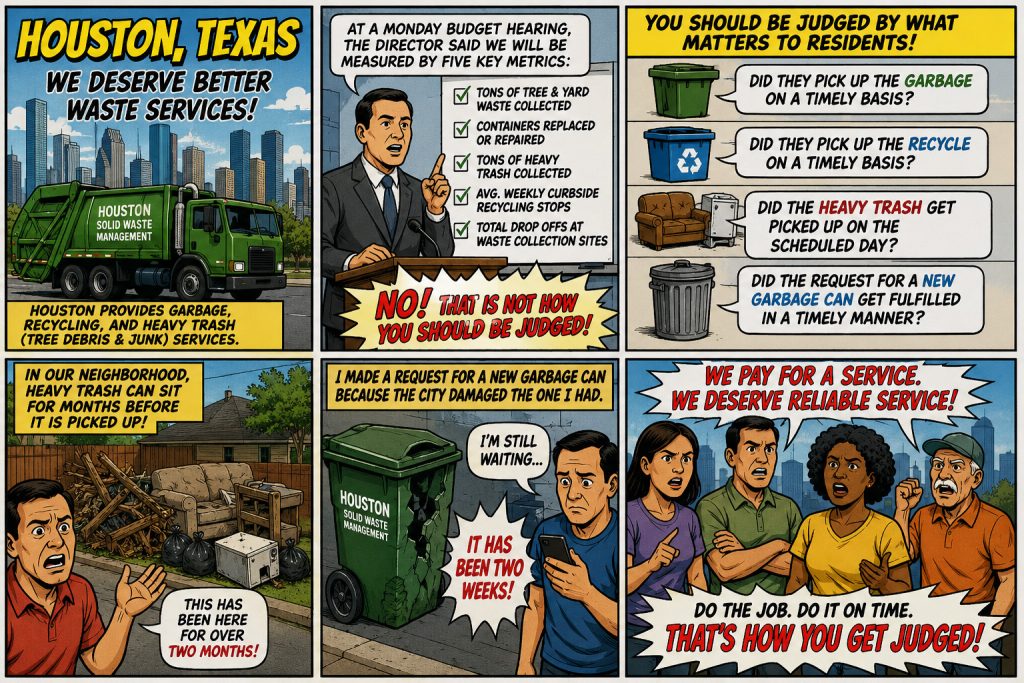
For years, Houston residents have been told that city services are improving. Officials often cite statistics, reports, and performance metrics as evidence of progress. During a recent budget hearing, city leaders highlighted measures such as the number of tons of tree waste collected, heavy trash removed, recycling stops completed, and containers repaired or replaced.
Those numbers may look impressive on paper. But for the people who actually live in Houston’s neighborhoods, a much simpler question matters:
Are the services being delivered when residents need them?
The true measure of success is not how many tons of debris are collected citywide. It is whether a family’s garbage is picked up on schedule. It is whether recycling is collected when promised. It is whether heavy trash disappears from the curb before it becomes an eyesore, attracts pests, and lowers neighborhood quality of life.
Many Houston residents have stories that suggest the city is falling short.
In some neighborhoods, piles of heavy trash remain on curbs for weeks or even months after scheduled pickup dates. Old furniture, broken appliances, and tree debris can sit exposed to weather and wildlife while residents wait for service. During that time, neighborhoods suffer the consequences.
Residents also report long waits for replacement garbage containers. When a sanitation truck damages a container, homeowners should not have to wait weeks for a replacement. Yet some residents say they have submitted requests and are still waiting long after the initial report was filed.
These experiences reveal a fundamental problem with how city performance is being measured.
Government agencies often prefer metrics that are easy to count. Tons collected. Stops completed. Requests processed. But residents judge government differently. They judge it based on results.
Did the truck arrive on collection day?
Did the recycling get picked up?
Did heavy trash disappear when scheduled?
Did a damaged garbage can get replaced quickly?
These are the questions that determine whether citizens feel their tax dollars are being used effectively.
When residents repeatedly encounter missed collections, delayed service, and unanswered requests, confidence in local government erodes. People begin to feel that city leaders are more focused on reporting numbers than solving problems.
Houston is one of the largest cities in America. Its residents pay taxes and utility fees with the expectation that basic services will be reliable. Garbage collection, recycling, and heavy-trash pickup are not luxury services. They are essential functions of local government.
The administration should be evaluated not by how many statistics can be placed in a presentation, but by whether residents receive dependable service.
If garbage is picked up on time, recycling is collected as scheduled, heavy trash is removed promptly, and replacement containers arrive quickly, residents will notice.
If those things are not happening, no amount of impressive-looking metrics can hide the reality experienced on Houston’s streets.
In the end, citizens do not live inside spreadsheets. They live in neighborhoods. And neighborhoods judge success by results, not reports.