
A city should know why so many of its people are dying in the thing it uses as its name.
Another body has been pulled from a Houston bayou.
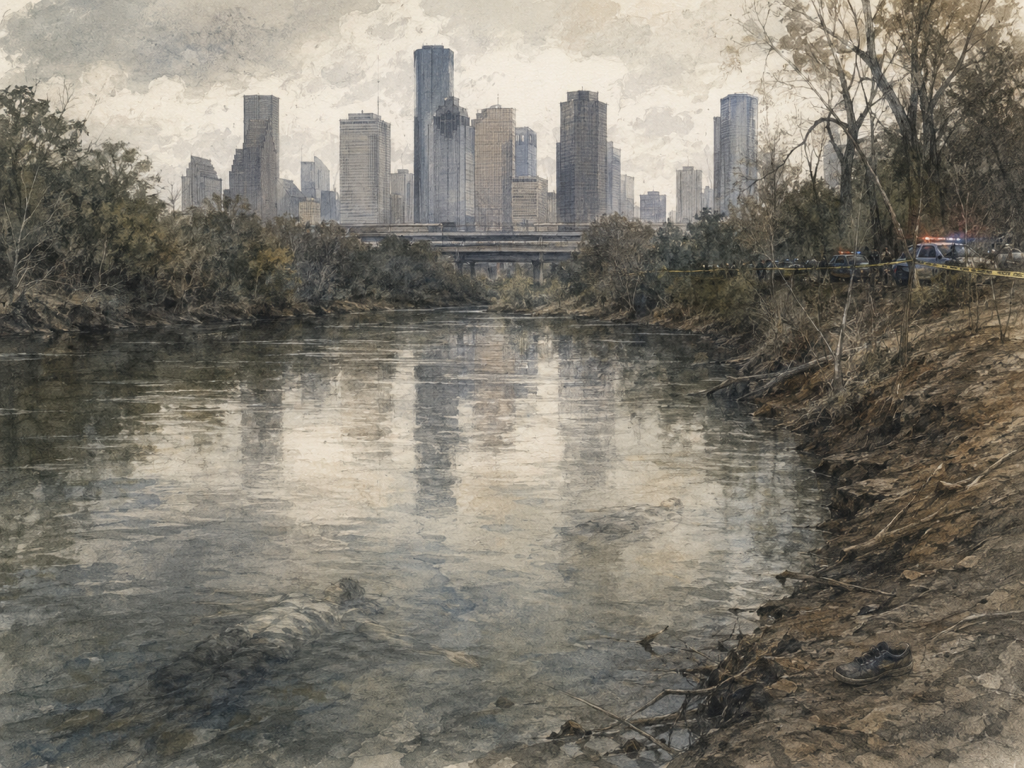
A man was found Wednesday morning in Brays Bayou near Martin Luther King Boulevard and the University of Houston. His identity and cause of death have not yet been determined. Two days earlier, another man’s decomposing body was found near Buffalo Bayou. Police said there were no obvious wounds, but the final answer must come from the medical examiner. (Houston Chronicle)
People will immediately ask whether Houston has a serial killer.
Authorities say there is no evidence connecting the deaths. That may be true. Bodies recovered from the bayous have died from many causes: drowning, suicide, drugs, illness, accidents and homicide. Houston also has thousands of miles of waterways, some with steep banks, hidden debris and currents that make escape difficult. (KPRC)
But “there is no serial killer” has become Houston’s answer to a question that is too small.
The larger question is why our bayous keep becoming morgues.
By February, records showed that 208 bodies had been recovered from Houston-area bayous since 2017. About 40 percent of the cases reviewed were classified as undetermined—meaning investigators could not firmly label them accidents, suicides, or homicides. (KPRC)
Undetermined does not mean murdered.
It means undetermined.
It means a human being entered the water, died, and sometimes left behind a family that still does not know how or why.
Perhaps there is no single monster stalking the bayous.
Perhaps the monster is larger and less dramatic: homelessness, addiction, mental illness, poor lighting, dangerous banks, inadequate barriers, missing surveillance, and people living so far outside society that nobody notices they are gone until the water gives them back.
Houston officials should stop treating every new body as an isolated incident merely because the deaths cannot be tied to one killer.
Two hundred and eight bodies are not isolated.
They are a pattern—even when the pattern has many causes.
The latest death may prove to be an accident. It may be suicide, illness, drugs, or homicide. Until the autopsy is completed, no one should pretend to know.
But Houston already knows enough to act.
The city should map every recovery point, identify the most dangerous stretches, improve lighting and barriers, expand outreach to people living near the waterways, and publicly account for every death—identified, unidentified, solved or still undetermined.
Houston likes to call itself the Bayou City.
A city should know why so many of its people are dying in the thing it uses as its name.