https://indd.adobe.com/view/6d07a0b2-1d37-43ad-b959-51fa09bfaf97
They Were Already Americans
Company E, the Mexican-American Texans Who Went to War
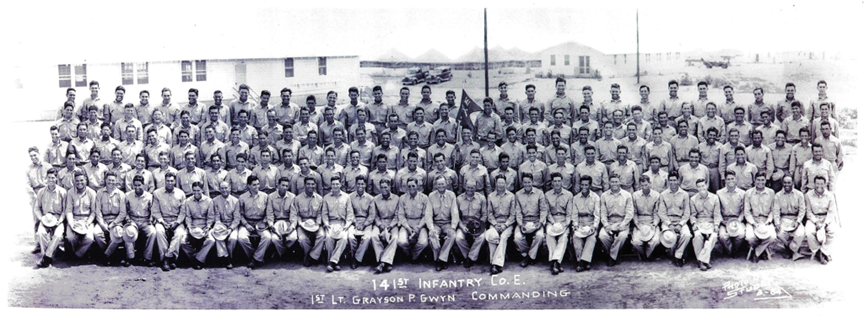
The 141st Infantry Regiment — “First Texas”
The 141st Infantry Regiment was part of the 36th Infantry Division, the Texas Division. Its military lineage reached deep into Texas history, and the regiment carried honors connected to the Republic of Texas, the Alamo, and San Jacinto. For World War II, it was federalized on November 25, 1940, and its men trained at Camp Bowie near Brownwood and later at other camps around the country.
Then there was Company E.
Company E had been organized in El Paso and federally recognized in 1923. Its enlisted ranks were Mexican American. The stated purpose of the unit included an idea that sounds extraordinary today: helping to “educate, train and Americanize” Mexican-American young men.
There was a problem with that idea. They were already Americans.
They were Texans. Many had been born in the United States, and some came from families whose roots in Texas and the border country went back generations. Yet they lived in a state where citizenship did not always mean acceptance. Mexican Americans could attend segregated schools, be shut out of jobs and businesses, and be treated as outsiders in communities where their families had lived for decades.
America organized a company partly to teach these men how to become Americans. Then it handed them rifles.
They Could Shoot
Company E quickly developed a reputation that had nothing to do with anybody’s theory about Americanization. The men could shoot.
The company achieved 100 percent weapons qualification, and its rifle team won the 141st Infantry Regiment championship eight consecutive years. Whatever anyone thought about their Spanish, their surnames or their Mexican ancestry, the targets did not care. Company E kept winning.
These were not poorly trained men waiting for the Army to turn them into soldiers. They were already one of the best-trained companies in the regiment.
Camp Bowie
When the Texas National Guard entered federal service, Company E moved to Camp Bowie near Brownwood. There the Army did something significant: Mexican-American soldiers from other Texas units were transferred into Company E. What had begun largely as an El Paso Mexican-American company became a concentration of Mexican-American soldiers from around Texas.
One of those men was Pablo Segura. Segura remembered that Company E’s noncommissioned officers spoke both English and Spanish, making the company useful in training soldiers whose English was limited.
There was an irony in that. The Army had placed these men together partly because officials thought they needed Americanization, yet it depended on them to train other American soldiers.
Outside the gates of Camp Bowie, another contradiction waited.
“No Mexicans or Dogs”
For older Mexican-American families, “No Mexicans” is not simply a sentence in a history book. Parents remembered those words, and some of their children remember that world too. They remembered restaurants that would not serve Mexicans, being told to use the back door, and signs that made clear who was welcome and who was not.
The soldiers of Company E encountered that Texas while wearing United States Army uniforms. Pablo Segura remembered going into Brownwood and trying to buy a Coke. He was refused. As Segura recalled it, the answer was:
“No, you’re still Mexican.”
The uniform did not change that. Neither did citizenship or the fact that he was training to fight for the United States.
One Brownwood incident became part of Company E’s history. Gabriel Navarrete had been promoted to sergeant, and some of the men went into town to celebrate. According to the account later preserved by historian Dave Gutierrez, they encountered a hamburger restaurant with the message “No Mexicans or dogs allowed.”
The soldiers were told that if they wanted food, it could be handed to them through the back door. These were American soldiers, in American uniforms, preparing for war, yet they were being told to go around back because they were Mexican.
Some of the men were furious. Navarrete stopped them from tearing the place apart and told them to return to camp.
Then their commander became involved.
Capt. John L. Chapin
Capt. John L. Chapin was Anglo, but he would become so closely identified with his Mexican-American soldiers that decades later surviving Company E veterans helped make sure an El Paso high school carried his name. The Brownwood restaurant incident helps explain why.
Chapin did not simply tell his men to forget what had happened. He went back to the restaurant with a colonel and confronted the management. They asked why American soldiers were being refused service. The answer remained essentially the same: the restaurant did not serve Mexicans.
The colonel answered that these men were Americans and soldiers. The restaurant still refused, so the Army responded in a language the restaurant could understand. The establishment was placed off limits to military personnel.
With thousands of soldiers around Camp Bowie, losing Army business mattered. The Mexican-American soldiers had been told to use the back door; their officers made sure the Army stopped coming through the front one.
That is the kind of thing men remember.
Why They Remembered Chapin
The restaurant was not the only reason Chapin earned his men’s loyalty. He spoke Spanish and understood the men he commanded. Accounts of his service say he passed up opportunities for advancement because he worried about leaving Company E under an officer who might not respect his soldiers.
That does not erase the discrimination surrounding the company. It makes the history more truthful. This was not simply a story of Mexicans on one side and Anglos on the other. It was about a society in which prejudice could be normal, and about individuals who chose whether to accept it.
Chapin chose not to. His men knew the difference.
Gabriel Navarrete’s Accent
The same Gabriel Navarrete who had stopped his soldiers from wrecking the Brownwood restaurant wanted to become an officer. He took the Officer Candidate School examination and passed the written test. Then came the oral examination, and he was rejected.
He tried again. He passed the written test again and was rejected after the oral examination again. Then he did it a third time.
Three written examinations. Three passes. Three rejections after the oral examination.
According to the account preserved by Gutierrez, Navarrete was told that his problem was his accent. The paper could not hear him speak. The men interviewing him could.
Pablo Segura Heard the Same Thing
If Navarrete’s experience stood alone, somebody might dismiss it as one bad examination board. Then there was Pablo Segura.
Segura also sought an officer’s commission. He remembered being rejected and asking why. The answer was direct:
“You have too much accent.”
Later Segura applied to the Army Air Corps. This time he was accepted and became a navigator and second lieutenant. After the war, he completed an engineering degree, moved to Houston, worked as a metallurgist, and became active in LULAC.
The man whose accent supposedly made him unsuitable to become an officer became one anyway.
The measurable tests often said these Mexican-American soldiers were good enough: 100 percent weapons qualification, eight consecutive rifle championships, written officer examinations passed. Trouble often began when measurement stopped, and judgment began. Someone heard an accent, saw a Mexican face or read a Spanish surname, and suddenly citizenship was not enough.
Soon those distinctions would matter much less.
Company E was going to war.
Part Two — The Rapido
Company E Goes Overseas
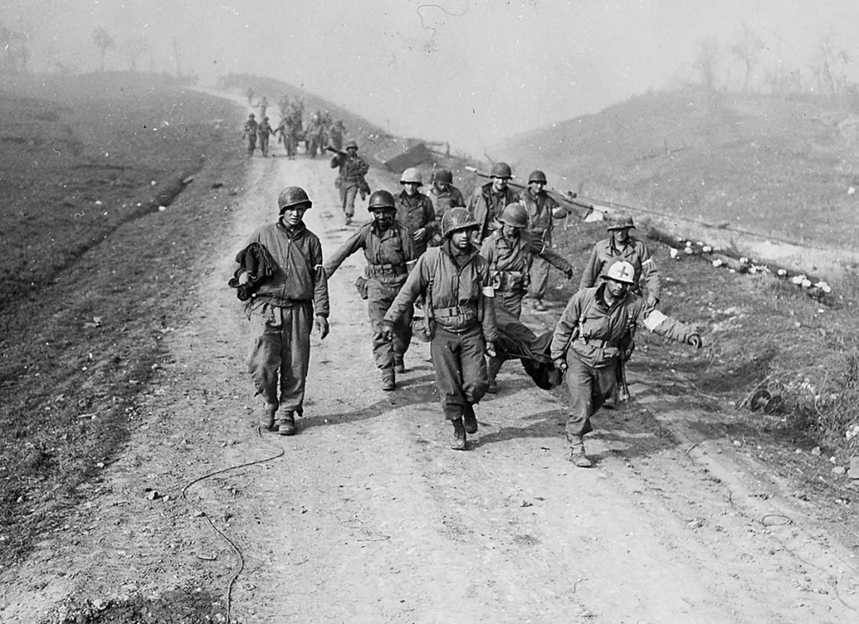
In April 1943, the 36th Infantry Division left the United States. Five months later, on September 9, 1943, the Texans landed at Salerno, Italy.
Company E was going into combat. The Mexican-American company Texas once hoped to “Americanize” was about to discover what America expected of it during war.
Salerno
Salerno nearly became a disaster. German counterattacks threatened the Allied beachhead, and the fighting became one of the first brutal tests of the 36th Infantry Division.
Among the men leading Company E soldiers was Gabriel Navarrete. At Camp Bowie, the Army had repeatedly decided that his accent counted against him as an officer candidate. At Salerno, nobody asked how he pronounced his words.
Navarrete was wounded while leading an advance. Later the Army commissioned him as an officer.
Combat had settled the question the examination boards could not.
North Through Italy
Salerno was only the beginning. The Allied armies pushed north through mountains and valleys where German forces had prepared one defensive position after another. Company E fought through Monte Rotondo and San Pietro, and the losses accumulated.
Men who had trained together for years disappeared from the ranks. Pfc. Lorenzo Macias, one of the original National Guardsmen, was killed on December 23, 1943.
The old Company E was being reduced one man at a time.
Chapin Is Wounded
During the fighting around San Pietro, John Chapin was wounded on December 16, 1943. The wound might have sent him home, but Chapin returned to Company E.
According to accounts preserved by the Texas Military Forces Museum, Chapin said he had brought his men overseas and intended to take them back to Texas—or die trying. Soon he learned that the 36th Division had been ordered to cross the Rapido River.
Chapin went back to his men.
The Rapido
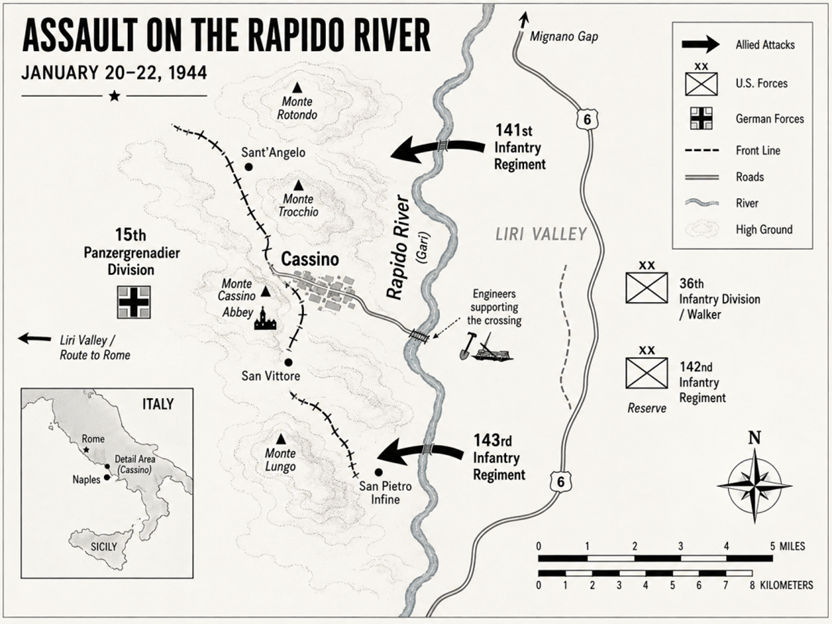
By January 1944, the German Gustav Line blocked the Allied advance toward Rome. The river the Americans commonly called the Rapido formed part of that defensive system near Cassino.
The approaches were flat and exposed. Likely crossing points could be targeted by German artillery. Minefields and wire protected the German positions, while machine guns, mortars and artillery covered the river.
The mission went to the 36th Infantry Division. Its commander, Maj. Gen. Fred L. Walker, believed the attack had little chance of success.
Before the assault, Walker wrote:
“We might succeed, but I do not know how we can.”
The order remained.
Mark Clark’s Order
Above Walker was Lt. Gen. Mark W. Clark, commander of the U.S. Fifth Army. Clark wanted the 36th Division to force a crossing as part of the larger Allied effort in central Italy. Walker objected, but he was overruled.
The 141st Infantry Regiment would attack in the northern sector, while the 143rd Infantry Regiment attacked farther south. Company E went forward with the 141st.
Into the River
The assault began on January 20, 1944. Men carried boats and bridging equipment across exposed ground while German artillery came down around them. Machine guns swept the approaches, mortars exploded among the infantry, and some soldiers drowned.
Others reached the western bank only to become trapped without sufficient supplies or reinforcements. Bridges needed to sustain the attack were repeatedly damaged or destroyed. Men who had crossed found themselves increasingly isolated.
The Rapido became a killing ground.
Chapin Goes With Them
John Chapin could have been somewhere else. He had been wounded only weeks earlier and could have remained in a hospital. Instead, he returned to Company E, and when his men went toward the river, Chapin went with them.
Company E succeeded in getting men across, but its foothold could not be sustained. Chapin was killed during the fighting and later awarded the Silver Star posthumously.
Years earlier in Brownwood, Chapin had stood beside his Mexican-American soldiers when a hamburger restaurant refused to serve them. Now he died beside them in Italy.
The veterans never forgot him.
154 Men
The assault lasted roughly two days, and the 36th Infantry Division suffered catastrophic losses. For Company E, the numbers were devastating.
According to Dave Gutierrez’s research, 154 men of Company E went into the Rapido operation. Afterward, only 27 enlisted men remained. The rest had been killed, wounded, captured or were missing.
Those numbers deserve emphasis because they tell the story more clearly than any speech could:
154 men went in. Twenty-seven remained.
Roll Call
On January 23, 1944, Company E held roll call. Twenty-seven enlisted men answered. No officers remained.
The Mexican-American company that had trained together, won rifle championships together, endured Brownwood together, and fought its way through Italy had effectively been destroyed. Replacements would arrive, and the name Company E would continue, but the old company was gone.
There is a reason the beginning of this story matters. Before the war, Texas officials talked about “Americanizing” Company E’s Mexican-American soldiers. These supposedly unfinished Americans became some of the best riflemen in the regiment, achieving 100 percent weapons qualification and winning eight consecutive rifle championships.
At Brownwood, some Texans would not let them eat at the front counter because they were Mexican.
At the Rapido, nobody asked whether they were American enough to cross the river.
The Japanese-American Soldiers Who Saved the Texans
The 141st Infantry’s war did not end at the Rapido. By October 1944, the 36th Division was fighting in the Vosges Mountains of France, and another group of Americans whose loyalty had been questioned was about to become part of the regiment’s history.
The 442nd Regimental Combat Team was a segregated Japanese-American unit. President Franklin Roosevelt approved its formation in 1943 after months of debate over whether Japanese Americans should even be permitted to serve in combat. Many of its mainland volunteers came from families that had been forced from their homes and confined in government incarceration camps.
On October 24, 1944, German forces surrounded the 1st Battalion, 141st Infantry Regiment in the Vosges Mountains. These were soldiers of the same 141st Infantry Regiment to which Company E belonged. Repeated attempts to reach the trapped men failed.
Then the 442nd was ordered to go in.
The Japanese-American soldiers had already been fighting hard in France. They had taken Bruyères and Biffontaine and had been given only a short rest when they were ordered back into combat to reach the trapped Texans. Rain, dense woods, steep ground, mines and hidden German machine-gun positions made the advance slow and costly.
For days the 442nd fought forward. On October 30, men of Company I finally reached the surrounded Texans. Two hundred eleven men of the 1st Battalion were brought out.
The price was extraordinary. U.S. Army accounts say the 442nd suffered more than 800 combat casualties in the fighting around the rescue of the Lost Battalion. The surviving Texans later honored the Japanese-American soldiers who had fought through to them.
It is difficult to miss the history contained in that moment. The 141st included Mexican-American Texans who had once been placed in a company partly to “Americanize” them. Now soldiers of that same regiment were being rescued by Japanese Americans whose own government had questioned whether men of Japanese ancestry could be trusted to fight for the United States.
Many of the Japanese-American soldiers were fighting while relatives and neighbors remained behind barbed wire in America. Yet when American soldiers were surrounded in a French forest, the Army called on the 442nd to bring them home.
They did.
Was It Necessary?
The anger over the Rapido did not disappear when the war ended. Veterans of the 36th Division remembered what had happened, and so did their officers.
In 1946, veterans demanded a congressional investigation and called the attack a “colossal blunder.” Congress held hearings into whether the division had been unnecessarily sacrificed. The inquiry did not punish Mark Clark, and Army authorities defended the operation, but the veterans were never entirely satisfied.
For Company E, the argument over strategy could never change the arithmetic: 154 went in, 27 remained, and John Chapin was dead.
Some of those 27 men continued fighting.
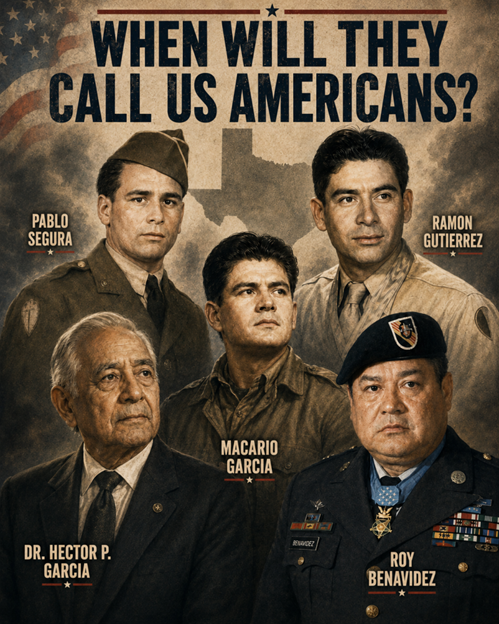
One of them was Ramon Gutierrez.
Part Three — The Men Who Came Home
One of the Twenty-Seven
Ramon Garza Gutierrez was from Del Rio, Texas. He had already distinguished himself at Salerno, where his Browning Automatic Rifle was shot from his hands during combat. Gutierrez continued forward and attacked a German machine-gun position.
The Army awarded him the Silver Star. A Soviet military observer also learned of his actions and recommended him for the Order of the Patriotic War, Second Degree.
But first Ramon Gutierrez had to survive the rest of Italy.
And he had to survive the Rapido.
Captured
Gutierrez was among the Company E men who crossed the river, and the Germans captured him. He was being marched toward the German rear through heavy fog when he kept stumbling over objects on the ground.
They were dead American soldiers.
At one point Gutierrez fell and stayed down. The Germans guarding him continued walking and apparently did not notice that their prisoner was no longer behind them.
Gutierrez remained on the German side for hours before eventually making his way back to American lines. He returned without his weapon, but he returned.
From Private to Sergeant
Company E had lost so many experienced men that survivors suddenly became extremely valuable. Gutierrez had been a private first class. After the Rapido, he was promoted to sergeant.
The Army needed men who had already survived combat. Company E was rebuilt with replacements, and the war continued north.
So did Gutierrez.
Captured Again
Later in Italy, Gutierrez was captured a second time. This time the Germans knew from his stripes that he was a sergeant.
According to the family account preserved by Dave Gutierrez, German soldiers beat him while demanding information and stabbed him with bayonets. He carried the scars for the rest of his life.
Then an Allied bomb or artillery round struck the building where he was being held and created an opening. Gutierrez escaped.
Again.
The Italians Who Hid Him
Italian civilians found the wounded American and hid him from German troops. Helping an escaped Allied prisoner placed those civilians in danger too, but they kept Gutierrez hidden until American forces reached the area.
He was then sent to a hospital.
He had been captured twice and escaped twice.
A Medal From the Soviet Union
Eventually Gutierrez returned to the United States. The Soviet government wanted to decorate him for his actions at Salerno, and he received the Order of the Patriotic War, Second Degree.
Consider the journey. A Mexican-American Texan from Del Rio joined a company created in an era when officials spoke of “Americanizing” men like him. He fought Germans at Salerno, survived the Rapido, was captured and escaped, was captured again, beaten and wounded, and escaped again. Italian civilians hid him, and then the Soviet Union honored him for bravery.
It should have made for quite a homecoming.
Except that Texas had not changed very much.
They Came Home to the Same Texas
The men came home from Europe wearing American uniforms and American decorations. Many returned to communities where Mexican Americans could still be refused service. The signs had not all disappeared, and neither had the back doors or the assumptions behind them.
The soldiers had changed.
Texas had not changed nearly enough.
This Was Never Only an El Paso Story
Company E began in El Paso, but after mobilization Mexican-American soldiers from other parts of Texas were placed into the company. The story spread across the state.
Ramon Gutierrez came from Del Rio. Pedro T. Soto came from Kingsville and was killed during the Italian campaign. Other soldiers came from Uvalde, Sonora, and communities throughout Texas.
They were not figures from some distant Mexican-American history. They came from towns still sitting along South Texas highways, and their families remained there.
The Men Did Not Always Talk
Many veterans returned home and said little about what had happened. A child might know that his father fought in Italy, or an uncle might say only that he had been in the Army. There might be a photograph, a medal, or a uniform stored away.
Ask what happened and the answer might be only a few words.
Behind those few words could be Salerno, San Pietro, the Rapido, a dead friend, a German prison or a wound. The men came home, but part of the war often stayed with them.
Mexican-American Veterans Had Had Enough
Something else happened when thousands of Mexican-American veterans came home. They had served as Americans. They had fought as Americans. They had been wounded as Americans. Many were no longer willing to quietly accept being treated as something less.
In Corpus Christi on March 26, 1948, hundreds of Mexican-American veterans gathered under the leadership of another World War II veteran, Dr. Héctor P. García. They formed the American G.I. Forum, and one of their first fights was basic: Mexican-American veterans were having trouble receiving benefits they had earned through military service.
The Forum demanded those benefits, then expanded into battles over education, hospital care, voting rights, and civil rights. Before the war, Mexican Americans had been told to prove their Americanism. After the war, veterans began demanding that America prove its promises.
Felix Longoria
The contradiction became national news in 1949. Felix Longoria, a Mexican-American soldier from Three Rivers, Texas, had been killed in the Philippines. When his remains were returned home, his family was denied use of a local funeral chapel.
Dr. Héctor García and the American G.I. Forum protested, and the dispute became known as the Felix Longoria Affair. Senator Lyndon B. Johnson arranged for Longoria to receive burial with full military honors at Arlington National Cemetery.
Longoria had died for the United States. His family still had to fight over whether he would be treated equally after death.
The Brownwood hamburger restaurant had not been an isolated incident. It was part of something larger.
Ramon Came Home
Ramon Gutierrez returned to civilian life. He married Consuelo “Connie” Sanchez, herself a wartime Navy WAVE, raised a family, and later continued military service in Texas. He eventually received an officer’s commission and died in 1993.
For years, much of his story remained known principally within his family. Then his cousin, Dave Gutierrez, began asking questions.
He started with Ramon. The search eventually led him to Company E and dozens of families whose fathers, grandfathers, and uncles had served. The result became Patriots from the Barrio.
Sometimes history disappears because records are destroyed. Sometimes it disappears because people deliberately hide it. And sometimes it disappears because the men who lived it simply did not talk.
Epilogue — The War Ended. “No Mexicans” Did Not.
Pablo Segura
Pablo Segura came home, finished college, and became an engineer. He settled in Houston and became active in LULAC.
The man who once told him, “You have too much accent,” had finished the war as an officer.
Segura later expressed the answer to the entire “Americanization” experiment in one sentence:
“You don’t have to lose your roots to be a proud American.”
Macario García
Macario García was not a Company E soldier, but he belonged to the same generation and the same Texas. García fought in World War II with the 4th Infantry Division and attacked enemy machine-gun positions in Germany despite being wounded.
President Harry Truman presented him the Medal of Honor on August 23, 1945. Then García returned to the Sugar Land area.
Only weeks after receiving the nation’s highest military decoration, García entered the Oasis Cafe in Richmond and was refused service because he was Hispanic. A fight followed, and García—the Medal of Honor recipient—was arrested.
The medal said he was one of America’s greatest heroes.
The restaurant still saw a Mexican.
Dr. Héctor P. García
Héctor García had served as an Army doctor during World War II and returned to Corpus Christi as a major. There he discovered that Mexican-American veterans were still having to fight for benefits and treatment they had earned.
He organized the American G.I. Forum.
The veterans had fought for America overseas. Now they would fight America when it failed to live up to its own promises.
And Then Came Vietnam
Another generation went to war. Roy Benavidez, a Mexican-American Texan, joined the Army and became a Green Beret.
On May 2, 1968, Benavidez voluntarily entered a battle to rescue a surrounded Special Forces team. For hours he moved through intense fire while repeatedly wounded, rescuing men and helping recover classified material.
President Ronald Reagan presented Benavidez with the Medal of Honor in 1981. Yet accounts of Benavidez’s life also record that he experienced discrimination because of his Mexican-American ethnicity, including being denied service and assaulted outside a restaurant.
Think about the distance between those stories. Company E trained before World War II and encountered “No Mexicans.” Macario García returned from World War II wearing the Medal of Honor and was refused service. Héctor García organized veterans because military service had still not produced equal treatment. Then came Korea and Vietnam, and Roy Benavidez became one of America’s most celebrated soldiers.
Still the question remained.
When Will They Call Us Americans?
For generations, Americans of European ancestry could become Irish-American, Italian-American, Polish-American or German-American, and eventually the first word increasingly became ancestry. American came first.
For Mexican Americans, the word Mexican often continued to carry a different weight. It could mean foreign, different, or not quite American enough.
Japanese Americans knew another version of the same question. Their government had confined families because of their ancestry, debated whether Japanese Americans could be trusted to serve, and then sent the 442nd into some of the hardest fighting of the war. When 211 Texas soldiers of the 141st were trapped behind German lines, those Japanese-American soldiers fought through to them.
Company E shows how old that assumption is. Texas organized a company of American citizens and spoke about Americanizing them. Those men became some of the finest riflemen in the 141st Infantry Regiment. They were refused hamburgers because they were Mexican, then crossed the Atlantic and fought through Italy.
At the Rapido, Company E went from approximately 154 men to 27. John Chapin died with them. Ramon Gutierrez was captured and escaped, then was captured again and escaped again. A foreign country decorated him for bravery.
The survivors came home, and Mexican-American veterans still had to fight to be treated as Americans.
The problem was never that these men had failed to prove themselves.
They were Mexican Americans, Texans, and Americans. They had been all three from the beginning.