The Trail That Did Not Lead to a Card
My family followed a different trail.
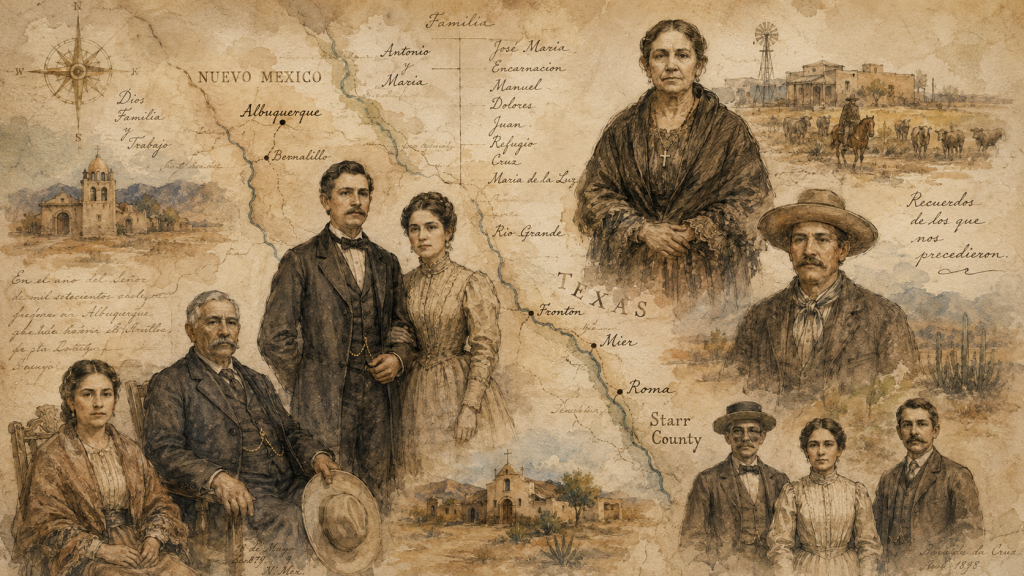
It began in New Mexico in the 1600s, around Albuquerque and Bernalillo, in a country surrounded by the Sandia, Santa Ana, and San Felipe Pueblos. Those old Spanish settlements did not exist apart from the Native world. They grew inside it.
The people who appear in the records with Spanish names were not necessarily people of purely Spanish blood. Pueblo people entered colonial families through marriage, baptism and adoption. Genízaros—Apache, Navajo, Comanche, Ute and others captured or traded on the frontier—were baptized, given Christian names and absorbed into Hispanic settlements. Within a few generations, the Native identity might disappear from the church record even though the ancestry continued through the children.
The priest wrote down the baptism.
He did not write down everything that had happened before it.
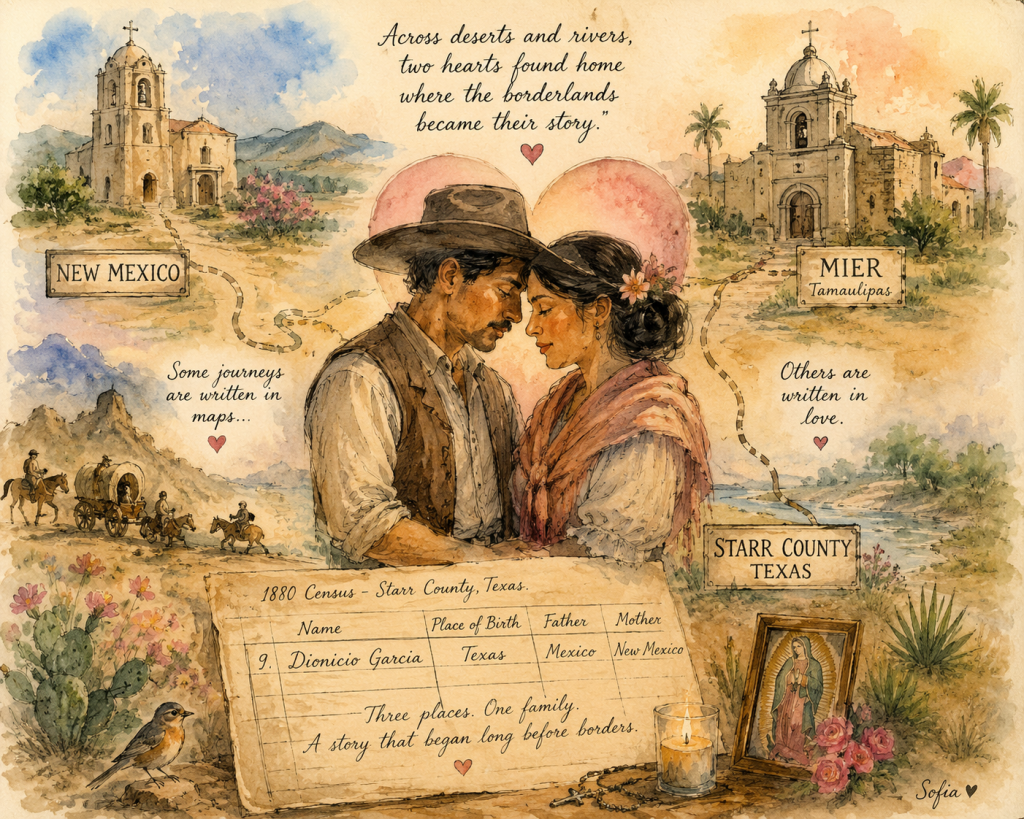
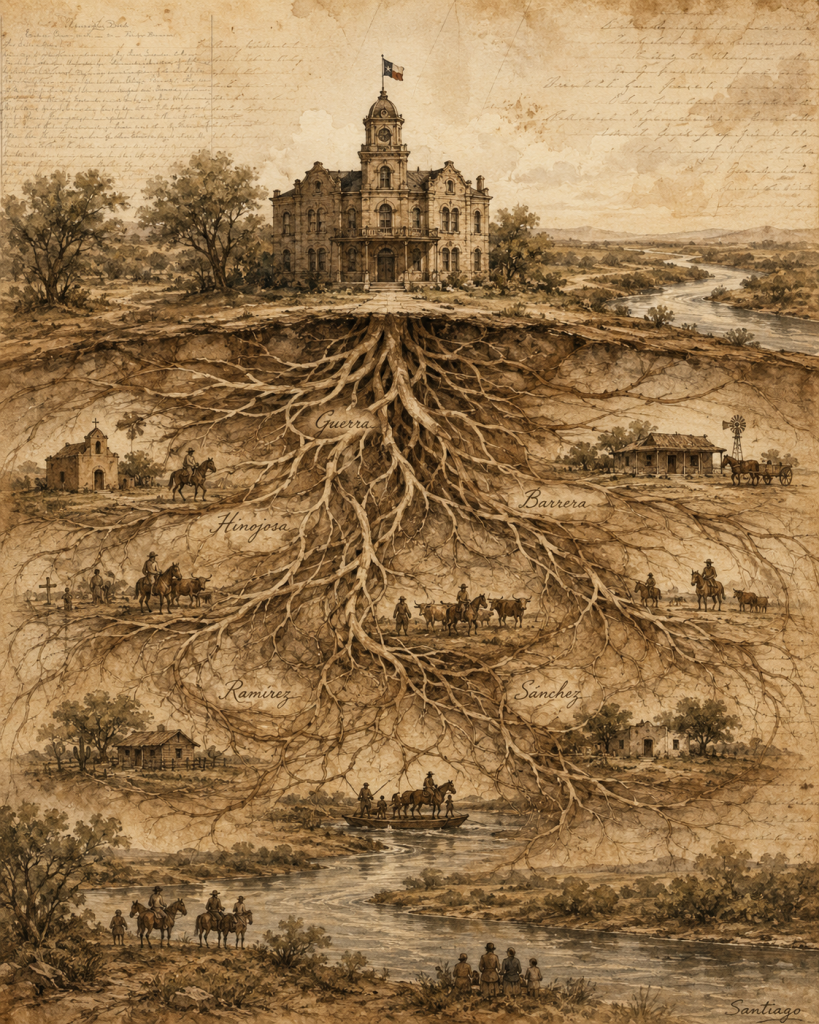
Then part of the family story moved south and east, into the borderlands that would become Starr County, Texas. By the 1700s, families were moving north from Mier, Camargo and other Rio Grande settlements onto Spanish land grants. They received long strips of land running toward the river—porciones meant to give each family water, pasture and a place to build a life.
Once again, they were not entering empty country.
The Lower Rio Grande belonged to Native people long before Spain drew lines on maps or issued land grants. Local Indigenous communities were pushed into missions, ranches and Spanish-speaking settlements. They were baptized, assigned surnames and gradually folded into the people later called Tejanos or Mexican Americans. Lipan Apache moved through the same country, sometimes fighting the settlements, sometimes trading with them and sometimes joining them.
That is how ancestry disappears without people disappearing.
A Native woman becomes María in a baptismal record. Her daughter marries a García, a Barrera or a Hinojosa. Her grandchildren speak Spanish and attend Mass. A century later, a census taker records them as Mexican. Another century passes, the river becomes an international boundary, and their descendants are told that the Native people were here before them—as though they were speaking about someone else.
My DNA estimate says approximately 32 percent Indigenous American. That is not the trace of one mysterious ancestor hidden deep in the family tree. It is too much for that. It suggests repeated Indigenous ancestry entering the family over generations, in New Mexico and again in the Texas-Mexico borderlands.
But DNA cannot issue a tribal card.
It cannot tell me which percentage came from Pueblo people, which from Apache people, which from Indigenous communities along the Rio Grande, or which came north through Mexico before anyone began keeping the records that survived. It can tell me that the ancestry is there. It cannot return the names that history erased.
That is the difference between my trail and Mullin’s.
His family trail reached the Dawes Rolls. A government employee wrote down an ancestor’s name, and that name became permanent. It survived prejudice, assimilation and the passing of generations. Today the Cherokee Nation can open the ledger, follow the family line and say: this man is one of ours.
My trail leads to older church books, Spanish land grants, marriage records, censuses, and DNA. It crosses Pueblo country, New Spain, Mexico, the Republic of Texas and the United States. It survives in surnames, family stories and the faces of descendants.
But it does not end at a roll created by the United States government.
It ends at the border.
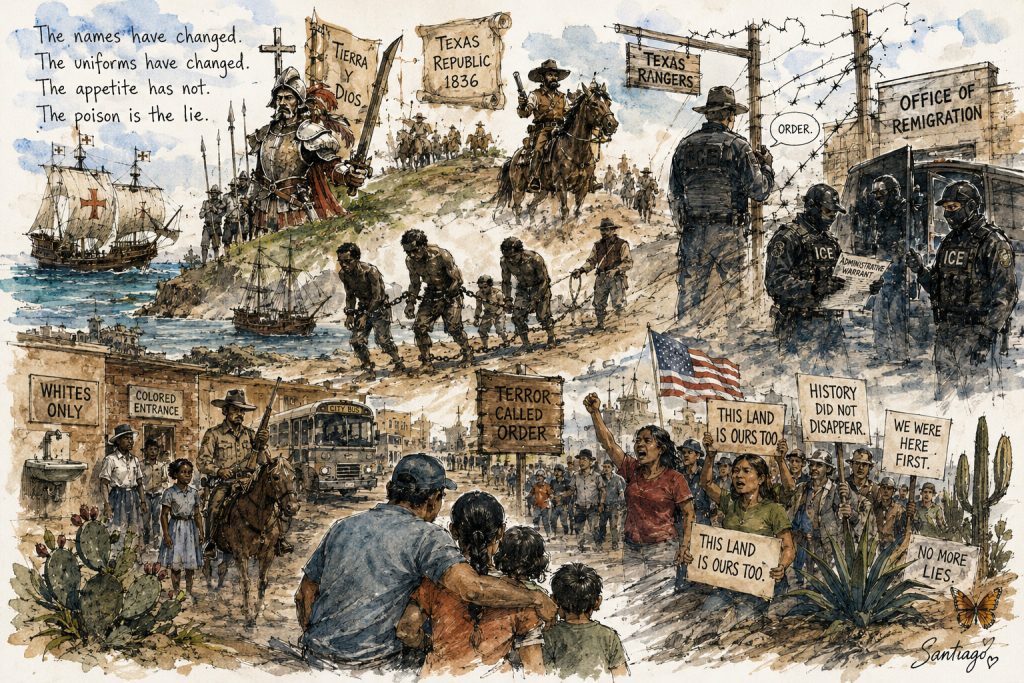
That is the irony. Mullin’s Native identity survived because the federal government documented it while breaking up Native land. My family’s Indigenous identity faded because Spain, Mexico, and the United States absorbed Native people into another category and eventually called their descendants Mexican.
One family was placed on a list.
The other was placed on the other side of a border.
Nearly sixty years ago, when I lived in Oklahoma, I dated a young woman who identified as Native American. Had we married, and had she been enrolled in a nation that allowed her children to qualify through her line, those children might have possessed something I never could give them: official tribal citizenship.
They might have inherited a card from their mother while inheriting much of their Indigenous blood from both sides of the family.
Life turned another way. The past cannot be brought back, and I am content with the history I have. I do not need to claim membership in a tribe that has not claimed me.
But I understand the peculiar bargain now.
Markwayne Mullin is Native American because his nation says he is. Its sovereignty gives it that right. I am a descendant of Indigenous people because my family records, geography and DNA tell me so. Those are not the same thing.
One is citizenship.
The other is ancestry.
One comes with recognition.
The other comes with a trail four hundred years long—and no card waiting at the end