The Things They Refused to Leave Behind
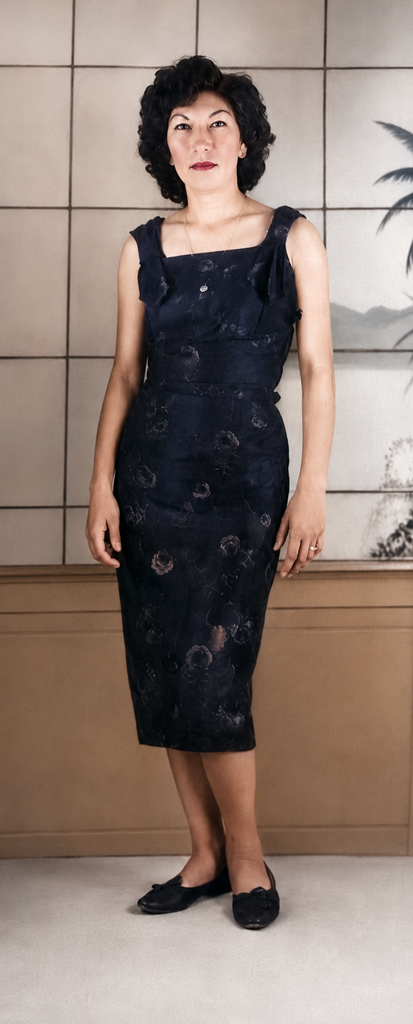
To my cousins, this is a little of what I have learned about your mother and father—not simply from records, but from the stories you have shared.
Your mother, Juanita García de la Cruz, was a child of Fronton and of the Depression generation. She grew up in a family where survival often came before schooling. She left school after the third grade because the family needed her help.
But she never stopped wanting an education.
Years passed. She married. Children came. The responsibilities that had taken her out of school as a girl were replaced by the responsibilities of being a mother. Yet when her children were finally in school, Juanita did something remarkable: she went back.
She attended night classes faithfully and earned her GED, completing the education that poverty had interrupted years before. She continued to cosmetology school, then traveled all the way to Austin to take the state examination. She passed and became a licensed cosmetologist.
At some point, another door opened. She received a letter offering her an opportunity to attend Pan American University in Edinburg. By then, however, five of her children were still in school. Transportation was difficult, Edinburg was too far away, and once again Juanita put the needs of her family ahead of her own opportunity.
That does not make the letter a story about something she failed to do.
It tells us how far she had come.
The little girl from Fronton who had been taken out of school after third grade had educated herself so successfully that college had become a possibility.
And then she did something even more important.
She made education possible for her children. At least two of her daughters became teachers. What poverty had interrupted in Juanita’s life continued through the next generation.
Your father, Reynaldo De la Cruz, followed a different road but carried much of the same determination.
He left school in the eleventh grade and never received a traditional high-school diploma. But no one could have called Reynaldo uneducated in the larger meaning of that word.
He worked for Military Water Supply. He played in a musical group on weekends. There was a plant nursery beside the house where plants were raised and sold. He and a friend started a backhoe business—and one of his children even got recruited to design the business card. He performed serenades for Mother’s Day and other occasions.
Reynaldo always seemed to have something going.
He understood work because he had lived it. Perhaps that helps explain another important part of his life.
During the great Starr County farmworker struggle of the 1960s, Reynaldo stood with the workers. His name appears in the history of the 1966 melon strike, when farmworkers challenged growers for better wages and working conditions. He was arrested during the struggle, and the episode became part of the federal court record.
But according to his family, his commitment did not end when the strike ended. He continued working with the United Farm Workers and César Chávez throughout his life.
That tells us something about the man.
Reynaldo knew what it meant to work with your hands. He knew what a paycheck meant to a family. He knew why a man or woman might accept almost any wage because children needed to eat. And he believed workers deserved something better.
Juanita and Reynaldo were not people whose lives followed a neat path.
She left school in third grade and found her way back.
He left in eleventh grade and built a life out of work, music, small businesses, and causes he believed in.
They belonged to a generation of Mexican-American families for whom education and opportunity were often interrupted by something more immediate: the family needed you now.
That is why old census records can fool us.
A census might say:
Third grade.
It cannot say:
She went back at night after raising children.
It cannot say:
She earned her GED.
It cannot say:
She went to cosmetology school and traveled to Austin to take her examination.
It cannot say:
Two of her daughters became teachers.
And beside Reynaldo’s name, a record might say:
Eleventh grade.
It cannot say:
Musician. Nursery owner. Entrepreneur. Serenader. Farmworker activist. Father.
Those things have to be remembered by the people who knew them.
Juanita and Reynaldo were children of a hard generation. Poverty narrowed their choices, but they refused to allow those narrow choices to become the boundaries of their children’s lives.
That may be their greatest accomplishment.
They did not get every opportunity they deserved.
They helped make sure their children got more.