My youngest brother, Joel, recorded my parents around 2001-2002 and asked them questions about their early lives. I am very thankful to him because it adds to the story of who our mother, Otalia García Barrera, was.
Barrera-García: Fronton, the River, and the Harvests
By Manuel “Meme” Barrera
My mother, Otalia García Barrera, remembered a childhood home in Fronton with one room, a dirt floor, and a separate kitchen where cooking was done on a wood-burning stove. There were eleven people in the family and only one bed. Two rooms were added later, although the timing of those additions is uncertain.
Those details came back to us through a recently recovered video. In it, she remembered the house, the animals, the water her father brought from the Rio Grande, the fights with her siblings, and the places where the family went to work. They add something that census records cannot give us: her account of daily life.
A cow, a goat, and two mules
Keeping the dirt floor clean took its own method. They sprinkled water over it before sweeping, a detail my mother still remembered many years later. The floor was part of the house they lived in, and she could explain how they cared for it.
She said they were “rich” because they had a cow and a goat. She milked both, but the goat was harder to manage because it kicked. To milk it, she held one of its legs between her own legs.
She also said they were “lucky” because they owned a wagon and two mules. Her father, Eduardo García, used them to haul water from the Rio Grande. The family had built a square or rectangular concrete storage tank, which she remembered as being approximately five feet high, to hold the water for cooking, bathing, and other household needs.
The river supplied their household water, but somebody had to go get it. Eduardo made those trips with the wagon and mules, bringing the water back to the house. The tank, the animals, and the wagon were practical possessions that helped the family live.
Her memories also included the ordinary quarrels of a large family. She remembered chasing her younger brother Guadalupe round and round. Alongside the work and crowded house, there were siblings fighting and a sister chasing her brother.
The family went together
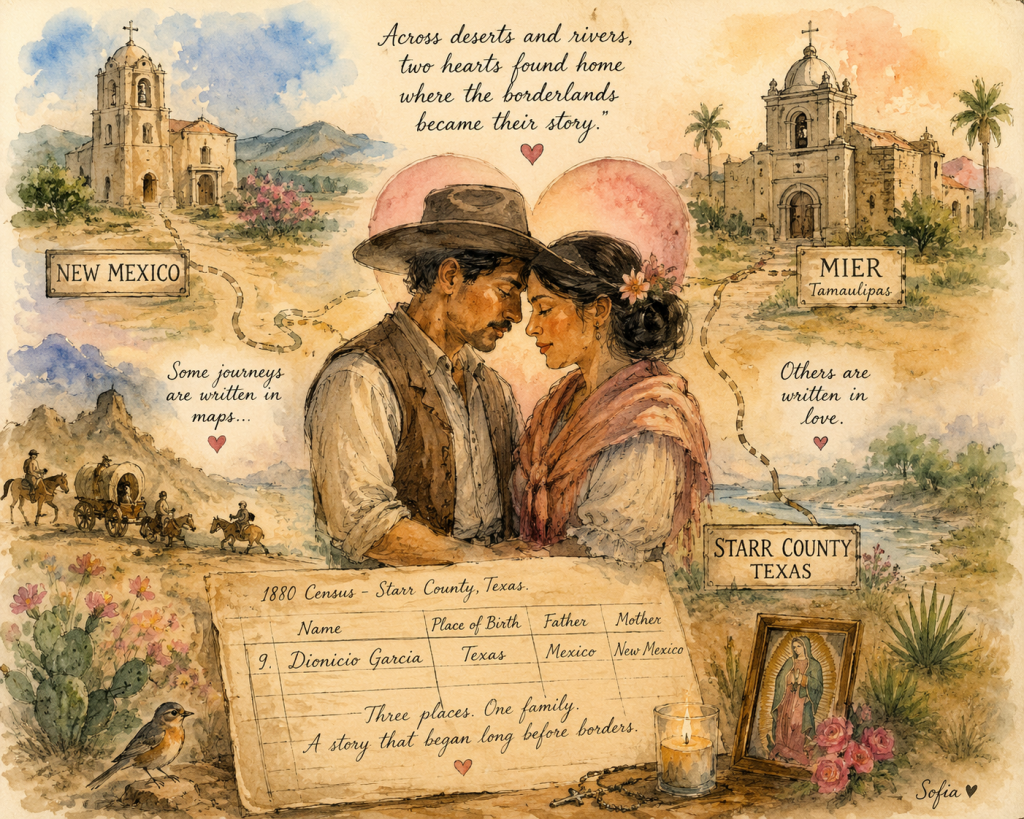
Fronton was home, even when earning a living took the family far away. In the earlier account of my mother’s life, the 1940 census identified Eduardo as a tenant farmer; the 1950 census identified him as a farm laborer. Those entries record two points in his working life, while her memories help describe the years between them.
Eduardo owned a truck, and my mother remembered that the whole family traveled together on it. They went where there was work to be done. Her recollections now place them in Mississippi picking cotton, as well as in Michigan picking cherries.
My grandmother Paula sustained that traveling household through her cooking. She had breakfast ready before the family left for the fields, prepared lunch for them to take along, and had dinner ready when they returned. Feeding a large working family was a daily job in itself.
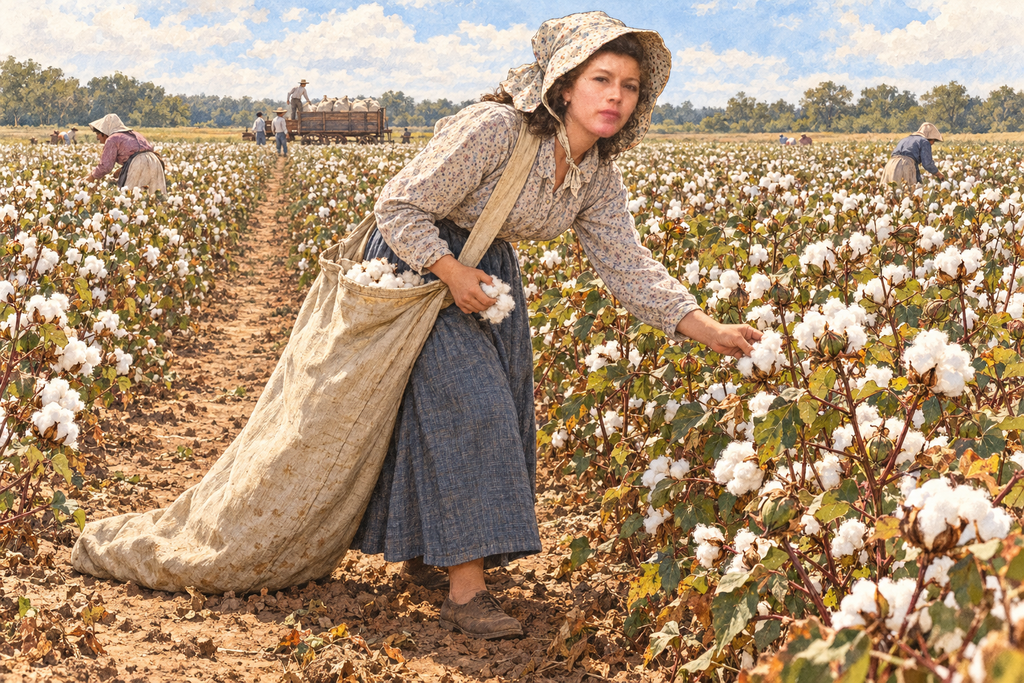
I later worked with my grandparents in the cotton fields around Driscoll. We wore long sleeves to protect our arms from the sun and from the cotton plants. That is a detail I remember from doing the work myself, just as I remember days that began at sunup and ended at sundown.
Mississippi, and the rain
My mother said that the family did not get much work done during one Mississippi cotton-picking stay because it hardly ever stopped raining. Around 1941 is now our best estimate for that trip. Born in 1926, she would have been about fifteen, close to the age of sixteen I had initially estimated.
A newspaper clipping from September 1941 gives us a contemporary view of the demand for workers. In an Associated Press dispatch datelined Indianola, Mississippi, September 16, the report said that several thousand Mexicans had been brought from Texas and that several hundred additional migrant workers had arrived. An acute shortage of labor remained, even though picking wages had doubled in some places, rising from seventy-five cents to a dollar and fifty cents per hundred pounds.
That report does not identify our family or the farm where they worked. It does document Texas workers arriving in Mississippi during the same period we are investigating. Indianola, in Sunflower County, gives us another place to look for records of recruitment and harvest conditions.
The rain also appears in contemporary records. The Federal Reserve Bank of St. Louis’s November 28, 1941 review described heavy rainfall during October and early November, delayed farm work, and extremely wet conditions in its cotton discussion. Most of the regional crop had nevertheless been harvested by the time of the report; the broader harvest figures cannot tell us how much work one traveling family managed to obtain.
My brother asked her whether they had seen Black people picking cotton. She answered that they had seen none doing that work. That was her observation of the places she experienced, and it belongs in the record of what she remembered.
She also recalled crossing a river on a vessel that could carry many trucks and other things. The Mississippi River is our leading possibility. Vehicle ferries crossed it during that period, including the Helena–Glendale service between Arkansas and Mississippi, but we have not identified the family’s particular crossing. law.justia.com
Cherries in Michigan, and home in Fronton
Michigan was another part of her working life. She remembered picking cherries there, although the town’s name has been lost. I also remember her mentioning sugar beets, but that recollection is less certain, and we do not know whether the Mississippi and Michigan memories came from the same year’s travels.
The family’s history now reaches from their house in Fronton to Mississippi cotton fields and Michigan cherry orchards. The video lets us hear more of the life behind those journeys: a dirt floor that needed sweeping, a goat that kicked, a wagon drawn by two mules, and water brought home from the Rio Grande. My mother remembered those things along with the work.
When she said they were “rich” or “lucky,” she named what they had: animals that gave milk and the means to haul water. Her description of one room and one bed also tells us how little space and furniture eleven people shared. Both belonged to the childhood she remembered.
My mother married Manuel López Barrera in 1948, at twenty-two. By then, her life had already included work far from Fronton and journeys with her parents and siblings. Many years later, she could still tell us about those harvests—and about chasing Guadalupe round and round.
The image below shows the truck where the cotton would be dumped; one would start from the wagon, go to the end of the row, and then return on a row where the cotton had not been picked. One threw the bag of cotton, sometimes weighing over a hundred pounds, over their shoulder and took it to be weighed. There, if thirsty, was a barrel with ice-cold water, one tin cup for everyone. The strap would cross your body, and they had to be long enough to get two rows, if full, one would have to walk carrying the sack all the way to the truck and return to where you were.