After I published my article on the Massacre at Porvenir, a reader asked how I had learned about the unpaid wages. That was a story their family had passed down. A man who said he was Chico Cano’s great-grandson brought another version to my attention.
The gabachos had long called Francisco “Chico” Cano a bandit, and the Rangers blamed him for the raid on the Brite Ranch. According to one version, the raid was payback for the rape of women who lived on riverfront land that Lucas Charles Brite was said to want. I haven’t been able to verify that account. There’s even an account that Brite met with Cano and believed him when he denied taking part in the raid. Refusing to Forget’s account of Chico Cano
So I went back to the newspapers. The Christmas raid took place on December 25, 1917. The cavalry pursued the raiders into Mexico the next day and returned to Texas that evening. A January 4 newspaper carried a report of another raid late on January 3, with no details. Then, on January 28, the Rangers and local ranchers, with help from U.S. soldiers, rounded up men and boys at Porvenir. What tied those men to either raid? Brite Ranch raid · January 4, 1918, Morning Oregonian · Porvenir massacre
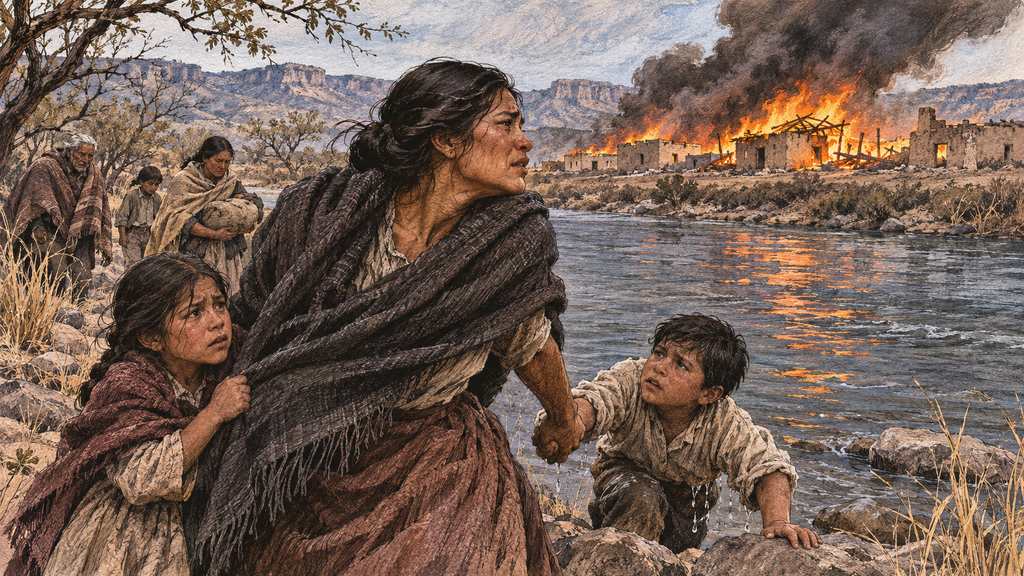
José Tomás Canales put the survivors’ testimony before the Texas Legislature and called the killings cold-blooded murder. Nobody was prosecuted. The part I keep coming back to is what happened after the fifteen men and boys were killed. The surviving families fled to Mexico. Within days, soldiers went back and burned the village. If I had to venture a guess, I’d say somebody wanted that land. Why burn the homes after the people were already gone? Canales and the Porvenir evidence · San Antonio Express-News on the burning of the village
Following the land may take trips to archives in Mexico. I’m too old for that kind of legwork, and reading old Spanish cursive is beyond me. Maybe some of the families whose people were killed at Porvenir already have a name, a letter, or a story about who moved in after they fled. That might tell us who first used the land, years before a deed ever showed who wound up owning it.
The trail of who wound up owning the land is beyond my ability, as it would require trips to Mexico; I am too old for that, and the ability to read Spanish, which I don’t, and read cursive in Spanish at that.
Maybe some of the family members of those massacred can do the investigation and see if it was just to kill the Mexicans and take their property.
Fifteen men and boys were murdered at Porvenir, Texas, on January 28, 1918. Their families fled across the Rio Grande into Mexico. Within days, U.S. soldiers returned and burned the village. The dates matter because the Rangers used the Christmas Day raid on the Brite Ranch to explain why they went to Porvenir. A month after the cavalry had already chased the Christmas raiders into Mexico and returned to Texas, armed men were taking farmers and their sons out of their homes. What happened in between? Handbook of Texas on Porvenir · San Antonio Express-News on the destruction of the village · Handbook of Texas on the Brite Ranch raid
On December 25, 1917, mail carrier Mickey Welch and two Mexican passengers were killed at the Brite Ranch. The next day, the cavalry crossed at Los Fresnos ford and pursued the raiders into Mexico. In the December 28 El Paso Morning Times clipping, Captain Fiske reported that his men had killed ten in a running fight. The Associated Press dispatch on the same page gave the military’s overall count as eighteen. Then on December 29, Ranger Captain James Monroe Fox wrote that his company had killed about twenty-five men he called bandits. As historian Monica Muñoz Martínez points out, Fox gave no date for his chase, no names for the dead, and no account of what happened to their bodies. Those reports were in print or in official correspondence weeks before the Porvenir killings. The names behind the December counts are still an open question. Handbook of Texas on the cavalry pursuit · Muñoz Martínez, The Injustice Never Leaves You, pp. 130–131
There was also a report of a second raid. On January 4, the Morning Oregonian published a dispatch from Marfa saying military headquarters had received word that the Brite Ranch had been raided again late on January 3. The message gave no details, and I haven’t found independent confirmation of the second raid. January 4, 1918, Morning Oregonian
Three weeks later, on January 24, Rangers and local civilians searched Porvenir and took three men prisoner. They released the three on January 26. Two days later, Rangers and ranchers returned with U.S. cavalrymen. Fifteen unarmed men and boys were taken from their families and shot. The Rangers invoked the Christmas raid. Fox claimed his men had come under fire and returned it. Investigations by Mexican consuls and U.S. officials found that the fifteen were unarmed and already in Ranger custody when they were killed. Fox said they had found items from the Brite Ranch but gave no description of what they found. What evidence tied those men to either raid? Muñoz Martínez on Fox’s account, pp. 131–132 · Handbook of Texas on the January raids and investigations
Manuel Moralez was one of the men they killed. He owned farmland, grew cotton, and diverted water from the Rio Grande to irrigate it. According to his relatives, he was a U.S. citizen. I have yet to find a record that independently confirms his citizenship. His widow, Francisca, said in a sworn statement that two masked civilians came into her house and took her husband away. After she learned he had been killed, she crossed into Mexico with her family. A judge finally approved his delayed death certificate in May 2025, more than a century after he was killed. Francisca Moralez’s affidavit in the Canales exhibits · Handbook of Texas on Moralez’s farm · Marfa Public Radio on the death certificates
The Texas Historical Commission estimates that about 140 people abandoned Porvenir. What reason did soldiers have to go back and burn their homes? The families had already lost fathers, sons, and neighbors. The destruction took away the homes they might have returned to. Texas Historical Commission marker · San Antonio Express-News on the burning
José Tomás Canales put evidence of the killings before the Texas Legislature in 1919. Mexico protested and later presented a claim on behalf of the survivors. Nobody was prosecuted, and the claims commission closed without hearing the families’ case. Their case file is Docket 561 at the National Archives. I would look there for the families’ descriptions of what they left behind. Texas State Library on the Canales investigation · Muñoz Martínez’s testimony to Congress, pp. 10–11
I want to know who first used the land after the families fled. Someone could have put cattle on it or worked the fields years before a deed recorded a change of ownership. I have yet to find a record naming who took possession or showing that anyone planned to take the land before the massacre. The killings drove the families out. The burning took away their homes. Who first put those fields or pastures back to use, and how soon after the soldiers burned the village?