Ramiro Cavazos died in McAllen on July 2 at the age of 99. His name may not be familiar to most Texans, but the sound he helped carry across dance halls, radio stations, movie screens, and national borders became part of the musical memory of South Texas and northern Mexico. (Texas Standard)
Before the records, the movies, and the tours, Cavazos washed dishes in a small Donna restaurant for $14 a week.
Mario Montes picked fruit in the fields. He played accordion. Cavazos sang and played guitar.
According to the story Cavazos later told, he was riding his bicycle through Donna when he saw two men playing music beside the road. One was Montes. Montes asked whether Cavazos was a musician. Cavazos said he played guitar and sang.
That was enough.
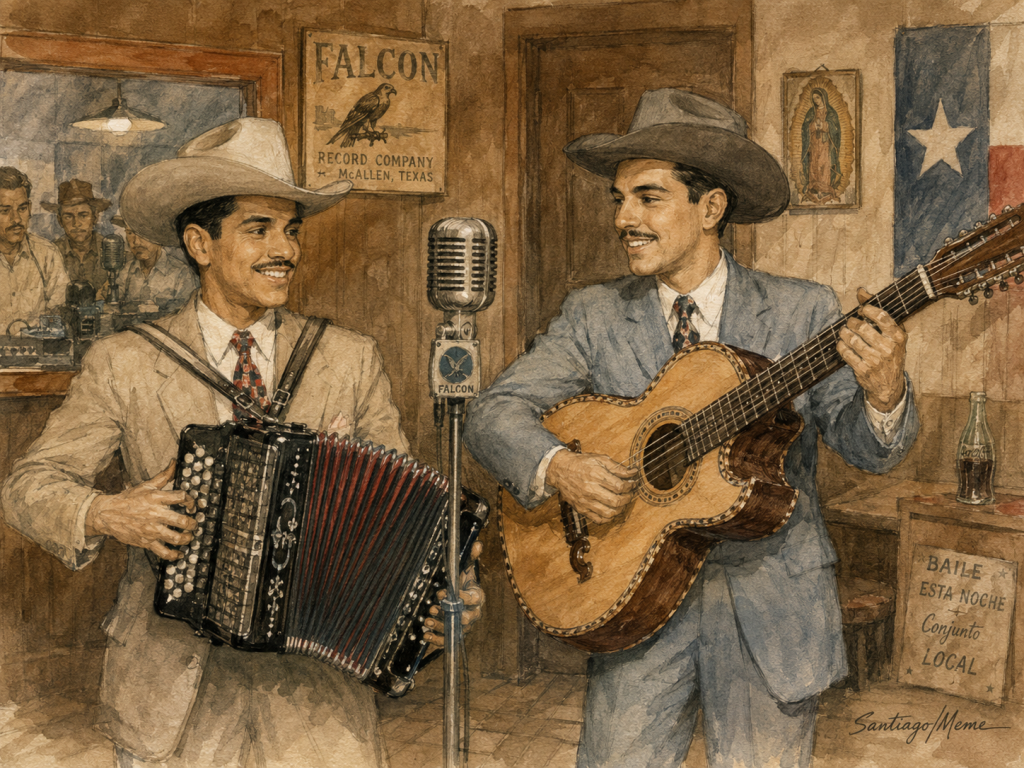
The two began playing together in the late 1940s and became Los Donneños, a name given to them by Arnaldo Ramírez, the Tejano owner of Falcon Records in McAllen. Ramírez named them after Donna, the Texas town where the musicians met, even though both men had been born in Nuevo León. (Frontera)
Today, they are usually described as pioneers of norteño music. That is not wrong, but it is incomplete.
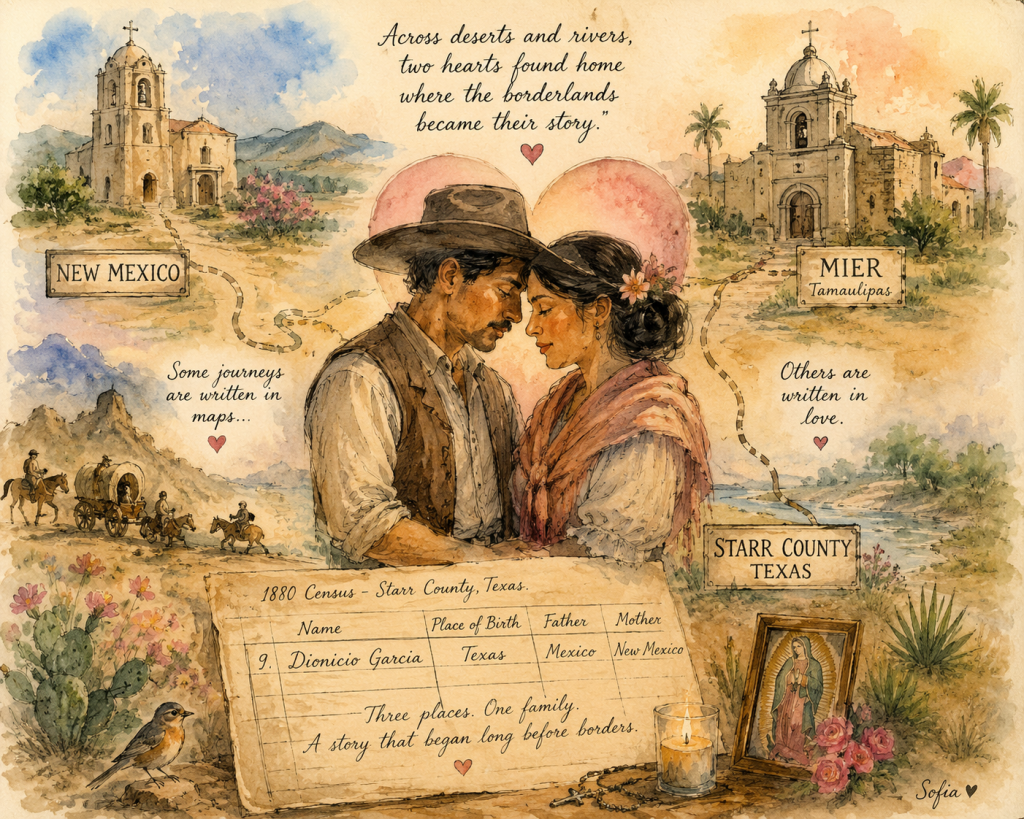
They were two musicians from northeastern Mexico who met in South Texas, were recorded by a Mexican American-owned Texas company, were named after a Texas town, and built their first audience in the border country. Their music belonged to the same world on both sides of the Rio Grande.
It was norteño/Tejano music before the record companies, historians, and award shows began drawing hard lines between the names.
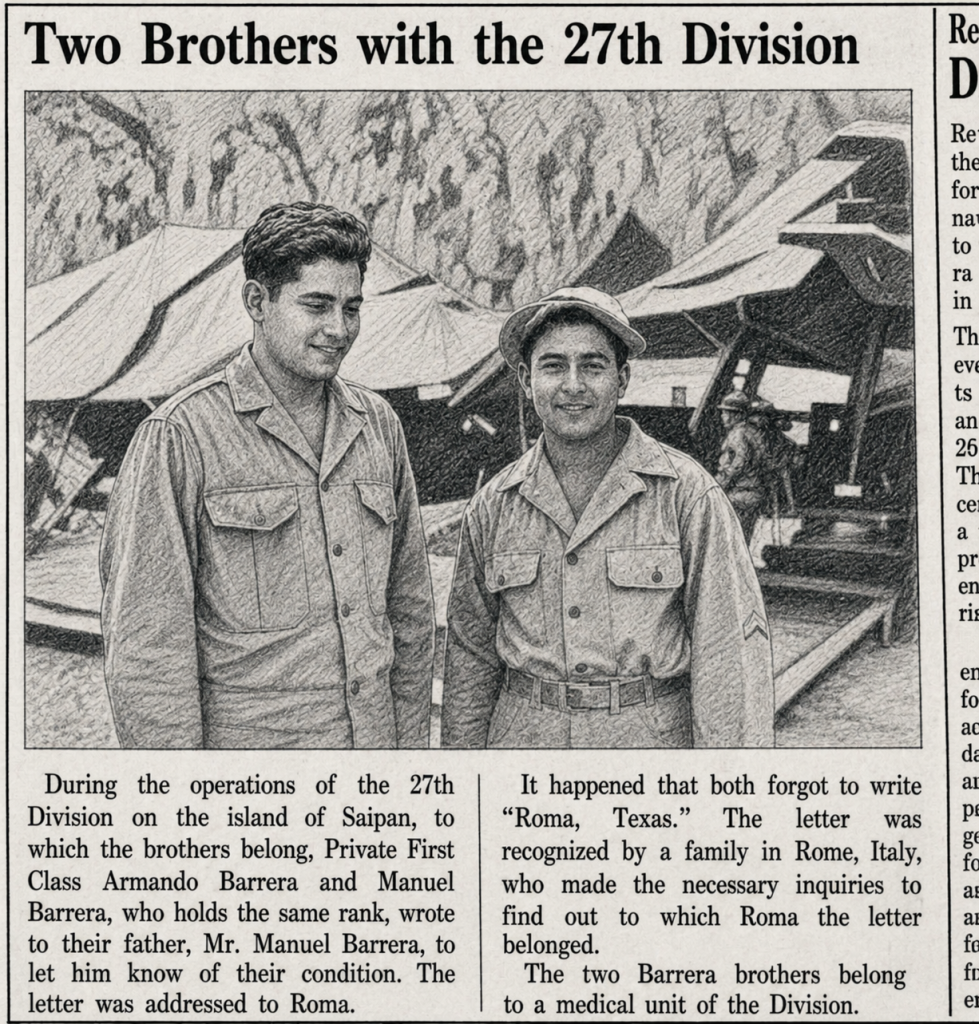
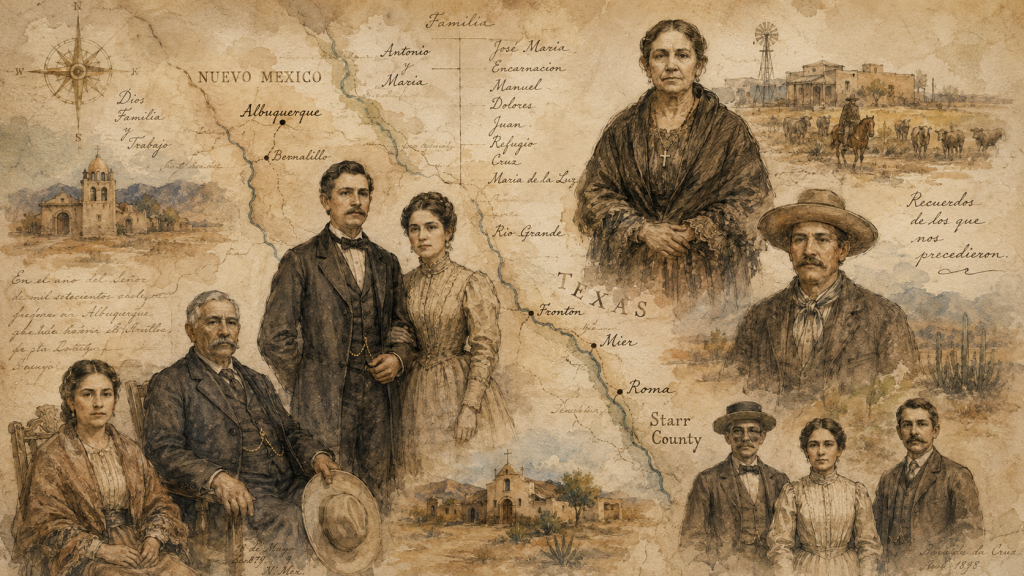
The international boundary was real, but the cultural wall we imagine today was not. Families, laborers, musicians, merchants, and songs crossed the river routinely. A musician could play in Donna, record in McAllen, perform in Reynosa, and return to Texas without believing that he had left one musical world and entered another.
Cavazos first played an ordinary guitar, but he later adopted the bajo sexto because its twelve strings produced a fuller sound. His bass lines worked beneath and against Montes’s accordion, helping create the lean musical structure that generations of listeners recognize immediately: accordion, bajo sexto or guitar, voices, bass, and eventually drums. (Frontera)
Accounts say Los Donneños first recorded for Falcon in 1947, although the surviving archival record becomes clearer in the early 1950s. That uncertainty matters. The first record that survives is not necessarily the first record they made, and the first record any group made was certainly not the beginning of the music. (Texas Standard)
Long before recording companies arrived, groups were already playing this music at ranches, weddings, quinceañeras, cantinas, festivals, and community dances. Most were never recorded. Their names disappeared, and their music vanished into the air after the last dance ended.
Los Donneños were not the men who invented the sound. They were among the generation fortunate enough to have the sound captured, pressed onto a disc, broadcast on radio, and carried farther than a musician could travel on his own.
Falcon Records played a central part in that history. Arnaldo Ramírez founded the company in his home in 1948 after working in border radio. At a time when large national companies were abandoning regional Mexican American music, Falcon and other South Texas labels recorded the performers whom the major companies ignored. Falcon eventually carried Tejano, conjunto, ranchera, and norteño music into cities across the Southwest and beyond. (Texas State Historical Association)
Los Donneños did not remain a local Donna duet for long. They appeared in five Mexican movies with Eulalio “El Piporro” González, whose films helped place the accordion-and-bajo-sexto sound before audiences far beyond the border. They toured the United States, Venezuela, and Cuba, and later signed with Columbia Records, where they remained for seventeen years. In 1962, they won a national competition in Ciudad Victoria involving more than 85 musical acts and became known as Los Campeonísimos Donneños. (Frontera)
The Strachwitz Frontera Collection now holds hundreds of their recordings, with Cavazos credited as a composer on dozens of songs. Those recordings preserve his voice and bajo sexto, but they also preserve something larger: a time when the music had not yet been separated into neatly labeled national and commercial categories. (Frontera)
Cavazos eventually returned permanently to the Valley, opened the R y N Music Store in McAllen, started his own record label, and operated a recording studio. The store became a gathering place where established performers and young musicians could meet, exchange stories, buy instruments, and find opportunities to record. Musicians including Rubén Vela, Joe López, and Jimmy González passed through its doors. (Texas Standard)
Mario Montes died in 1993, but Cavazos continued performing with other accordionists. He remained active almost until the end of his life, one of the final living connections to the men who had carried the early border sound from unrecorded dances into the modern music business. (Texas Standard)
There are still people alive who heard that generation in person. They heard Tony de la Rosa, Freddie Martínez, Conjunto Bernal, Carlos Guzmán, Narciso Martínez, Los Donneños, and other musicians whose music was not something stored in an archive. It was the music playing in front of them while people danced.
But those listeners are disappearing too.
When they are gone, historians may look at the surviving records and assume that the first disc marked the beginning. They may accept the record-company labels as though the musicians and audiences always divided the music the same way.
The records are precious, but they are only a keyhole.
Behind them was an entire border country filled with musicians whose names were never written down, whose songs were never recorded, and whose sound lived only as long as someone was still alive who remembered hearing it.