Congress Thought New Mexico Was Too Mexican to Become a State
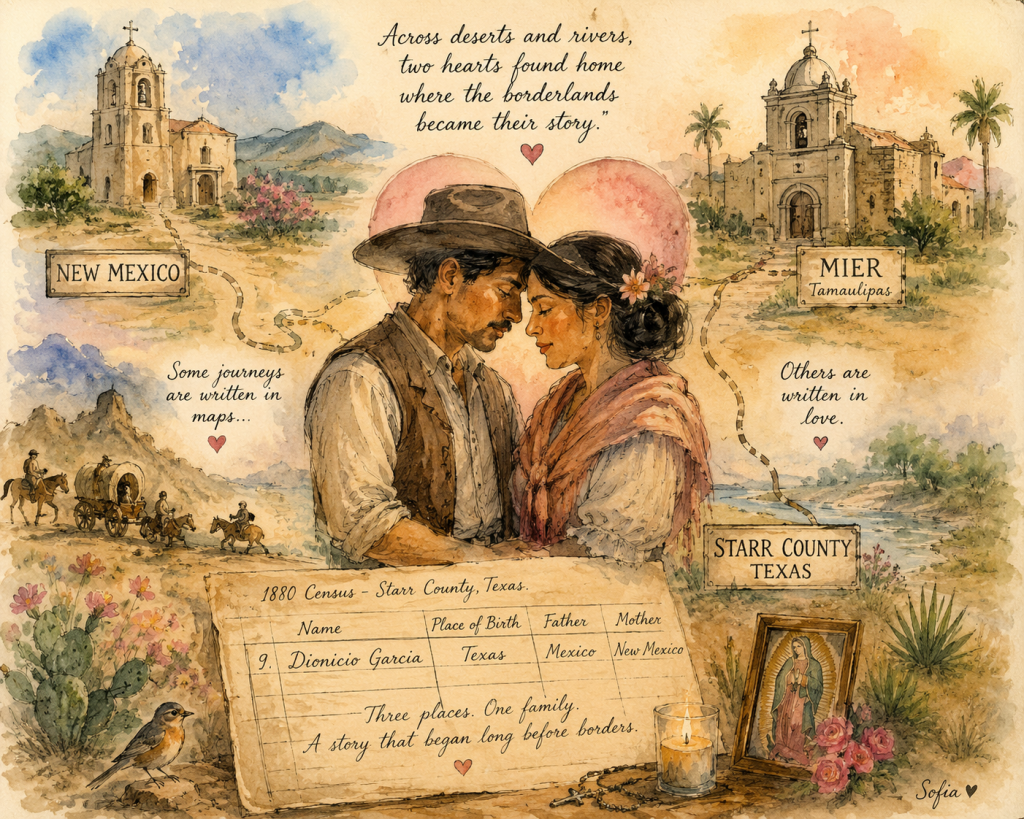
When the United States took control of New Mexico after the Mexican-American War, the people living there did not suddenly disappear.
They stayed.
They raised families, paid taxes, elected representatives, served in government, and fought in American wars. Under the Treaty of Guadalupe Hidalgo, Mexican residents of the territory were given one year to choose whether to retain Mexican citizenship; those who remained without making that declaration were considered to have chosen United States citizenship. (National Archives)
Yet Washington spent more than 60 years deciding whether those American citizens were American enough to live in an American state.
One of the reasons was remarkably simple.
There were too many Mexicans.
They Were Americans Before New Mexico Was a State
The Treaty of Guadalupe Hidalgo ended the Mexican-American War in 1848 and transferred an enormous amount of Mexican territory to the United States, including present-day New Mexico. Most Mexicans who remained in the transferred territory became American citizens under the treaty. (National Archives)
New Mexico did not become a state until January 6, 1912.
That was a wait of roughly 64 years.
According to the official historian of the U.S. House of Representatives, New Mexico struggled for statehood longer than any other contiguous state. (History, Art & Archives)
There were several reasons for the delay. Slavery and sectional politics complicated the question before the Civil War. Political disputes and territorial rivalries mattered too.
But after those issues faded, another objection remained.
The people.
Too Spanish, Too Catholic, Too Mexican
The U.S. House historian does not dance around what happened.
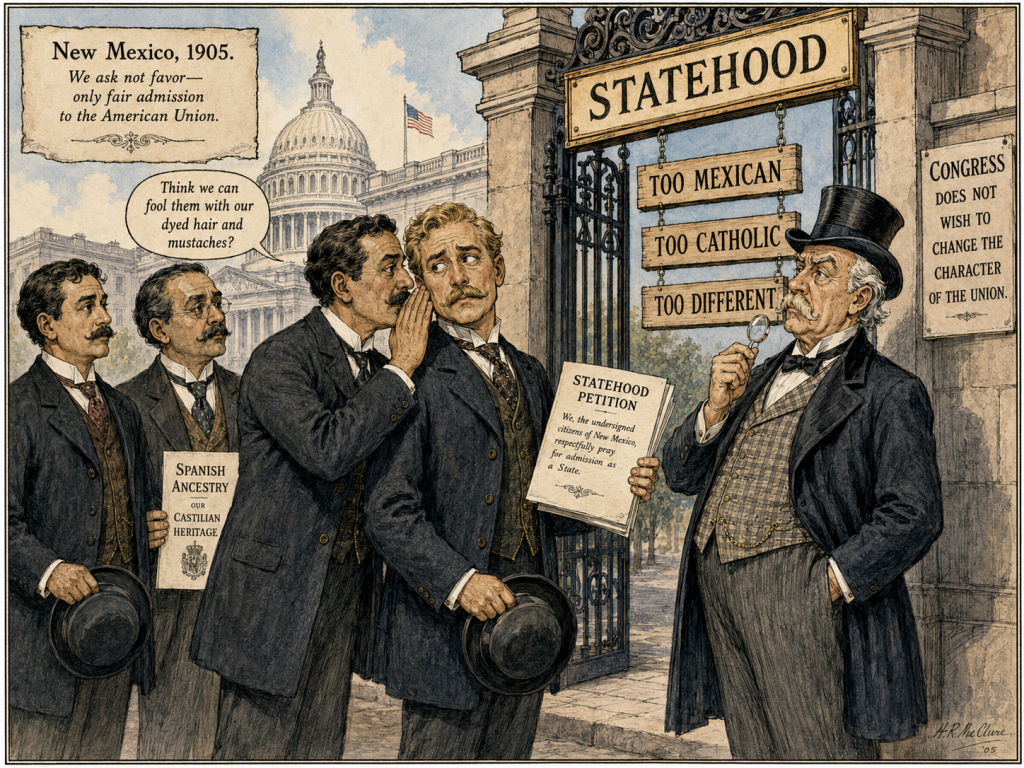
Congressional resistance to New Mexico statehood was fueled by longstanding prejudice against its Spanish-speaking, Roman Catholic population. (History, Art & Archives)
Think about what that means.
These were not recent immigrants arriving at the border.
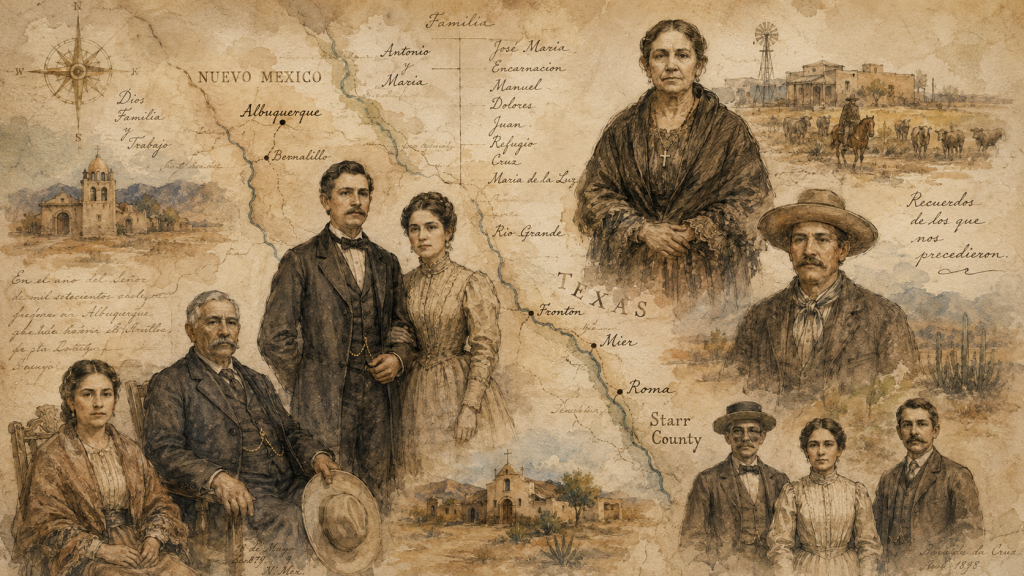
Many New Mexican families had lived in the region for generations before the United States even existed there. Their ancestors had lived under Spain and Mexico. Then a treaty moved the international boundary around them.
They became Americans.
Washington still looked at them and wondered whether they belonged.
Senator Beveridge Said the Quiet Part Out Loud
One of the strongest opponents of New Mexico statehood was Republican Senator Albert Beveridge of Indiana, chairman of the Senate Committee on Territories from 1901 to 1911.
The official House history says Beveridge blocked New Mexico statehood almost single-handedly during part of that period. (History, Art & Archives)
In a 1902 Senate committee report opposing statehood, Beveridge focused directly on what he called New Mexico’s “Mexican element.”
He described them as people “unlike us in race, language, and social customs.” (History, Art & Archives)
There it is.
No need for historians 120 years later to guess what he meant.
He told us.
The problem was not simply whether New Mexico had enough population, roads, courts, or tax revenue.
The problem was whether people who spoke Spanish, practiced Catholicism, and carried Mexican culture could become the political equals of the Americans deciding their fate.
New Mexicans Tried to Prove They Were White Enough
The prejudice produced another revealing response.
Some wealthy Hispano political leaders began emphasizing their Spanish ancestry rather than their Mexican identity. They presented themselves as descendants of Spain and sometimes stressed what they described as pure Castilian blood.
Why?
Because they believed Congress needed to be convinced that New Mexicans were racially fit for self-government. The official House history notes that historians have identified “whiteness” as an important part of the statehood debate. (History, Art & Archives)
That is an extraordinary position for American citizens to find themselves in.
They were not merely asking:
Are we qualified for statehood?
They were effectively having to answer:
Are we white enough for statehood?
They Had Already Fought for the United States
There was another irony.
During the Civil War, many Nuevomexicanos remained loyal to the Union. New Mexican forces helped resist the Confederate invasion of the territory, and Hispano political leaders served the Union cause. (History, Art & Archives)
They could fight for the United States.
They could die for the United States.
They could send delegates to Congress.
But Congress could still look at their language, religion, and ancestry and decide they were not quite ready to become a state.
Sixty-Four Years Later
New Mexico finally became the 47th state on January 6, 1912. (National Archives)
By then, generations had been born and died while New Mexico remained a territory.
Children who had been alive when the Treaty of Guadalupe Hidalgo transferred New Mexico to the United States could have become grandparents and great-grandparents before Washington finally admitted their home as a state.
The people had not suddenly become Americans in 1912.
They had been Americans for decades.
Congress finally decided to believe them.
The Part We Usually Leave Out
American history often tells the story of western expansion as though empty land simply became American territory and eventually turned into states.
But the land was not empty.
People were already there.
In New Mexico, many of those people spoke Spanish, were Catholic, and had Mexican ancestry. When the boundary changed, they became part of the United States.
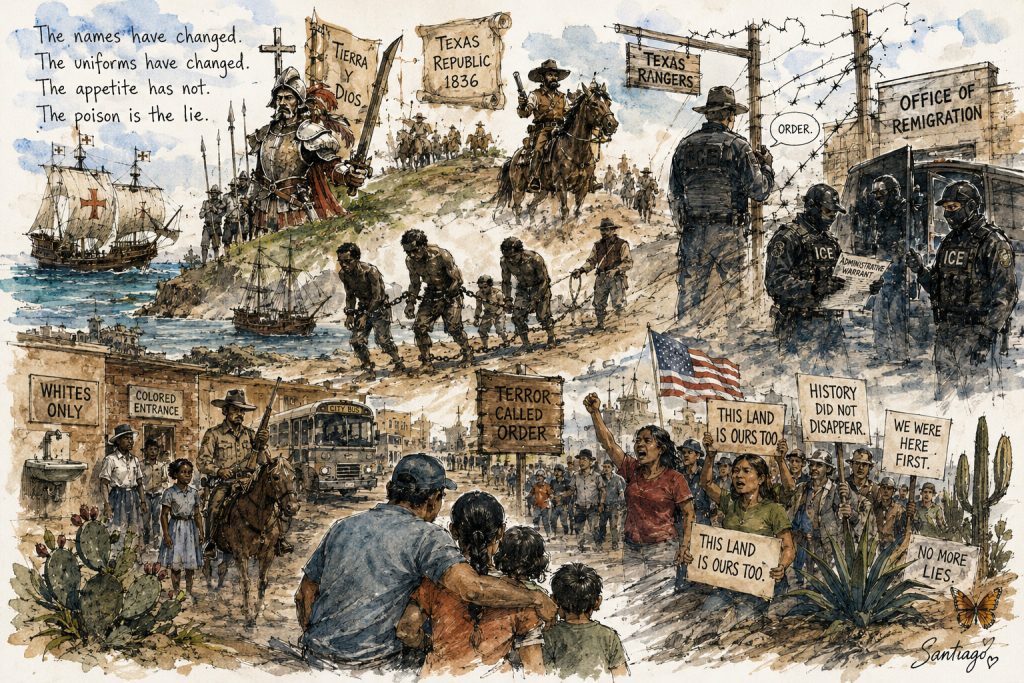
Then they discovered something Mexican Americans would encounter repeatedly over the next century:
American citizenship did not always mean that other Americans considered you American.
California could tell Mexican children they were too dirty for the public swimming pool.
Arizona could devise an English test that disproportionately removed Mexican Americans from the voting rolls.
And in New Mexico, Congress could keep an entire territory waiting for statehood while senators worried about its “Mexican element.”
The methods changed.
The question underneath them was remarkably similar:
How Mexican can you be before someone decides you are not American enough?