For Savannah Bernal and Jorge Barrera Jr., who keep reading these old South Texas stories and giving me a reason to keep digging.
Somebody mentioned the Garza War to me.
I had never heard of it.
That bothered me.
I knew Mier. I knew Roma. I knew Rio Grande City and Starr County. I knew those old family names that appear again and again on both sides of the Rio Grande. Yet somehow I had reached this age without knowing that in the 1890s men from that same country had taken up rifles, crossed the river, and tried to overthrow the government of Mexico.
Mexico sent soldiers after them.
The United States sent soldiers after them.
Texas Rangers hunted them.
Men were killed. Ranches were searched. Scores of suspected revolutionaries were arrested. Federal courts became involved. Mexico demanded extraditions.
And most of us were never taught a word about it.
Before There Was a Mexican Revolution
The Mexican Revolution supposedly begins for us in 1910.
Pancho Villa. Emiliano Zapata. Francisco Madero. Venustiano Carranza.
But almost twenty years earlier, South Texas and northern Mexico were already producing armed opposition to the dictatorship of Porfirio Díaz.
Recent historian Thomas Ty Smith describes what became known as the Garza War as three connected attempts launched from Texas: an 1890 raid led by Francisco Ruiz Sandoval, Catarino Garza’s uprising beginning in 1891, and the San Ignacio raid of 1892.
The name that survived was Garza.
Catarino Erasmo Garza was born near Matamoros in 1859. He was not originally a general or professional revolutionary. He was a journalist, political activist, sometime salesman, and newspaper publisher who moved through the border world of Brownsville, Laredo, San Antonio, and northern Mexico.
He wrote about Porfirio Díaz.
He attacked the dictatorship.
He also wrote about the treatment of Mexicans in Texas.
Eventually, Garza decided that words were not enough.
Twenty-Six Men Cross the River
On September 15, 1891, the eve of Mexican Independence Day, Catarino Garza crossed the Rio Grande near Mier, Tamaulipas, with twenty-six armed men.
Twenty-six.
It hardly sounds like the beginning of a war.
Garza issued his revolutionary plan calling for the overthrow of Díaz. His little force fought Mexican troops and eventually returned to Texas.
But Garza had something more important than those first twenty-six rifles.
He had the border.
And he had the families who lived there.
The Border Was Not Their Border
This is the part of the story that becomes easier to understand if you know South Texas.
A government map showed Texas on one side of the Rio Grande and Mexico on the other.
Families did not necessarily see their world that way.
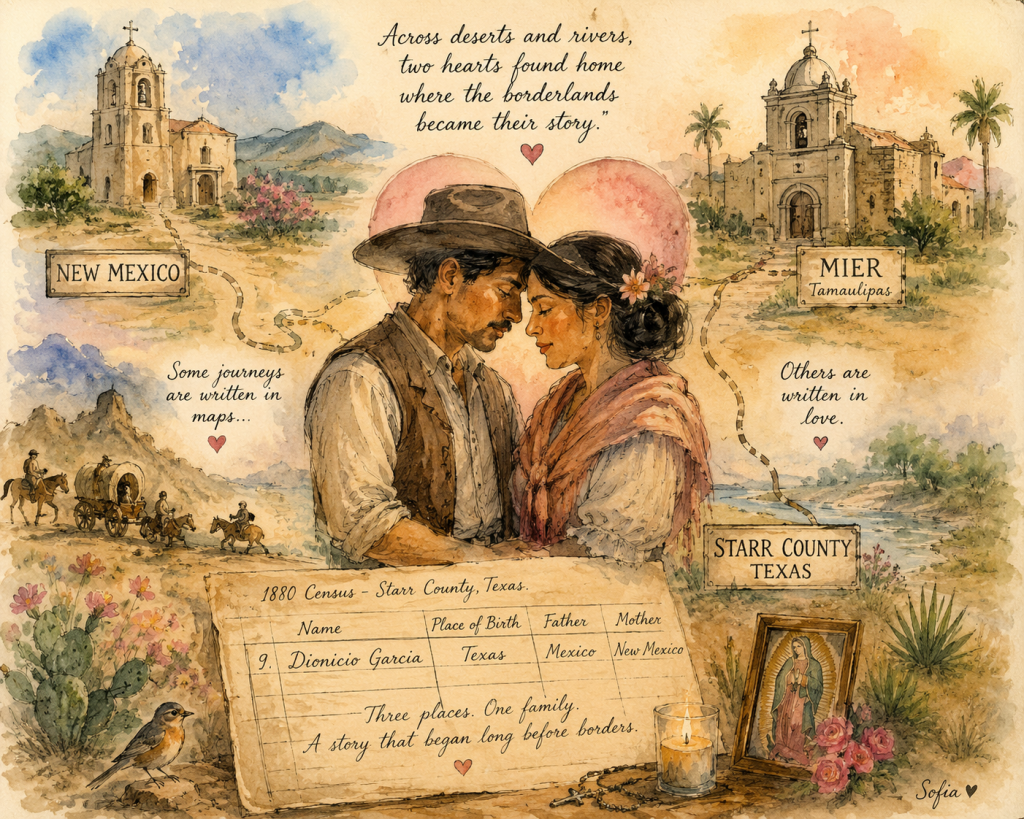
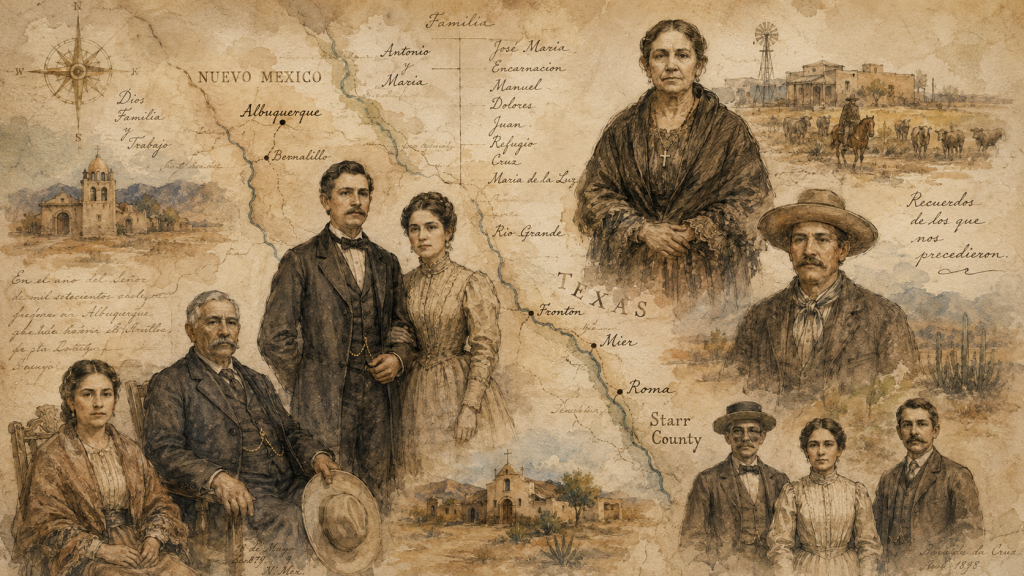
A man might have a brother in Mier, cousins in Roma, another cousin near Rio Grande City, and relatives running cattle farther north. Families had been living, marrying, trading, and owning land throughout that country long before the United States and Mexico decided exactly where one nation ended and the other began.
The river divided governments.
It did not divide families.
That became Garza’s great advantage.
His rebels could gather on a Texas ranch, cross the Rio Grande as revolutionaries, fight Mexican government troops, return across the river and disappear into ordinary life.
Yesterday’s soldier became today’s ranch hand.
The revolutionary on horseback became somebody’s cousin at supper.
The United States Army discovered that finding Garzistas was not the same thing as finding an invading army.
They belonged there.
The Ranches Were the Revolution’s Roads
Garza married Concepción González, daughter of South Texas rancher Alejandro González.
That marriage mattered.
Alejandro González had roots in Mier and possessed something Garza desperately needed: money, supplies, ranches, and connections.
The revolution began moving through networks that already existed.
Ranch roads became military roads.
Family connections became intelligence networks.
Homes and ranches became places where a man could eat, obtain a horse, hear where soldiers were located, and disappear again into the brush.
Among Garza’s supporters was Manuel Guerra of Roma, merchant, cattle dealer, and later one of Starr County’s most powerful political figures.
Another supporter associated with the movement was Bernardo de la Garza of Randado Ranch.
Then the other names begin appearing.
González.
Canales.
Hinojosa.
Sáenz.
Treviño.
García.
Ramírez.
Sandoval.
Guerra.
Garza.
Anyone who has worked through old South Texas church books, census records, and land documents knows those names.
That is when this stops looking like some foreign revolution that happened to spill into Texas.
It becomes a South Texas story.
Washington Has a Problem
The United States was officially at peace with Mexico.
That meant Garza could not legally use Texas as a military base from which to attack the Díaz government.
Washington therefore faced an uncomfortable situation. These men were not trying to overthrow the United States. Many lived in Texas. But they were organizing military expeditions on American soil against a neighboring country.
The United States Army entered the hunt.
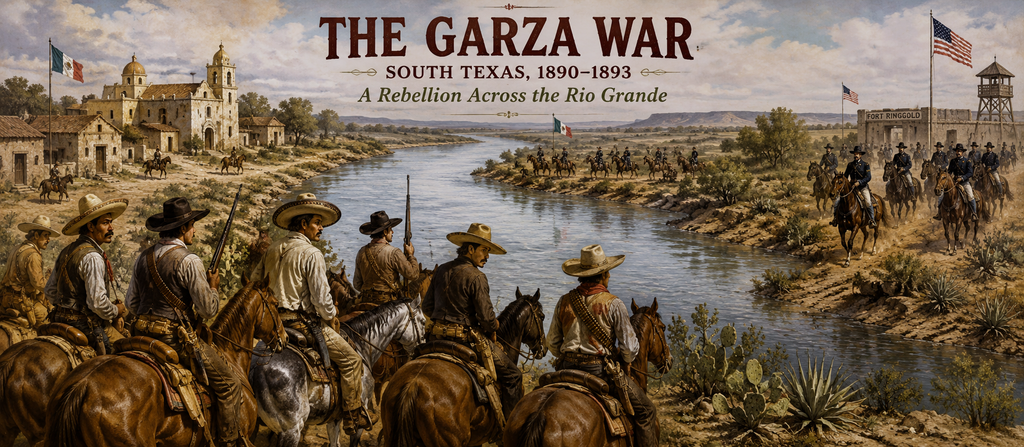
Troops operated from Fort Ringgold near Rio Grande City, Fort McIntosh at Laredo, and other posts along the border. Cavalry moved through ranch country looking for Garza’s men.
One of the officers involved was Captain John Gregory Bourke, an experienced frontier Army officer who had served in campaigns against Indigenous peoples in the West.
Now the Army faced a different kind of campaign.
Soldiers searched ranch country.
They followed horse tracks.
They questioned residents.
They tried to determine which ranches were helping the revolutionaries.
The difficulty was simple.
Nearly everyone they encountered might know someone involved.
Garza Leaves. The War Does Not.
Catarino Garza fled Texas in 1892.
If this had merely been one man’s private rebellion, that should have ended it.
It didn’t.
That may be the strongest evidence that the name Garza War hides something larger.
In December 1892, revolutionaries attacked a Mexican military position near San Ignacio, across the Rio Grande from South Texas.
The fighting was brutal.
The American response intensified.
The Army and civil authorities began rounding up suspected participants throughout the ranch country. Federal records eventually reported 132 arrests during the later campaign, with dozens identified as San Ignacio participants and many ultimately convicted.
And now the anonymous revolution begins acquiring names.
Juan Guerra.
Jesús Sandoval.
Secundino Ramírez.
Juan Maldonado.
Julián Flores.
Librado Gutiérrez.
Aniceto Treviño.
Fernando Salinas.
Rafael Ramírez.
Tomás Cuéllar.
Román García.
In March 1893, six Garzistas surrendered at Fort Ringgold. American diplomatic records explained why: soldiers were continually rounding up the ranches.
Think about what that sentence means.
The United States Army was sweeping through the ranch country around the Rio Grande looking for men who had joined a revolution in Mexico.
The international border was becoming something very different from what it had been to the families living there.
Who Was a Bandit?
Mexico had a simple answer for these men.
Bandits.
Criminals.
Murderers.
The Garzistas had another answer.
Revolutionaries.
The United States found itself somewhere in between.
American prosecutors used federal neutrality laws against men accused of organizing military expeditions from Texas against Mexico.
Mexico sought extradition of some participants for crimes committed during the raids.
That produced a remarkable legal question:
When a man crosses an international border intending to overthrow a dictatorship and kills government soldiers, is he committing ordinary murder?
Or is he participating in a political rebellion?
The legal aftermath lasted for years after the shooting subsided and became entangled in American extradition law and federal courts.
A little South Texas border rebellion had become an international problem.
And Then There Was the Land
The Garza War was fundamentally a political revolt against Porfirio Díaz.
But it took place during another revolution that involved no proclamation and no army.
South Texas itself was changing.
For generations, Mexican and Tejano families had controlled enormous stretches of ranch country under Spanish and Mexican land grants.
Then came the new border.
New courts.
New political systems.
Drought.
Debt.
Fencing.
Railroads.
Outside money.
Larger ranches swallowing smaller ones.
Increasing Anglo economic and political power.
Some old families prospered in that new world. Others lost land and influence.
The Garza movement therefore attracted an unusual coalition: ranch workers, farmers, merchants, professionals, former soldiers and wealthy landowners.
They did not necessarily have identical reasons for joining.
They had a common enemy.
Porfirio Díaz.
Something Was Coming
Catarino Garza never defeated Díaz.
Eventually he fled through the Caribbean and Central America and joined still another revolutionary struggle. He was reportedly killed in 1895 while participating in an attack at Bocas del Toro, then part of Colombia.
But Garza had been early.
Very early.
The grievances that would explode across Mexico in 1910 were already visible along the Rio Grande in 1891.
Political dictatorship.
Concentrated power.
Land.
Economic inequality.
Discontent in the countryside.
Armed men willing to challenge Díaz.
The Garza War did not cause the Mexican Revolution.
But looking backward from 1910, it looks remarkably like smoke rising before the fire.
What Really Happened Along That River?
At first I thought this was going to be a story about Catarino Garza.
I don’t anymore.
Garza matters, but the more interesting story may be the people who made his rebellion possible.
The ranchers who supplied horses.
The merchants who supplied money.
The women who knew who was moving through the ranches.
The guides who knew every trail through the brush.
The relatives who provided shelter.
The men who crossed the river with rifles and then crossed back into Texas and became ordinary residents again.
That is why the United States Army had so much trouble finding them.
The government saw an international border.
The families saw a river running through the middle of their country.
The War We Forgot
There are undoubtedly descendants in South Texas today who carry the names of Garzistas without knowing what their ancestors did.
Some may eventually discover an old name in a federal court record.
Others may find one in a baptismal book in Mier, a marriage record in Roma, a census sheet in Starr County, or the faded papers from an old ranch.
And perhaps that is how stories like this disappeared.
They weren’t important enough to the people writing the history books.
But they were important to the people living the history.
In the 1890s, men from South Texas ranch country tried to overthrow Porfirio Díaz.
Mexico hunted them.
The United States Army hunted them.
Texas Rangers hunted them.
The rebels kept crossing the river anyway.
The fighting lasted for years.
The arrests continued after Catarino Garza was gone.
The legal battles continued after the rifles became quiet.
And somehow, generations of South Texas children grew up without anyone telling us that there had once been a war practically in our own backyard.
The Garza War.
I didn’t know about it.
Now I do.
And so do Savannah and Jorge.