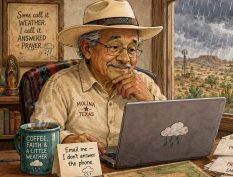
Meme had gone looking for an answer to a number.
Almost twenty percent Jewish.
The number sat there on the ancestry report as if it required no explanation. But to Meme it required a very large one. His mother’s people had been in northern Mexico and along the Rio Grande for hundreds of years. Their names filled Catholic baptismal books, marriage registers, censuses, land records, and family trees. García. Hinojosa. Guerra. Candelaria. Families that had lived in the borderlands so long that the modern border seemed almost recent beside them.
So why, after all those generations, was so much Jewish ancestry still there?
Meme asked his assistant, Santiago.
Santiago did what assistants do when they believe they know more than the person asking the question. He explained percentages. He explained population genetics. He explained founder effects, distant ancestors, estimates, and all the ways DNA could fool a person who wanted a simple answer.
Meme kept digging.
And then the family tree began doing something Santiago could not explain away quite so easily.
The same families kept marrying each other.
Not necessarily brother to sister or first cousin to first cousin, although close marriages certainly occurred. Meme’s own mother and father were second cousins; they shared a great-grandfather. What appeared farther back was a larger web of families who seemed to know one another across generations and, sometimes, across astonishing distances.
That created a problem.
If descendants of Jews who had survived Spain, forced conversion, Mexico, the northern frontier, and generations of Catholic life still preferred to marry among their own people, eventually nearly everyone nearby would be related.
At some point, finding one of your own meant traveling farther.
Much farther.
That was when Meme and Santiago stopped looking only at percentages and began looking at roads.
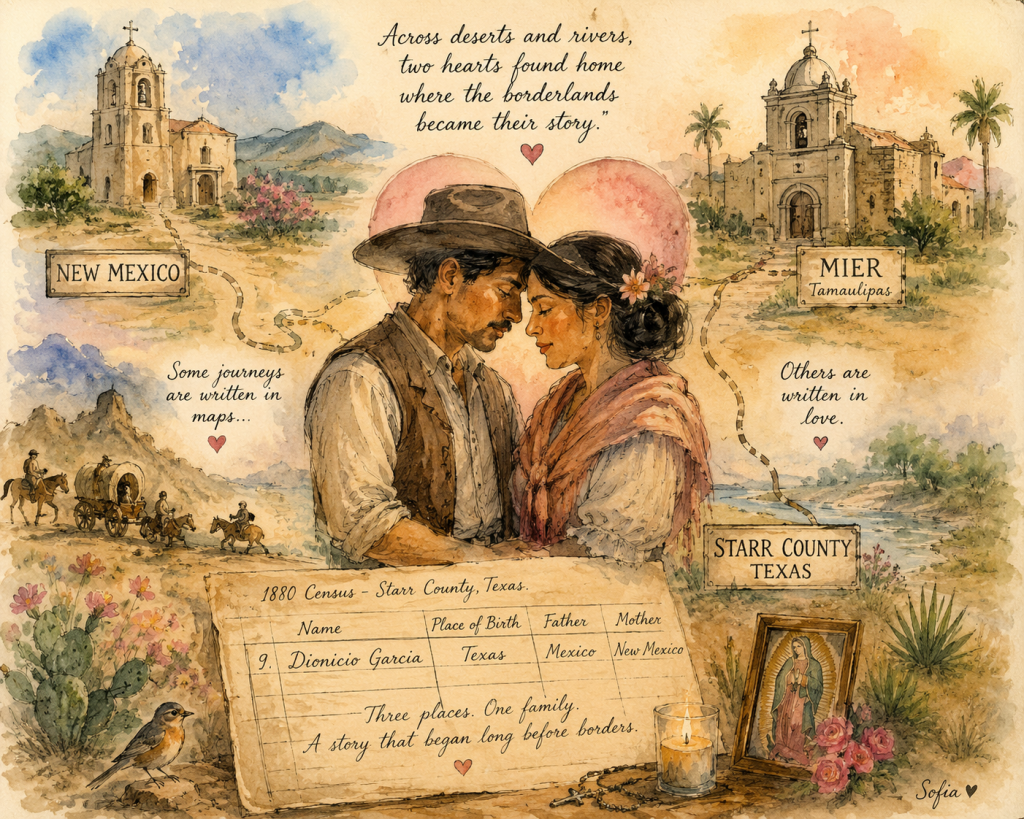
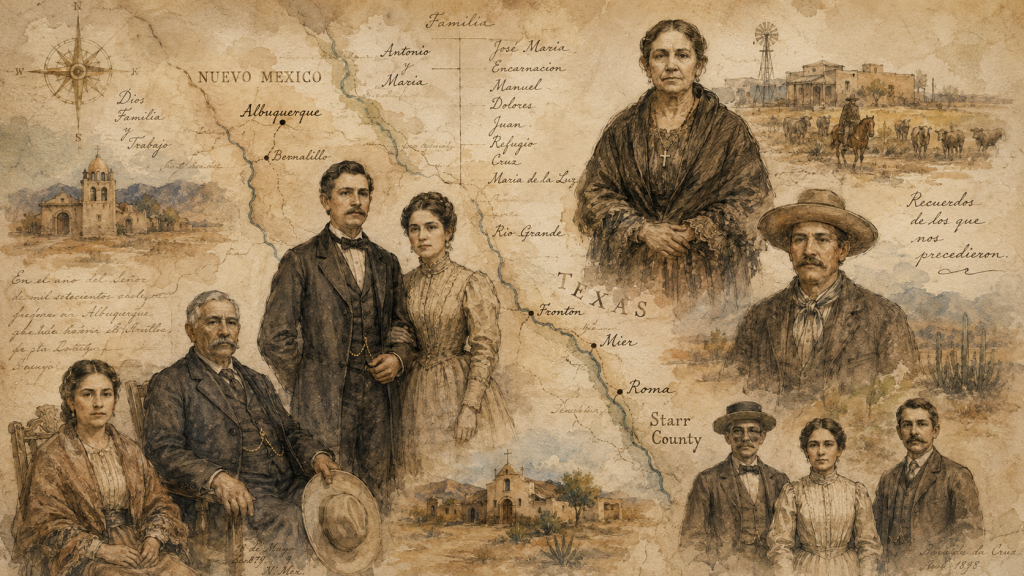
And somewhere between New Mexico and Mier, they found Rosa.
Long before anyone could mail a photograph or telephone ahead, families knew families by names.
A man might know little about a young woman hundreds of miles away, yet know exactly who her grandfather had been. An aunt could recite marriages three generations deep while insisting she had a poor memory. An old woman might hear a surname and ask immediately, “Which ones?”
That question mattered.
Among families who carried an older secret, it mattered even more.
They were Catholics in the records because being Catholic was how their ancestors had survived. Children were baptized. Marriages took place before priests. Saints stood in niches. Church bells marked births, weddings, funerals, feast days, and the passing of years.
But inside some houses, other memories remained.
An old grandmother might light lamps before sundown on Friday and say only that her mother had done the same. Certain foods were prepared in certain ways because that was how the family had always prepared them. Bloodlines were remembered with an intensity that seemed excessive until one understood that knowing who belonged to whom had once been a matter of survival.
Among themselves there were words.
Los nuestros.
Our people.
Nuestra gente.
Our people again, but with a different weight when spoken behind a closed door.
And sometimes, more quietly still:
La Nación.
The Nation.
No one needed to write judío on a letter that might pass through twenty hands before reaching its destination.
People who had survived by not saying too much had become very good at saying enough.
In New Mexico, sometime before the spring of 1852, a letter began its journey south.
It was entrusted not to a government official but to a man accustomed to carrying things farther than most people traveled in a lifetime. A merchant, perhaps, or an arriero moving with animals and goods. The letter might ride in a leather pouch beside invoices, prayers, family news, and money owed by one cousin to another.
It was addressed to people in the country around Mier.
Its purpose was marriage.
The writer explained that Jesús José Candelaria was young, unmarried, accustomed to work, and from a known family. More importantly, the family sought a young woman from among los nuestros.
But not simply any young woman.
Too many of the nearby families were already connected.
The letter asked for names.
Parents.
Grandparents.
Enough of the family tree to determine whether a prospective bride belonged to the right people without belonging too closely to Jesús himself.
The request might have been phrased cautiously:
Buscamos una joven de nuestra gente, de familia conocida, de buena crianza y sangre limpia entre los nuestros. Conviene saber también quiénes fueron sus padres y abuelos, para que no resulte parentesco demasiado cercano.
We seek a young woman of our people, of a known family, well raised and of good lineage among our own. It is also necessary to know who her parents and grandparents were, so that no relationship proves too close.
The letter arrived in Mier.
An older man read it first.
Then an older woman.
The man’s eyes moved over the family names. The woman’s lips moved as she reconstructed marriages that had never been written on the page.
“Candelaria,” she said.
Someone nodded.
“From New Mexico.”
Another name followed.
A García connection.
Then another.
Finally the old woman said, “There is one.”
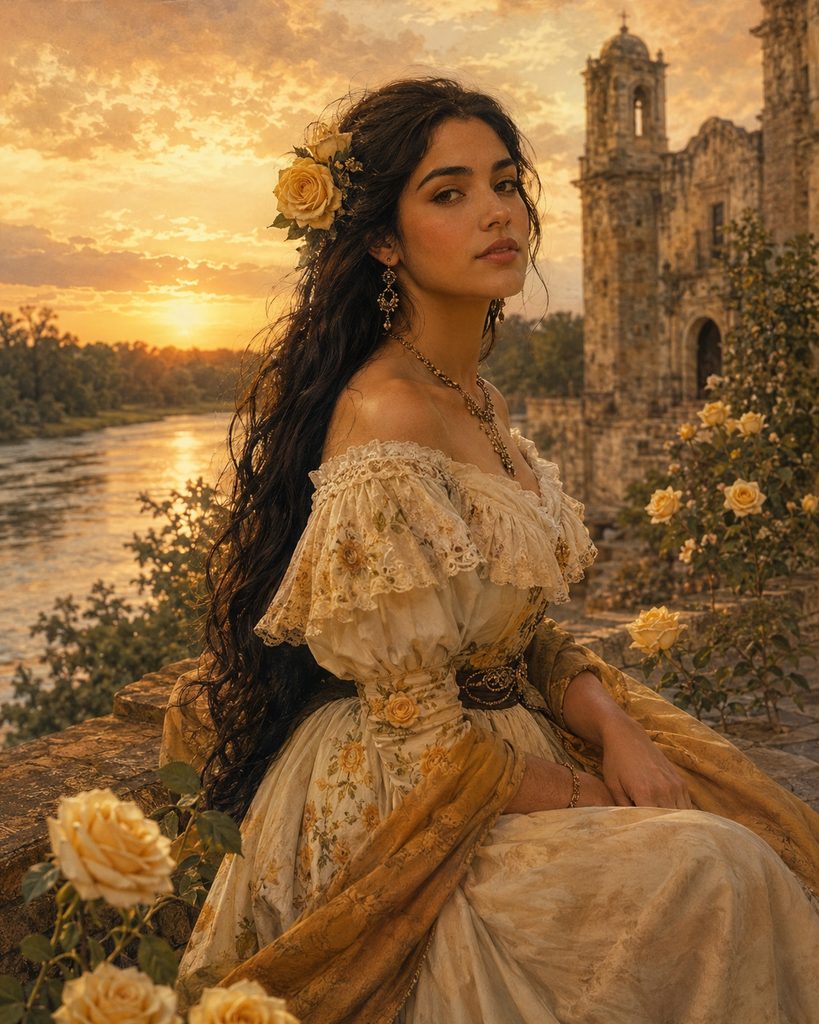
Her name was Rosa Hinojosa.
Rosa was eighteen.
Men noticed her before she noticed them, which had taught her very early not to confuse attention with character.
She had long dark hair, nearly black, and a face that could seem gentle until someone said something foolish. Her eyes did most of the work. They could invite conversation or end it. Yellow flowers suited her, although she would have laughed at anyone who told her so.
She was a daughter of Mier.
The town was not merely where she lived. It was the map of her family. Streets led to cousins. Houses belonged to people whose grandparents had known her grandparents. Across the river and along the ranch country were more relatives, some close, some so distant that only the old women could explain the connection.
When her family told her that inquiries had come from New Mexico about marriage, Rosa was not impressed.
“New Mexico?”
“Bernalillo.”
“That is farther.”
“Yes.”
“How far?”
Her mother gave the kind of answer mothers give when they do not want a daughter thinking about danger.
“Far.”
Rosa looked at her.
“How old is he?”
“Twenty-four.”
“What does he do?”
“He farms. He works with caravans. He is an arriero.”
“Does he have all his teeth?”
Her mother stared at her.
“I am asking because whoever wrote the letter forgot to mention it.”
That evening the older people laughed about Rosa’s question after she had left the room.
Then they returned to the serious matter.
Who were the Candelarias?
Who had married whom?
How closely were they connected?
A family could search far for one of its own and still discover that some great-grandmother had made the whole journey unnecessary by marrying the other family sixty years earlier.
The names were examined carefully.
The conclusion was encouraging.
Jesús was one of theirs.
But apparently not too much one of theirs.
A reply went north.
There was a young woman in Mier.
Rosa Hinojosa.
Her people were known.
Jesús already knew the road was dangerous.
That may have been one reason his fictional church certificate identified him as both labrador y arriero — farmer and muleteer. A man who worked with caravans understood distances that frightened other men.
He understood something else too.
A journey was never merely a line between two places.
There were days when water determined every decision. An animal could go lame twenty miles from the nearest settlement. A swollen river could trap travelers on one bank for days or take a horse from beneath a man in seconds. Heat punished anyone foolish enough to underestimate it, while desert nights could turn cold enough to make the previous afternoon seem impossible.
Then there were people.
Bandits.
Horse thieves.
Desperate men who recognized a loaded pack animal as wealth on four legs.
And farther into the frontier lay the fear that haunted nearly every caravan: raids. Apache and Comanche country was not a story told merely to frighten children. Men disappeared. Livestock vanished. Travelers learned to study distant ridges and clouds of dust.
Some stretches of the journey deserved no romantic name.
They were simply country where people died.
Years later, while reconstructing the story, Meme called it the corridor of death.
The name was not on a map.
It did not need to be.
Jesús knew what waited there.
And he went anyway.
Before leaving, he needed something more than courage.
He needed paper.
The fictional certificate dated May 20, 1852, placed him in the Villa de Alburquerque before the priest José de Jesús Luján at San Felipe de Neri. It described Jesús José Candelaria as twenty-four years old, unmarried, a labrador y arriero, born and residing in the jurisdiction of Bernalillo.
Then came Rosa.
Doña Rosa Hinojosa, eighteen years of age, of the Villa de Mier in Tamaulipas.
The document served the public world, the Catholic world. Witnesses testified that Jesús was baptized, unmarried, and free to marry. One stated that he knew Jesús had lived in the valley and traveled with the commercial caravans.
And then came a sentence that must have pleased the families almost as much as it pleased the Church:
He had no spiritual or blood kinship with the woman in Mier that would prevent the marriage.
The Church called it a canonical impediment.
The families called it good news.
Jesús folded the certificate carefully.
He joined the caravan south.
The first several days cured him of imagining Rosa.
The road demanded too much attention.
Men rose before the sun whenever possible. Animals were checked before breakfast because an injured hoof could become everyone’s problem. Water was measured. Loads were shifted. Leather cracked. Dust entered clothing, food, hair, eyes, and seemingly the soul.
At night the men arranged themselves with more thought than comfort.
Animals were kept close.
Weapons were closer.
A fire was useful but could also announce a camp to people who had no business knowing it existed.
One evening, a rider coming from the opposite direction warned them that animals had been stolen two nights earlier from another party. On another day they found tracks that made the older men quiet.
“How old?” Jesús asked.
A man crouched and touched the ground.
“Old enough.”
Nobody laughed.
They pushed on.
There were stretches when the landscape seemed determined to convince travelers that God had abandoned it before creation was finished. Thorn, stone, dust, distance.
Water became conversation.
Where was the next dependable source?
How much remained?
Would the animals make it?
Then, suddenly, the country that had seemed dead would change. Rain somewhere upstream could turn a crossing into brown violence. The same river a man cursed for disappearing could kill him when it returned.
Jesús had traveled with caravans before.
But this journey was different.
At the end of this one was a name.
Rosa Hinojosa.
At first he had repeated the name because it gave his mind somewhere to go during the long empty hours.
Later he stopped.
He became afraid that the woman could not possibly equal the journey.
Mier appeared without ceremony.
No angels announced it.
No music sounded.
Jesús arrived tired, dusty, sun-darkened, and smelling sufficiently of horse and road that the first thing anyone sensible would have offered him was water and the second a bath.
Instead, he saw Rosa.
She stood near the church with two women.
There were yellow flowers in her hair.
For several seconds Jesús simply looked.
Rosa noticed.
She had been told that the Candelaria man had arrived with travelers from the north. She had expected someone older. Perhaps taller. Certainly cleaner.
Finally they were introduced.
Jesús had spent hundreds of miles considering what he might say.
Rosa saved him the trouble.
“So you are the man who required a letter, two witnesses, and half of New Mexico before coming to speak to me.”
One of the women beside her made a sound suspiciously like a laugh.
Jesús looked at Rosa.
Then he laughed too.
“I crossed considerably more than half of New Mexico.”
“Then I hope I am worth the additional trouble.”
He answered before caution could stop him.
“So do I.”
Rosa’s eyebrow rose.
That was their beginning.
The families had arranged an introduction.
They had not arranged love.
Rosa made certain Jesús understood the difference.
He was questioned by her father, her mother, an uncle, two women whose exact relationship Jesús never completely understood, and an elderly relative who seemed chiefly interested in his grandparents.
“Your mother’s mother?”
Jesús answered.
“And hers?”
He answered again.
The old woman studied him.
“Good.”
Jesús finally asked, “What would have happened if I had given the wrong name?”
“You would have saved yourself a long courtship.”
Rosa, listening nearby, smiled.
Jesús understood.
These people were not playing at genealogy.
They remembered.
Perhaps they remembered Judaism clearly. Perhaps some knew more than others. In Rosa’s house, Catholic saints occupied their proper places. Yet Jesús noticed things that seemed familiar in ways he could not explain.
On Friday, before the sun disappeared, an older woman lit two small lamps.
No announcement was made.
No one crossed herself immediately afterward.
Jesús looked at Rosa.
She looked back.
Neither said anything.
Later, when they were alone long enough to speak quietly, he asked, “Does your family call itself la Nación?”
Rosa’s face changed.
Not fear exactly.
Recognition.
“Who taught you that?”
“My grandmother.”
Rosa looked toward the room where the older women sat.
“Mine too.”
Nothing more needed saying.
For the first time since leaving New Mexico, Jesús understood completely why he had come.
He still had to make Rosa love him.
That proved harder than crossing rivers.
Rosa wanted to know what New Mexico looked like.
Jesús described mountains, broad skies, and winter mornings.
“What do you miss when you are here?” she asked.
“My family.”
“Only them?”
“My bed.”
She laughed.
“Finally, an honest man.”
Over the following weeks, their conversations lengthened. Rosa learned that Jesús could be patient when patience mattered and impatient when it did not. He learned that she hated being treated as fragile and loved hearing stories about places she had never seen.
One evening she asked about the dangerous country he had crossed.
“Are the stories true?”
“Some.”
“Indians?”
“Sometimes.”
“Bandits?”
“Yes.”
“Men killed?”
“Yes.”
She grew quiet.
“You traveled through all of that to meet a woman you had never seen.”
“I had heard about your family.”
“That is not what I asked.”
Jesús looked at her.
“No.”
Rosa waited.
“I traveled because there are not many of us.”
Her expression changed again.
Jesús continued.
“And among the ones nearby, half seem to be cousins.”
Rosa laughed softly.
“Only half?”
“Perhaps three-quarters.”
She looked down.
Then she said, “So you came all this way because I was Jewish and not your cousin.”
Jesús smiled.
“That was before I met you.”
“And now?”
“Now I would make the trip without the letter.”
That answer stayed with her.
When Jesús asked Rosa to marry him, nobody was surprised.
Rosa still made him wait.
Not because she doubted him.
Because the decision was larger than Jesús.
Marriage meant leaving Mier.
She would travel back through the country he had crossed. The dangers he described would become hers. Every mile north would put another mile between Rosa and her mother, her family, the church bells, the streets where everyone knew her name.
Her mother helped pack what she could carry.
On the final evening, one of the old women called Rosa aside.
“Your husband’s people remember?”
“Yes.”
“How much?”
Rosa thought of the lamps.
“Enough.”
The woman nodded.
“Then teach your daughters.”
Rosa swallowed.
“What if I have sons?”
“Teach them too. They are usually the ones who forget.”
Rosa laughed through tears.
The older woman kissed her forehead.
“We survived because somebody always remembered.”
The return journey north was worse for Rosa than the journey south had been for Jesús.
He had traveled toward possibility.
She traveled away from certainty.
The first nights she slept badly. Every sound beyond the camp became a rider, an animal, a thief, an attack. Jesús learned not to tell her that something was probably nothing because Rosa considered probably a useless word in a dangerous country.
Once, they encountered travelers moving south who warned them of raiders ahead.
The caravan changed course.
That cost them water.
For two days the animals suffered, and everyone became irritable. Men who normally joked said little. Rosa’s lips cracked. Dust coated her face.
When at last they reached water, she knelt beside it and drank until Jesús pulled the cup away.
“Slowly.”
She glared at him.
“I crossed half the world to marry you.”
“Not half.”
“Do not correct me while I am thirsty.”
He handed the cup back.
Another night, distant movement sent the men for their weapons. Fires were reduced. Animals were drawn in. Rosa sat near Jesús without speaking.
Nothing happened.
Sometimes terror consisted entirely of waiting for something that never came.
By morning everyone laughed too loudly.
Weeks later, when the country began to look familiar to Jesús, he pointed ahead.
“Home.”
Rosa stared at the landscape.
“No.”
Jesús turned toward her.
She took his hand.
“Not yet.”
He understood.
Home would have to become something they built together.
Years passed.
Rosa became a New Mexican woman without ever ceasing to be a woman of Mier.
She and Jesús had children.
One of them was Juana Candelaria.
Juana grew up hearing about a place she had never seen. Her mother’s Mier became almost mythical: stone houses, river country, relatives without end, yellow flowers, bells that supposedly could be heard everywhere.
Jesús disputed the distance of the bells.
Rosa disputed his memory.
Their children learned that this argument was safer to ignore.
They also learned other things.
The Friday lamps.
The names of families.
Which customs belonged to the Church and which belonged to something older that nobody discussed with strangers.
And the words.
Los nuestros.
Nuestra gente.
La Nación.
Juana understood enough to know that the words carried history.
She did not yet know they would shape her own marriage.
Far south, among the García family of Mier and Starr County, there was another young man accustomed to animals and long distances.
Eduardo García was a herder.
His people were among the old García families tied to Mier. Generations of marriages connected them to other families in the region so thoroughly that an elder could turn an introduction into a genealogy lesson before anyone had been offered coffee.
Then came another letter.
New Mexico.
A young woman.
Juana Candelaria.
The older Garcías were mildly interested.
Then someone read the next line.
Her mother was Rosa Hinojosa of Mier.
The room changed.
“Rosa?”
“Which Rosa?”
The names followed.
Hinojosa.
Guerra.
Candelaria.
One elder began reconstructing the family aloud.
Another interrupted.
“No. That García married the other branch.”
“Are you certain?”
“I was at her funeral.”
That ended the dispute.
Then came the essential question.
How closely related were Eduardo and Juana?
The family worked backward through names.
Not close enough to prevent interest.
Close enough to inspire trust.
Far enough to permit marriage.
Someone looked at Eduardo.
“You should go.”
Eduardo laughed.
“To New Mexico?”
“Yes.”
“Do you know how far New Mexico is?”
An old woman answered.
“Apparently Rosa Hinojosa did.”
When Eduardo finally arrived after weeks on the road, Juana saw him first.
Rosa saw the road.
She saw it in the dust ground into his clothing, in the tired animal, in the way he stood as though his body had forgotten what a chair felt like.
For a moment she was eighteen again.
A dusty young stranger had come from far away carrying papers and family names.
Now another had come for her daughter.
Jesús stood beside her.
“You are smiling.”
“No.”
“You are.”
Rosa watched Eduardo approach.
“He looks terrible.”
“So did I.”
“You looked worse.”
Jesús smiled.
“And you married me.”
“I was young.”
Eduardo was introduced.
Rosa asked his father’s name.
Then his grandfather’s.
Then another.
Eduardo answered.
Finally he looked at Juana.
“Does everyone in this family begin courtship by interrogating a man’s dead relatives?”
Juana smiled.
“Only if they are considering keeping you.”
Rosa heard herself in her daughter.
That frightened her more than the road ever had.
The second love story did not repeat the first exactly.
Love stories never do.
Eduardo was quieter than Jesús. Juana was less guarded than Rosa had been, perhaps because she had grown up hearing that sometimes the right person arrived from very far away.
But the questions were the same.
Family.
Faith.
Memory.
Distance.
And eventually, love.
When Juana told her mother she intended to marry Eduardo and return south with him, Rosa said nothing for a long time.
Juana became worried.
“You don’t want me to go.”
Rosa took her daughter’s hands.
“I left Mier because I loved your father.”
“I know.”
“I crossed country I thought would kill me.”
“I know.”
“I cried where he could not see me.”
From the doorway, Jesús said, “I saw you.”
Rosa turned.
“You were asleep.”
“I pretended.”
Rosa looked back at Juana.
Then she smiled.
“Your father came south and took me north.”
She squeezed Juana’s hands.
“Now a García has come north to take my daughter south.”
Juana’s eyes filled.
Rosa’s did too.
“You are going home,” Rosa said.
“Your home.”
“Ours.”
Juana made the journey her mother had made, only backward.
She crossed the same hard country. She knew fear at night. She learned the value of water and the misery of dust. She learned why men checked animals before themselves and why travelers paid close attention when strangers mentioned tracks on the road.
She also learned Eduardo.
Long journeys reveal things courtships can hide.
He gave her the better portion when food ran short.
He never admitted doing it.
When Juana was frightened, he did not tell her there was nothing to fear. He sat beside her and acknowledged that sometimes there was.
When an animal became lame and the caravan lost half a day, Eduardo worked until his hands bled.
Rosa had told Juana once that the road had shown her who Jesús really was.
Now Juana understood.
By the time they reached the lower Rio Grande, she was exhausted.
Then she saw the country her mother had carried inside her for years.
Mier.
The old families.
The river.
The church.
The names Rosa had taught her suddenly belonged to living people.
Juana Candelaria, daughter of Rosa Hinojosa, had come home.
More than a century later, Meme stared again at the ancestry result.
Almost twenty percent Jewish.
By then Santiago had stopped trying quite so hard to explain it away.
There were still things they could not prove.
No surviving letter had been found telling Jesús to seek Rosa Hinojosa because she belonged to la Nación. No diary recorded their first conversation. No document said that Eduardo rode north because an elderly García decided Juana Candelaria was one of their people and sufficiently distant in blood.
Those parts belonged to the story.
But the names belonged to the family.
The marriages belonged to the family.
The movements between New Mexico, Mier and Starr County belonged to the family.
And generation after generation, the same old families kept appearing beside one another.
Perhaps that was the answer.
For centuries, Jews had been expelled, hunted, converted, scattered, renamed, and told that survival required disappearance. Yet families have ways of remembering things governments cannot erase.
A grandmother remembers a name.
A mother remembers a custom.
A father writes a letter.
Someone knows which family is safe.
Someone else knows which family is too closely related.
And when the suitable young woman lives hundreds of miles away, a young man saddles a horse, joins a caravan, carries his papers, watches the horizon for danger, crosses rivers and deserts, and goes looking for her.
Jesús found Rosa.
Eduardo found Juana.
One traveled south.
The other traveled north.
Rosa left Mier as a bride.
Her daughter returned as one.
Meme had gone searching for an explanation of why so much Jewish ancestry remained in his mother’s family after hundreds of years.
What he and Santiago found was not proof of every whispered custom or every imagined letter.
They found something more human.
They found families that remembered.
They found people willing to cross a corridor where travelers sometimes died because the person waiting at the other end was one of the few who understood who they were.
And after hundreds of years of being scattered, frightened, converted, hidden, married, and remarried, somehow—
they kept finding each other.