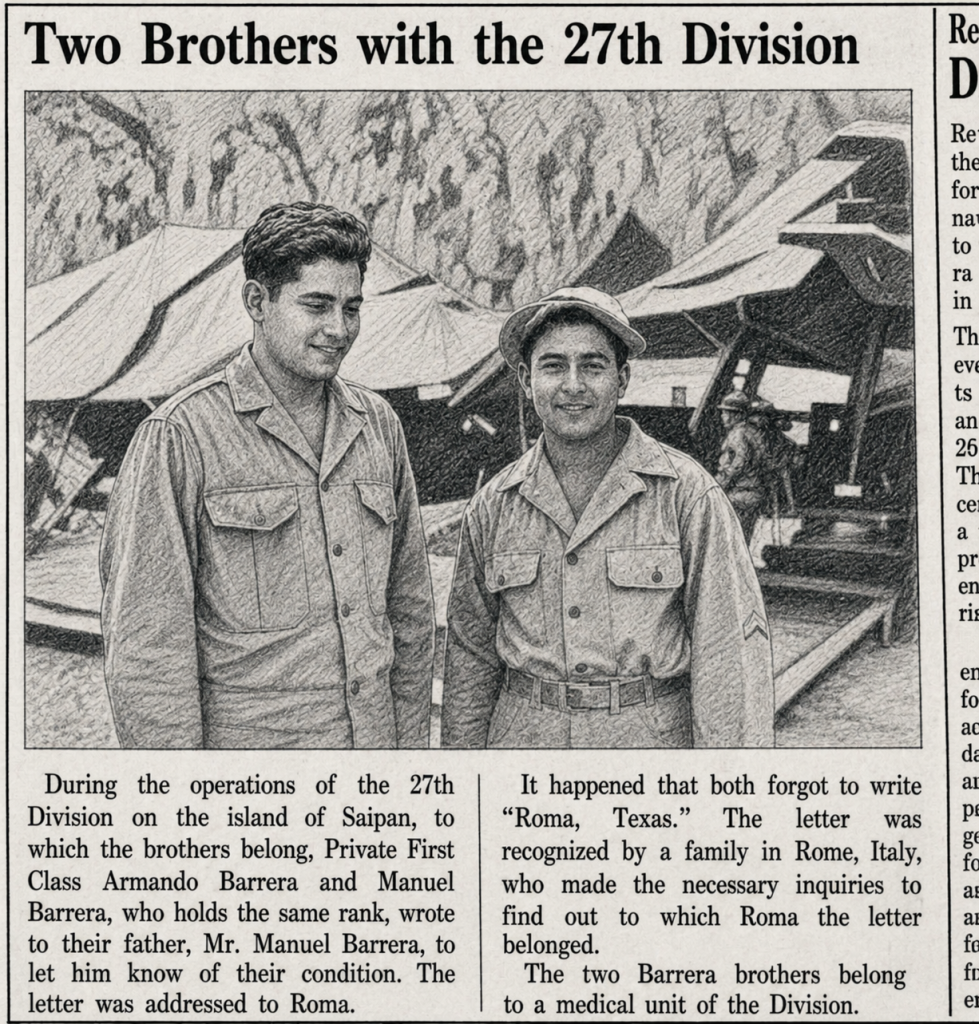
Twenty years earlier, young Mexican-American men from El Paso had marched off to war with Company E of the 141st Infantry. Many came from Segundo Barrio and the neighborhoods near the border. They fought in Italy, came home, raised families, and helped build a different El Paso.
By the early 1960s, another generation was coming of age.
These young Mexican Americans were not marching off to war. They were listening to rock ’n’ roll and rhythm and blues, going to school dances and house parties, forming bands, and discovering a nightlife that belonged to them.
And they had something teenagers in most American cities did not have.
Mexico was just across the bridge.
The Music Was Already There
El Paso did not have to wait for someone from Los Angeles or New York to teach its teenagers about rock ’n’ roll.
Local radio personality Steve Crosno began holding dances that became known as the Crosno Hops. By the early 1960s, Mexican-American teenagers were requesting records by groups such as Sunny and the Sunliners. Crosno later took the idea to television, giving El Paso something resembling its own American Bandstand.
The kids were not only listening.
They were playing.
Groups such as the El Paso Drifters, the Nite Dreamers and the Preludes were appearing around town by 1963. The Jives were even younger. Most were teenagers, and their lead singer was only eleven when the group began. They played rhythm and blues and soul at house parties and dances and eventually faced the El Paso Drifters in a battle of the bands at Bowie High School.
That matters.
Bowie sat in the heart of Mexican-American El Paso. A generation earlier, that part of the city had sent young men into Company E. Now its teenagers were carrying guitars and saxophones instead of rifles.
On the north side of town, Bobby Fuller and his family opened the Rendezvous in 1963, an alcohol-free nightclub aimed directly at teenagers. Young people packed the place to hear live music and dance. National performers occasionally appeared there, but much of the excitement came from the young musicians growing up in El Paso itself.
The city already had its own sound.
Then There Was Juárez
For an El Paso teenager, going out did not necessarily end at the Rio Grande.
You could walk across the bridge.
On the other side was Avenida Juárez, filled with bars, nightclubs, dance halls, restaurants, musicians, and lights. Nearby Calle Mariscal offered a rougher nightlife. Young men knew where the red-light district was. Some went simply to look. Others went farther.
It was part of growing up on that border.
Older teenagers could drink beer in places such as Fred’s Rainbow Bar, hear music at clubs, eat late at night, and wander streets that seemed far less restricted than El Paso.
Juárez could be elegant or rough depending on which door you entered.
At places such as La Fiesta, customers could see polished nightclub acts and nationally known entertainers. Other clubs presented rock groups, Mexican music, dancing and floor shows. Then a few blocks away were inexpensive bars, street musicians and Mariscal.
It was all part of the same night.
The Kids Across the River Were Playing Too
Juárez had its own teenage rock explosion.
Los Seven Teens formed in 1959. Most were only seventeen or eighteen. By 1962, they had gone to Mexico City, recorded for Musart, and were being promoted as Los Reyes del Twist. One of their songs was appropriately called “Juárez Twist.”
Los Silver Boys began in 1962 when their members were still teenagers. Their first performance was at a church kermés. Other young groups followed, playing rock, twist, rhythm and blues, and whatever new records were arriving from the United States.
The border gave Juárez musicians an advantage. They could hear and buy American records almost immediately, learn the songs by ear, and be playing them before much of Mexico had even heard them.
The result was not completely American music, and it was not completely Mexican music.
It was border music.
Before Juan Gabriel
Then, in 1966, a sixteen-year-old boy named Alberto Aguilera Valadez began singing at a Juárez nightclub called El Noa Noa.
He was not yet Juan Gabriel.
And the Noa Noa was not some magical place that suddenly created a music scene around him. The scene had already been there for years.
There were musicians everywhere. There were young bands, dance halls, bars, cabarets and clubs stretching through downtown Juárez. The Noa Noa was part of that larger world.
Alberto began with local musicians, including Los Prisioneros del Ritmo, and moved through the Juárez nightclub circuit. He would sing at other clubs and eventually leave for Mexico City.
Years later, he turned the name of that little nightclub into one of the most famous songs in Mexican popular music:
“El Noa Noa.”
Juan Gabriel became one of Mexico’s greatest entertainers.
But Juárez had been dancing long before he arrived.
One River, Two Cities
That may be the most important thing to understand about being young and Mexican in El Paso during the early 1960s.
El Paso and Juárez could be two countries politically, but to young people they could feel like one metropolitan area.
On one side were Bowie High School, house parties, Crosno Hops, and teenage rock bands.
Walk across the bridge, and there were dance halls, beer, music, Noa Noa, Avenida Juárez, and Mariscal.
The young people moved between both worlds.
Their parents’ generation had lived through segregation, depression, and war. Some of their fathers and uncles had marched away with Company E.
The children inherited something different.
They had rhythm and blues. They had rock ’n’ roll. They had the twist. They had young Mexican-American musicians creating their own sound.
And just across the river, they had Juárez.
A few years later, the world would know one of the kids who came out of that nightlife as Juan Gabriel, El Divo de Juárez.
But he was not the beginning of the story.
He was proof of how alive the place already was.