I was reading John Weber’s From South Texas to the Nation: The Exploitation of Mexican Labor in the Twentieth Century when I came across several paragraphs about irrigation in the Lower Rio Grande Valley. They were not part of what I was looking for, but I stopped because there was another story buried there.
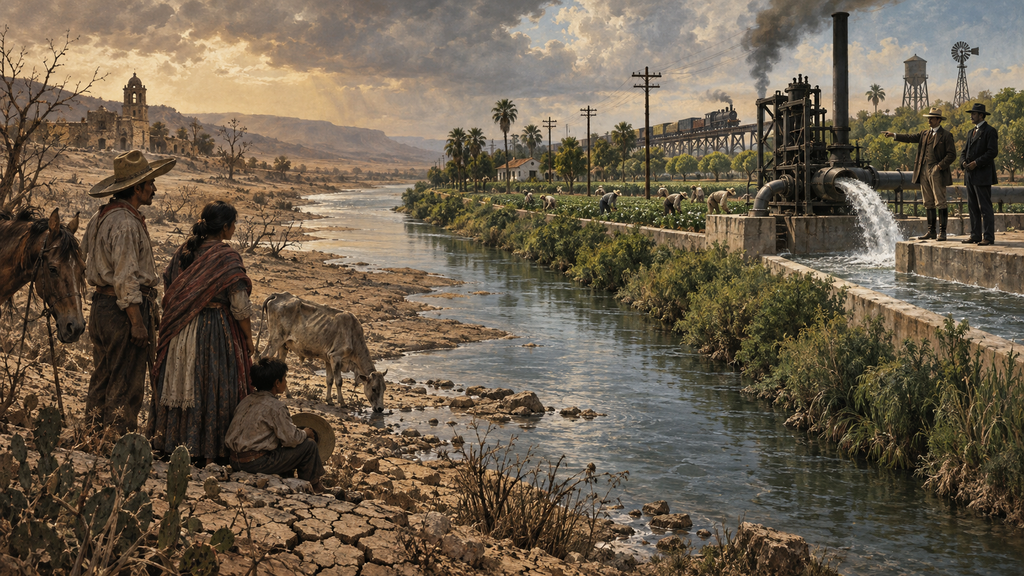
We were taught about the creation of the “Magic Valley”: the railroad arrived, irrigation transformed dry ranch country, farmers poured into South Texas, crops flourished, and the Lower Rio Grande Valley became one of the great agricultural regions of the United States. That story is true, but it leaves out a rather important question.
Who paid for the magic?
Before They Took the Water
The history did not begin with irrigation pumps.
During the Mexican-American War, American troops committed documented sexual assaults, robberies, and violence against Mexican civilians. The National Park Service says sexual assaults, looting, and violence against civilians and surrendered Mexican soldiers were common, while the U.S. Army’s own history describes an episode at Huamantla in which American troops murdered dozens of Mexicans, raped scores of women, and burned homes. (National Park Service)
The war ended in 1848, but violence along the border did not disappear. During the following decades, Mexican Americans in South Texas confronted economic pressure, racial intimidation, land disputes, and violence while political and economic control of the region increasingly shifted toward an Anglo minority.
Then came the railroad.
The railroad connected the Lower Valley to northern markets and helped make commercial agriculture possible. Outside investors arrived, land became more valuable, and the old ranching economy began giving way to something entirely different.
But trains could carry vegetables north. They could not make vegetables grow.
For that, the newcomers needed water.
Mexico Had the Water. Texas Had the Pumps.
The Rio Grande became the engine of the new economy.
According to Weber, irrigated acreage in South Texas increased from about 54,000 acres in 1909 to 228,000 acres in 1919. Across the same river in Tamaulipas, only about 2,000 acres were irrigated in 1910, increasing to merely 20,000 acres by 1930.
Same river. Two dramatically different results.
Texas irrigation companies installed enormous pumping plants and canal systems along the Rio Grande. A Texas Historical Commission history records that by 1909 one pumping plant near Hidalgo alone was supplying water to approximately 40,000 acres, and irrigation development continued at extraordinary speed. (Atlas)
There was another reason Texas could move so quickly.
Mexico was falling apart.
The Mexican Revolution began in 1910. Governments changed, armies fought one another, presidents fell, and much of northern Mexico became a battlefield. At precisely the moment Texas developers were establishing massive irrigation works on the Rio Grande, Mexico had no stable central government capable of effectively protecting its interests in the river.
And there was no international treaty dividing the waters of the Lower Rio Grande.
The 1906 agreement between the United States and Mexico dealt with water in the El Paso-Juárez area. It was not until 1944 that the two countries finally signed a treaty formally allocating Rio Grande water from Fort Quitman all the way to the Gulf of Mexico. (IBWC)
By then, Texas agriculture had enjoyed decades to establish itself.
Historian James Sandos summarized what happened in five remarkable words, quoted by Weber:
“Mexico unwillingly paid with water.”
Was the Water Really Stolen?
If we are speaking as lawyers, “stolen” requires some qualification.
There was no Lower Rio Grande water treaty being violated in 1915 because the treaty that finally divided those waters did not exist until 1944. International water law was unsettled, and the United States asserted rights for existing American users that Mexico disputed.
But history does not end with the legal technicality.
Texas developers took enormous quantities of water out of an international river while one of the two countries sharing that river was consumed by revolution and lacked the political leverage to stop them. Those diversions helped establish an enormously valuable agricultural economy on one side while comparable development was starved for water on the other.
By the time two functioning governments finally sat down and divided the river, the facts on the ground had existed for decades.
You can decide what word describes that.
Water Made Dirt Worth a Fortune
Irrigation did more than grow crops. It transformed the value of the land itself.
Weber writes that South Texas pasture that had sold for 50 cents to $2 an acre in the late nineteenth century could sell for as much as $300 an acre unimproved by the 1910s. Land close to irrigation facilities could command as much as $500 an acre.
That sounds wonderful if you are buying and selling land for speculation.
It can be disastrous if your family has been ranching the same land for generations.
As land values increased, tax valuations increased with them. Ranchers who had survived in the old livestock economy could suddenly find themselves sitting on extremely valuable property without having the income necessary to carry the taxes and debt that came with that value.
Some sold and retired comfortably. Others sold because the changing economy left them little choice, and Mexican-American rancheros faced those pressures while simultaneously living in a society in which violence and racial intimidation were very real.
Weber describes the transformation with a memorable image: the invisible hand of the market sometimes had assistance from the trigger finger.
Then Came 1915
On July 4, 1915, approximately forty armed Mexican raiders attacked Los Indios Ranch in Cameron County. During the weeks that followed there were attacks on ranches, stores and police officers, attempted assassinations, destruction of railroad property and efforts to cut telegraph lines.
The violence was real.
The raiders were not imaginary, and the people they killed were dead.
By late July, however, the state response was becoming something much larger than an attempt to capture the men responsible for particular crimes.
Governor James Ferguson sent Texas Ranger Captain Henry Ransom into the Lower Valley. Ransom had previously served as a prison guard and Houston police chief, and Weber describes the company he assembled from other former prison guards as an officially sanctioned force prepared to use extraordinarily violent methods.
Ransom explained his philosophy himself: a “bad disease” required “bitter medicine,” and he invoked Mexican dictator Porfirio Díaz as an example of how such problems should be handled.
Four years later, the Texas Legislature’s Canales Investigation heard eighty-three witnesses and produced more than 1,600 pages of testimony concerning Ranger conduct. The charges included murder, attempted murder, torture, intimidation, false imprisonment, and illegal searches. Cameron County Sheriff W. T. Vann testified that Ransom told him he intended to kill four prisoners in custody and then did so. (Texas State Historical Association)
This was no longer simply law enforcement pursuing forty armed raiders.
It became racial terror.
“Something Yet Due the Mexicans”
One letter quoted by Weber may tell us more about the atmosphere than a hundred pages of statistics.
A South Texan wrote the adjutant general praising what the Rangers were doing. He said he had never been satisfied with what happened at the Alamo and Goliad and believed there was still “something yet due the Mexicans from us.”
Think about what that means.
The Alamo fell in 1836. These killings were occurring almost eighty years later.
The Mexicans and Mexican Americans being hunted in 1915 had not killed anybody at the Alamo. Some were American citizens whose families had lived in South Texas before many of the Anglo families arrived.
It did not matter to the writer.
They were Mexicans.
The debt, in his mind, passed from one generation of Mexicans to another.
The Texas State Historical Association records that approximately thirty raids connected with the Plan of San Diego between July 1915 and July 1916 resulted in 21 American civilian and military deaths. Federal reports, however, indicated that more than 300 Mexicans and Mexican Americans were summarily executed in South Texas during the atmosphere created by the conflict. (Texas State Historical Association)
Historians continue debating the total number killed during the broader period of border violence. What is not seriously disputed anymore is that Mexican Americans and Mexican nationals were killed by Rangers, law-enforcement officers, and vigilantes, sometimes without trial and sometimes without evidence that they had participated in the raids. University of Texas Press describes the period from 1910 to 1920 as one in which large numbers of Mexican Americans and Mexican nationals were killed by vigilantes and law-enforcement officers, particularly Texas Rangers. (University of Texas Press)
Look at What the Raiders Attacked
There is another detail worth noticing.
The raiders did not merely rob stores and ranches. They burned railroad bridges and cut telegraph wires.
They were attacking the infrastructure of the new South Texas.
The railroad had brought investors and settlers into the Valley. Irrigation had transformed the land. Communications tied the region to the economic and political institutions of the rest of Texas.
The violence of 1915 therefore took place against the background of an enormous economic transformation in which ownership, political power, and control of natural resources were changing hands.
That does not make murder by the raiders legitimate.
It tells us what world the violence occurred in.
And After All That, They Needed Mexicans
Here is where the story becomes almost impossible to miss.
The new agricultural economy required workers.
Lots of them.
The same society that had spent decades treating Mexicans as a racial threat discovered that Mexican labor was indispensable.
Weber’s book is largely the history of that contradiction. South Texas agriculture wanted Mexican workers when crops needed planting and harvesting, wanted them inexpensive and plentiful, and supported immigration policies according to whether those policies increased or reduced the available labor supply.
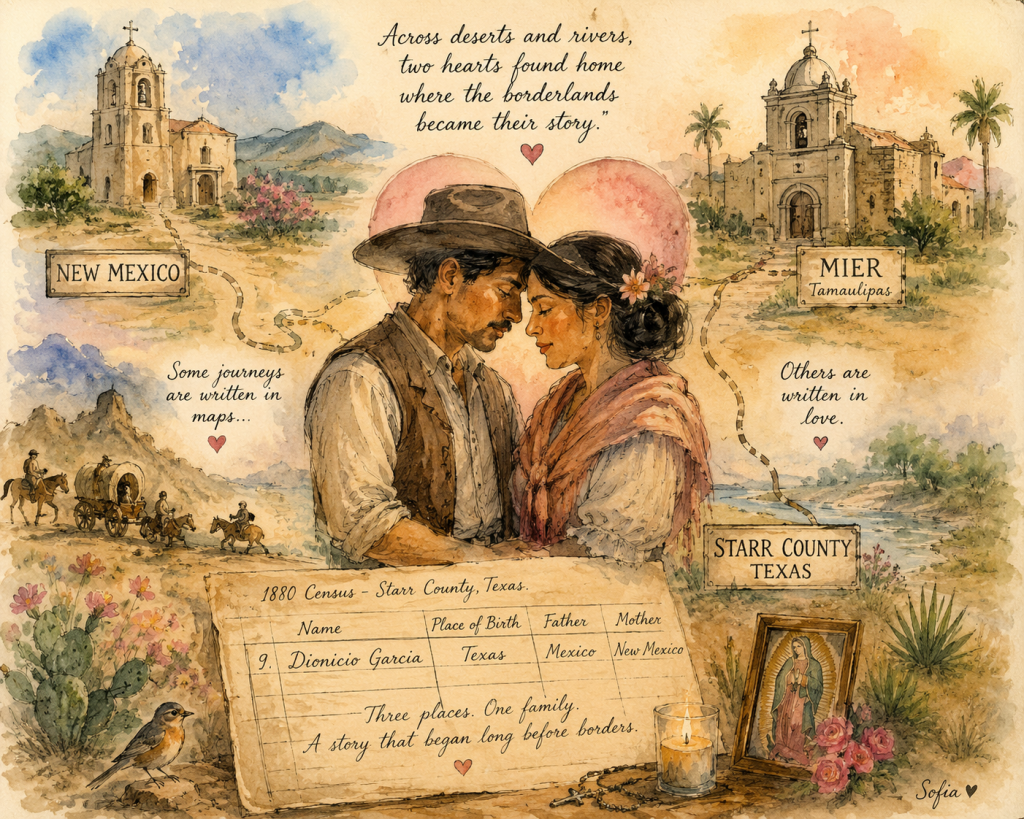
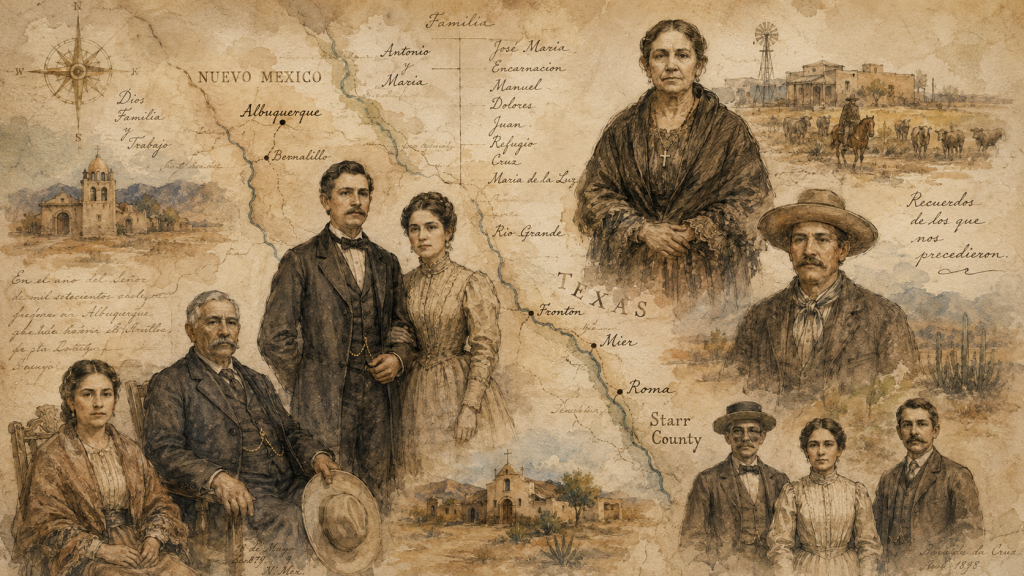
And a few hours ago, while looking for my own family in the 1940 census, I stumbled directly into that world.
There they were.
Not an academic estimate. Not a government report. Not a historian describing them seventy years later.
Their names.
Two census pages filled with Mexican-born men.
The entries repeat almost mechanically: hired hand, laborer, farm. Beside man after man appears the number 60—hours worked during the previous week.
Some were teenagers. Others were in their twenties, thirties, forties and fifties.
This was April 1940, two years before the Bracero Program even began.
The great dependence of South Texas agriculture upon Mexican labor was already there.
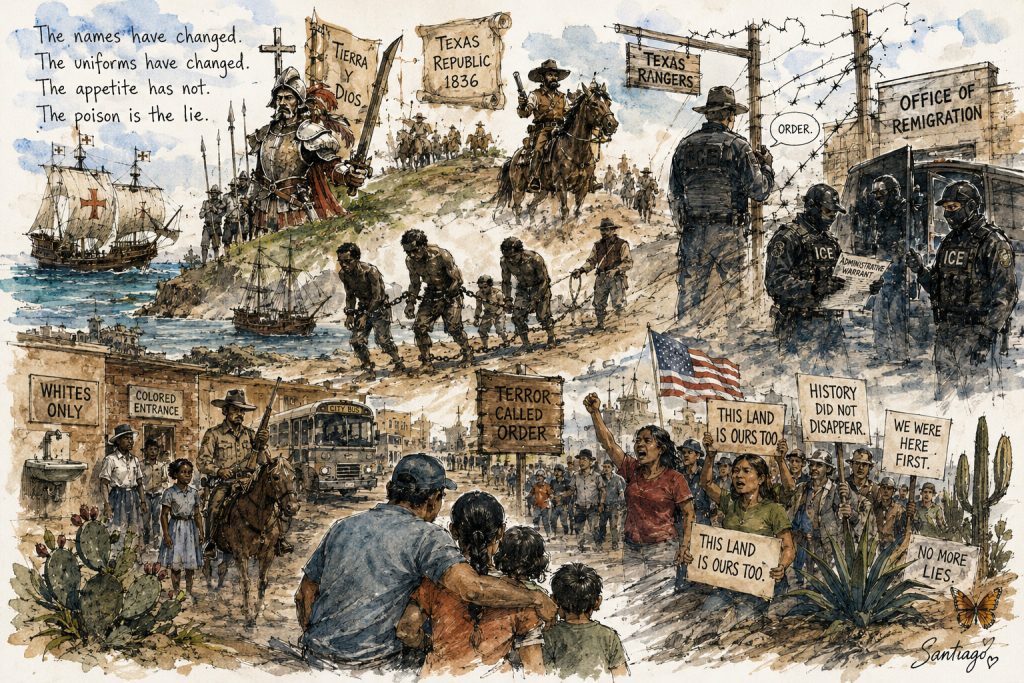
First Their Bodies. Then Their Land. Then Their Water. Then Their Labor.
It would be historically careless to pretend that one group of identical men committed every act across a hundred years. The soldiers who raped Mexican women in 1847 were not the irrigation developers of 1910, and the Rangers killing people in 1915 were not necessarily the farmers employing Mexican workers in 1940.
But history does not require them to be the same individuals for us to recognize a pattern.
American soldiers invaded Mexico and sexually assaulted Mexican women.
Mexican-American rancheros lost land during a transformation accompanied by economic pressure, fraud, intimidation, and violence.
Texas developers diverted enormous quantities of water from a river shared with Mexico while revolutionary Mexico lacked the power to protect an equal claim.
When armed Mexican resistance erupted in 1915, legitimate pursuit of raiders expanded into killings of Mexicans and Mexican Americans far beyond those proven responsible.
Then, after the railroad, the land and the water had created one of America’s richest agricultural regions, the people running that economy turned once again toward Mexico.
This time they wanted workers.
The border became extraordinarily important when deciding who belonged in Texas.
It became remarkably flexible when Texas wanted Mexican land, Mexican water, or Mexican labor.
That is the part missing from the cheerful story of the “Magic Valley.”
There was no magic.
Somebody was always paying for it.