Do you remember reading about the white men’s primaries in Texas?
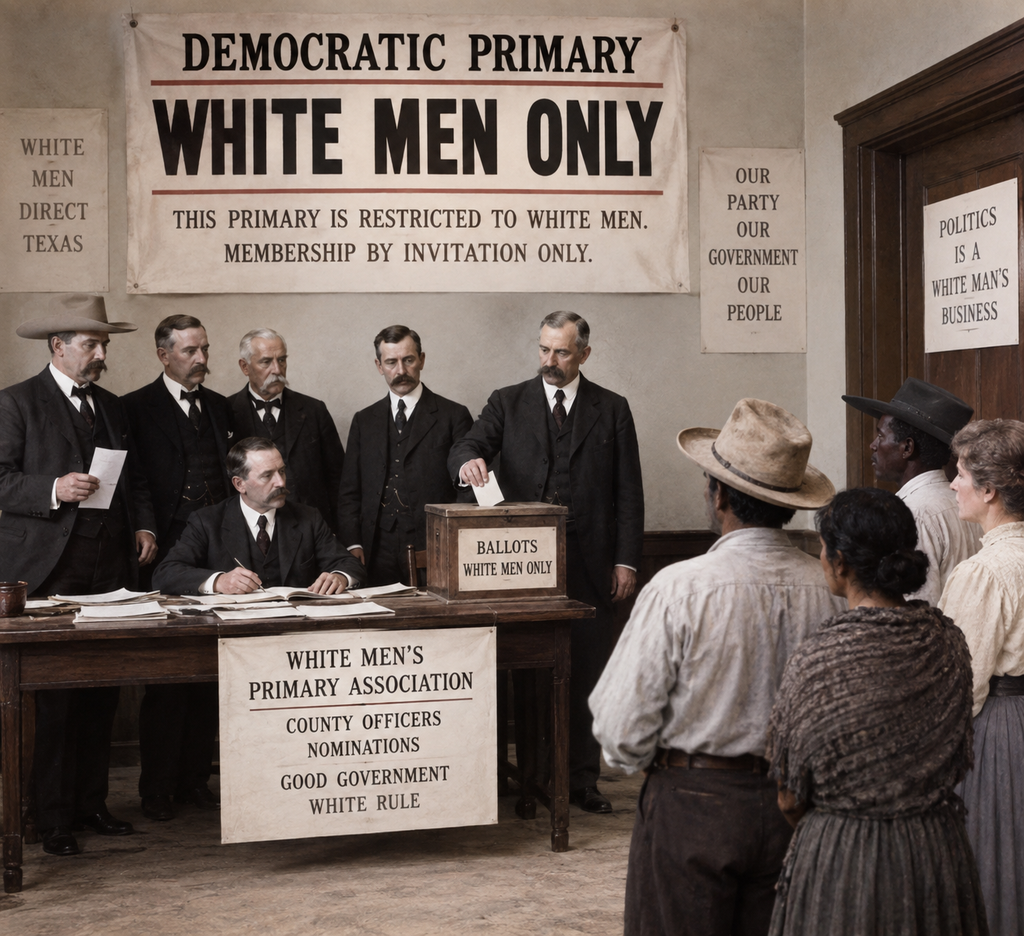
I don’t remember, but while reading a book, I came across the term and decided to look into it further. It seems it was fairly widespread in Texas. In South Texas, they used it to stop “Mexicans” from voting; in East Texas, it was used to keep Black men from voting.
Wharton County formed a White Man’s Union in 1889. It eventually became powerful enough to nominate county officials and effectively shut Black and Hispanic voters out of meaningful county elections.
Fort Bend County created the Jaybird Democratic Association in 1889. The Jaybirds held their own whites-only election before the Democratic primary. Whoever won the Jaybird vote was ordinarily the candidate who went on to win office. The system lasted for more than sixty years before the U.S. Supreme Court finally struck it down.
Grimes County formed a White Man’s Union after Black and Populist candidates won elections in the 1890s. The organization used intimidation and violence to drive Black voters from politics and selected every county officer from 1900 until 1958.
Marion County organized a White Men’s Association in 1898, and Jackson County followed in 1902. Similar organizations and white-only Democratic primaries appeared in other Texas counties.
It was not limited to county government. In Waxahachie, an official notice in 1916 announced a “white man’s primary” to select candidates for city marshal, tax assessor and collector, city attorney, treasurer, secretary and aldermen.
By the early twentieth century, the practice had become part of a much larger system. Counties such as Grimes, Wharton, Fort Bend and Harrison used private white political associations to control nominations, while other counties simply adopted white-only Democratic primaries.
The method was remarkably simple. In one-party Texas, winning the Democratic nomination usually meant winning the office. Black and Mexican American voters could still show up in November, but by then they were often voting only on candidates the white men had already chosen in the primary.
In practical terms, the real election had already taken place without them.