Listen to the Story
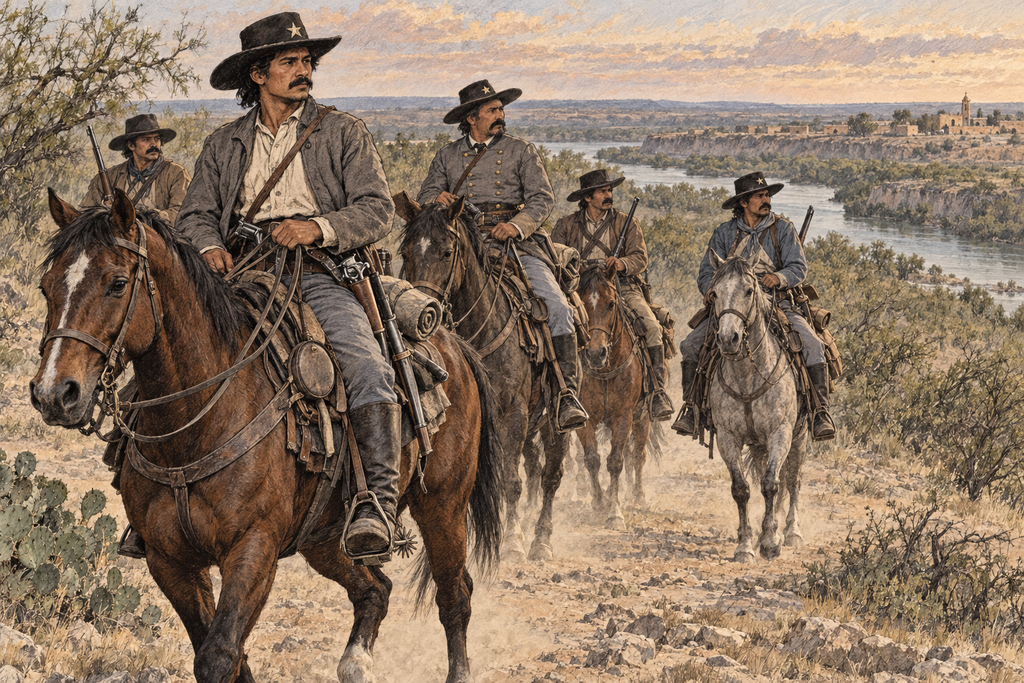
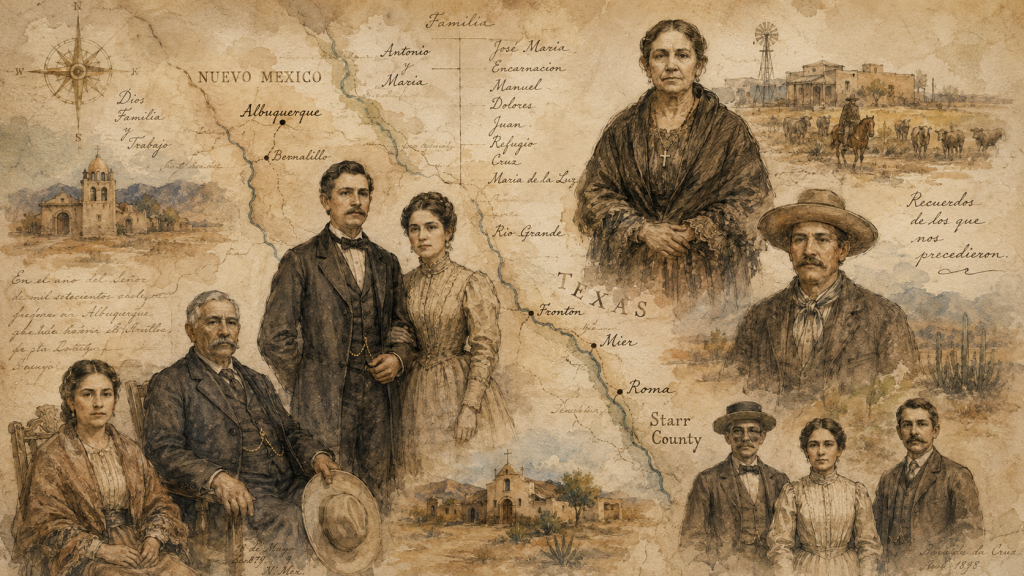
When my third-great-grandfather José María Barrera rode with Colonel Santos Benavides during the Civil War, he was serving under a man from my own extended border family. Benavides and I are distant cousins: we both descend from Captain Tomás Tadeo Sánchez de la Barrera y de la Garza, the founder of Laredo and my eighth great-grandfather.
Nearly two centuries later, one descendant went looking for another and recovered the name of an ordinary Tejano cavalryman almost erased from history.
A Name in Two Records
A Starr County record dated June 16, 1862, lists “Barrera, Jose Maria” among residents registered as citizens of Texas and the Confederate States. The document places a man by that name in Starr County during the Civil War, although it does not give his age, wife, parents, or reasons for registering.
A second record carries the story into military service. The National Park Service’s Civil War database identifies “Barrera, Jose Ma.” as a private in Company A of Benavides’ Regiment, Texas Cavalry.
The matching name, place, and time strongly indicate that the Starr County resident and the Confederate cavalryman were the same man. My Ancestry family tree identifies José María Barrera as my third-great-grandfather. I have not found the final document connecting the soldier directly to a known wife or child, but the evidence makes him the probable man in my family tree.
Earlier internet-generated information placed him in Company K of the 33rd Texas Cavalry. That was incorrect. The military index identifies him specifically as a private in Company A of Benavides’ Regiment.
The Family Connection
Santos Benavides was born in Laredo in 1823. Before the Civil War, he served as mayor of Laredo and Webb County judge. During the war, he became the highest-ranking Tejano officer in the Confederate Army.
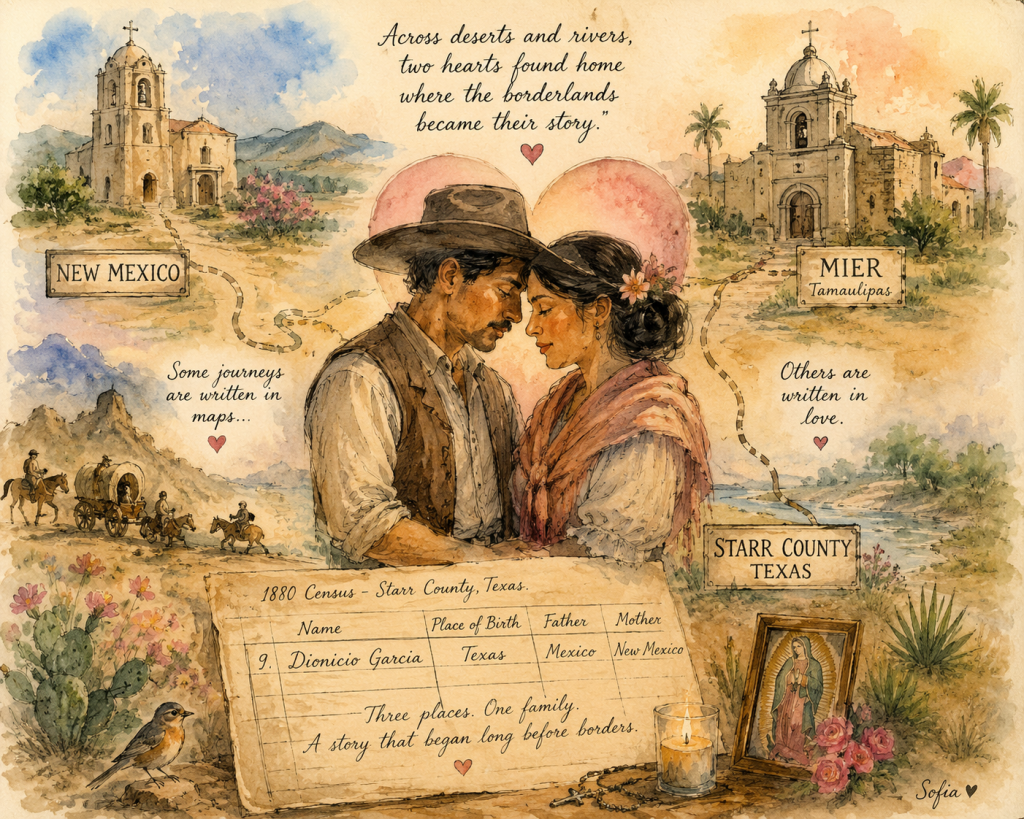
Benavides was a descendant of Captain Tomás Tadeo Sánchez de la Barrera y de la Garza, who founded Laredo in 1755. I descend from the same founder through my mother Otalia García’s family:
Tomás Tadeo Sánchez’s daughter María Gertrudis Sánchez was the mother of José Marcelino Hinojosa. That family line continued through María Teresa Hinojosa, José Seferino Hinojosa, Rosa Hinojosa, Juana García, Dionicio García, Eduardo García, and my mother, Otalia García Barrera.
The connection does not run through my Barrera surname. It reaches me through the García and Hinojosa families on my mother’s side. Nevertheless, it means that Colonel Santos Benavides and I belong to different branches of the same old border family.
José María Barrera was therefore not riding under a historical stranger. He served under a man connected to the same network of families that had lived along the Rio Grande since long before Texas became part of the United States.
War Along the Rio Grande
Benavides began the war as an officer associated with the 33rd Texas Cavalry. In November 1863, he was promoted to colonel and authorized to organize his own regiment of partisan rangers using men from the 33rd and other border companies. The resulting organization became known as Benavides’ Regiment, Texas Cavalry.
The Civil War along the Rio Grande looked different from the enormous battles fought in Virginia and Tennessee. It involved cavalry patrols, raids, political feuds, smuggling, river crossings, and control of the cotton trade. Because the Union Navy blockaded Confederate ports, cotton could be carried across the Rio Grande and shipped through Mexico in exchange for money and supplies.
In March 1864, Benavides and a small force defended Laredo against a larger Union expedition sent to destroy thousands of bales of Confederate cotton. His regiment later participated in the fighting at Palmito Ranch near Brownsville in May 1865, commonly described as the final land battle of the Civil War.
The military index does not tell us whether José María participated personally in either battle. It establishes only that he served as a private in Company A of Benavides’ Regiment. His complete service file may eventually reveal when he enlisted, where his company served, whether he supplied his own horse and equipment, and how long he remained with the regiment.
Why Did José María Serve?
I do not know why José María Barrera joined the Confederacy. No diary, letter, or personal statement has been found. His military record establishes his service, but it does not tell us what he believed.
Tejanos along the border served on both sides of the Civil War. Some supported the Confederacy, some remained loyal to the Union, and others made decisions based on family relationships, local politics, economic survival, military pressure, or the need to defend their communities. Life along the Rio Grande rarely fit neatly within the political boundaries drawn by distant governments.
His service also cannot be separated from the cause for which the Confederacy fought: the preservation of slavery. That remains true even when the soldier was a Spanish-speaking Tejano private serving hundreds of miles from the plantations of the Deep South. Recognizing José María as an ancestor does not require ignoring that history, nor does acknowledging the Confederacy’s purpose tell us everything that motivated an individual border soldier.
Only José María knew why he rode with Benavides. Unless a letter or diary survives somewhere, that answer may have died with him.
Returning His Name to History
The famous men were remembered. Santos Benavides became the celebrated Tejano colonel who defended Laredo and later served in the Texas Legislature. The name of Private José María Barrera survived only in a Starr County registry and a military index.
Now his name has returned to our family history. The surviving evidence strongly indicates that my third-great-grandfather was the José María Barrera who served in Company A of Benavides’ Regiment. He rode under a colonel who was also my distant cousin; both of us descended from the founder of Laredo.
We are not changing what happened. We are changing who gets remembered.
Sources: Starr County Confederate registry of 1862; National Park Service record for José María Barrera; Handbook of Texas biography of Santos Benavides.
.