When I was studying at Oklahoma State, I met numerous Indigenous people. They would often ask me what tribe I belonged to. I had no idea, what tribe I belonged to but that time for the white people, I preferred to tell them I was Mexican as they had strong dislike for the Indiginous People. My strong Spanish accent helped convince them.
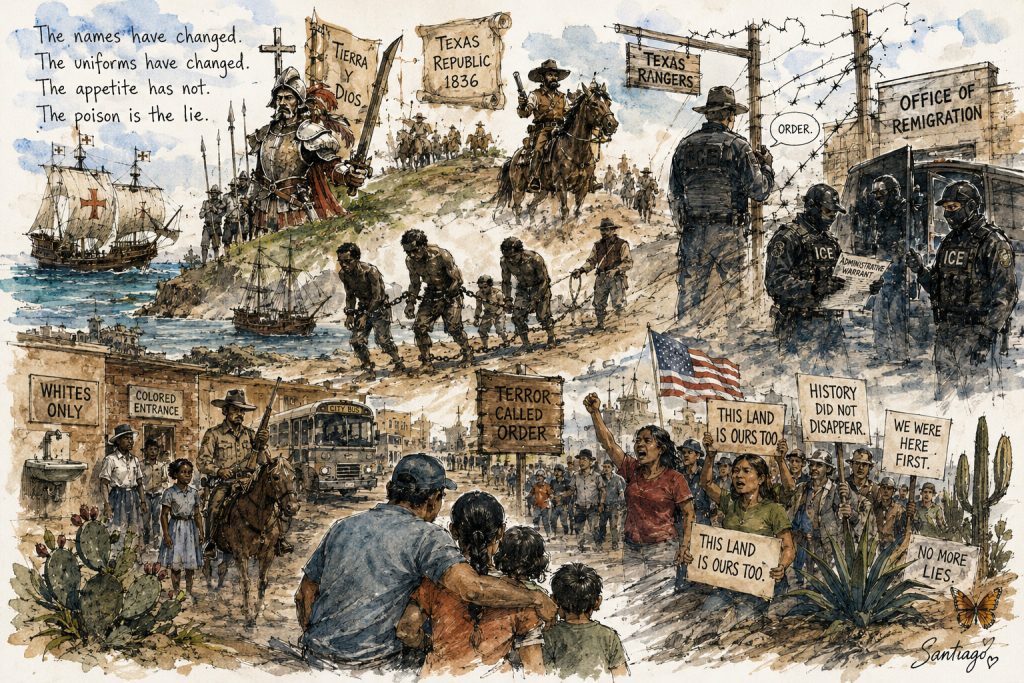
To call myself part of La Raza wasn’t just about politics; it was about honoring the 500-year history of survival, adaptability, and family strength that allowed my ancestors to thrive on the rugged South Texas borderlands.
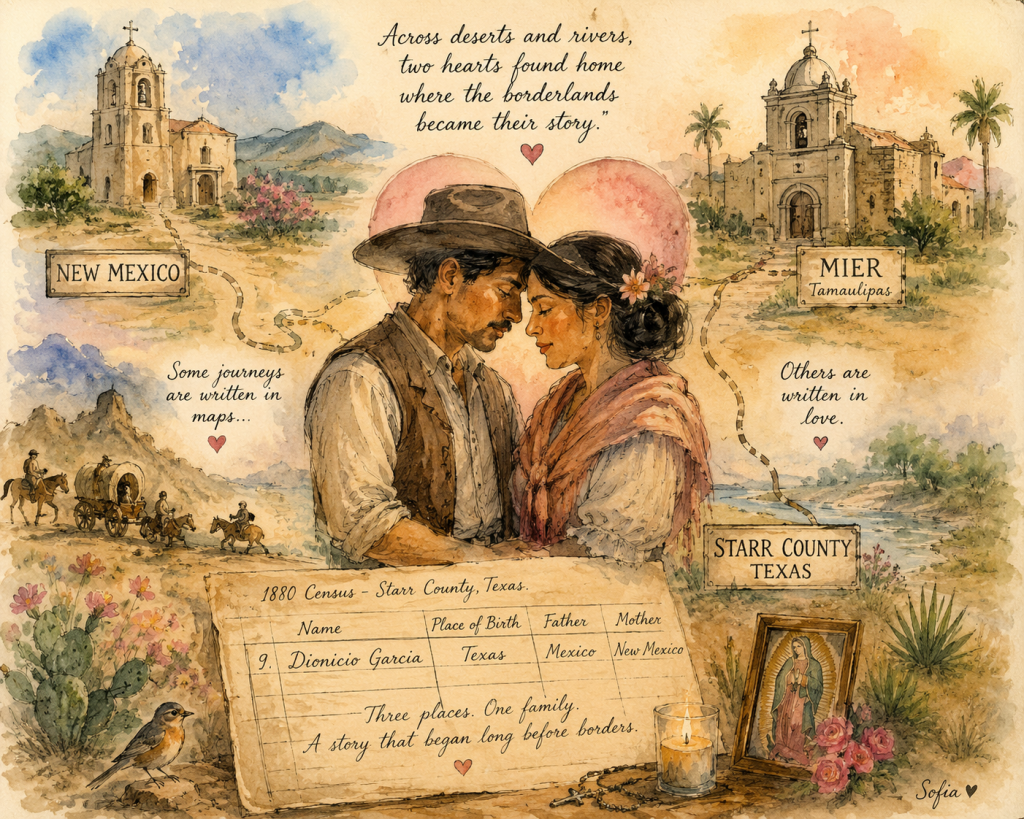
A Barrera–García family story
Before I knew anything about DNA, my mother told me she had a happy childhood.
There were eleven children, one bed, and a house with a dirt floor. The kitchen stood apart from the house, and the cooking was done on a wood-burning stove. They sprinkled water on the floor before sweeping it, settling the dust so they could make their home clean.
My mother also remembered that they were lucky. They had a wagon and two mules, a cow and a goat. Her father brought water from the Río Grande and filled a concrete tank so the family would have water for cooking, bathing, and the work of living.
When she remembered that childhood, she remembered happiness. I understood what that meant: love, food, a roof, and the security that lets a child be a child. Generations later, a machine could give me percentages, but my mother had already told me something about my inheritance.
Older Than the Border
The DNA clues I have been exploring suggest Sephardic roots through my mother’s family and substantial Indigenous ancestry through my father’s. They open doors into older histories. I want to look through those doors and see the people beyond them.
My Indigenous ancestry connects me to the long human history of the Americas, reaching far beyond the Spanish records where so many family trees begin. Before a clerk entered a name into a baptismal book, there were already families, languages, ways of feeding children, and places people called home. The brush country of southern Texas and northeastern Mexico was home to many distinct Indigenous peoples, whose lives cannot be reduced to a single name or ancestry percentage. tshaonline.org
I may never recover every ancestral name. Yet I can remember that the unnamed were people, too. They had children whose futures mattered to them, and those children became ancestors in their turn.
The possible Sephardic roots on my mother’s side open another door, toward the Jewish history of Spain and the upheavals of persecution, conversion, and exile. For families caught in those events, leaving a home or changing the public expression of a faith could become a matter of survival. I wonder what they carried away, what they left behind, and what they hoped their children would be spared. MirallPerdut_TextosOrdenats
Some of the oldest chapters remain partly hidden. Their distance makes me curious about how those lives might connect with the names I can find along the river.
The Names Along the River
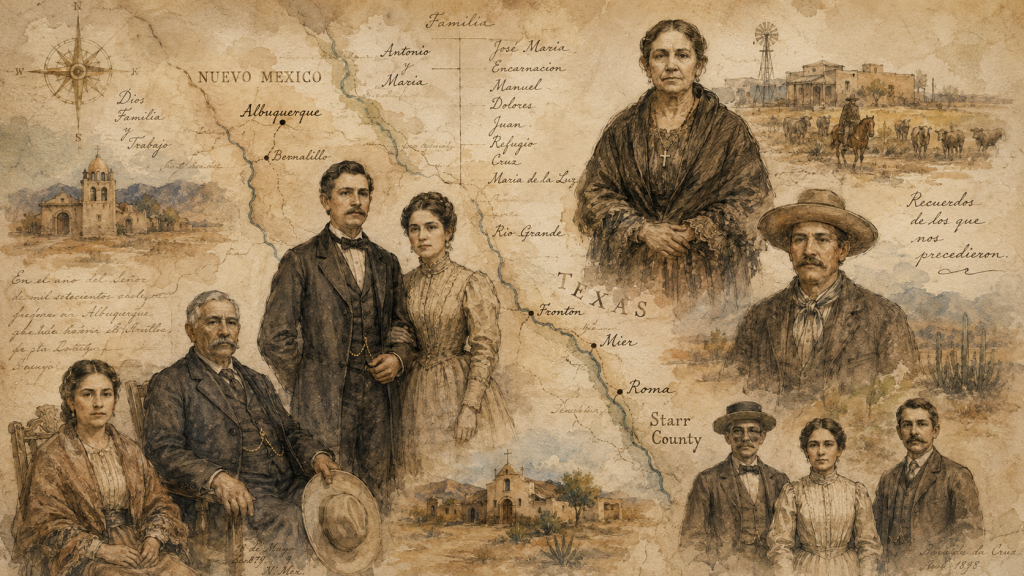
Those names bring me closer: Barrera, García, Hinojosa, Sánchez, Guerra. They appear in family trees, local histories, and the records of communities where generations knew one another.
One Hinojosa branch in my tree leads to José Manuel Ángel Hinojosa Chapa and his son José Marcelino Hinojosa Sánchez. The history of San Pedro de Roma names Manuel Ángel Hinojosa and his wife, Juana Gertrudis Sánchez, as the parents of a family whose descendants populated the lands of porciones 4 and 5. Their children included a Marcelino. The matching names suggest that a chapter of the town’s history may also be a chapter of my own. es.scribd.com
That possibility brings back a memory from the 1960s. Returning from the interior of Mexico, I encountered a border guard at the place I knew as San Pedro, now Miguel Alemán. He asked my father’s name and my grandfather’s, told me we were cousins, and pointed out a house associated with a Barrera he identified as one of the founders.
I carried that encounter for decades. Now the records give me another way to approach it, and a reason to keep looking.
In 1848, a treaty established the international boundary along the Río Grande. Families already living in that country acquired a border through their familiar landscape. The river that connected settlements and relatives became a line between nations, while the old relationships continued to matter. National Archives
What Reached Me
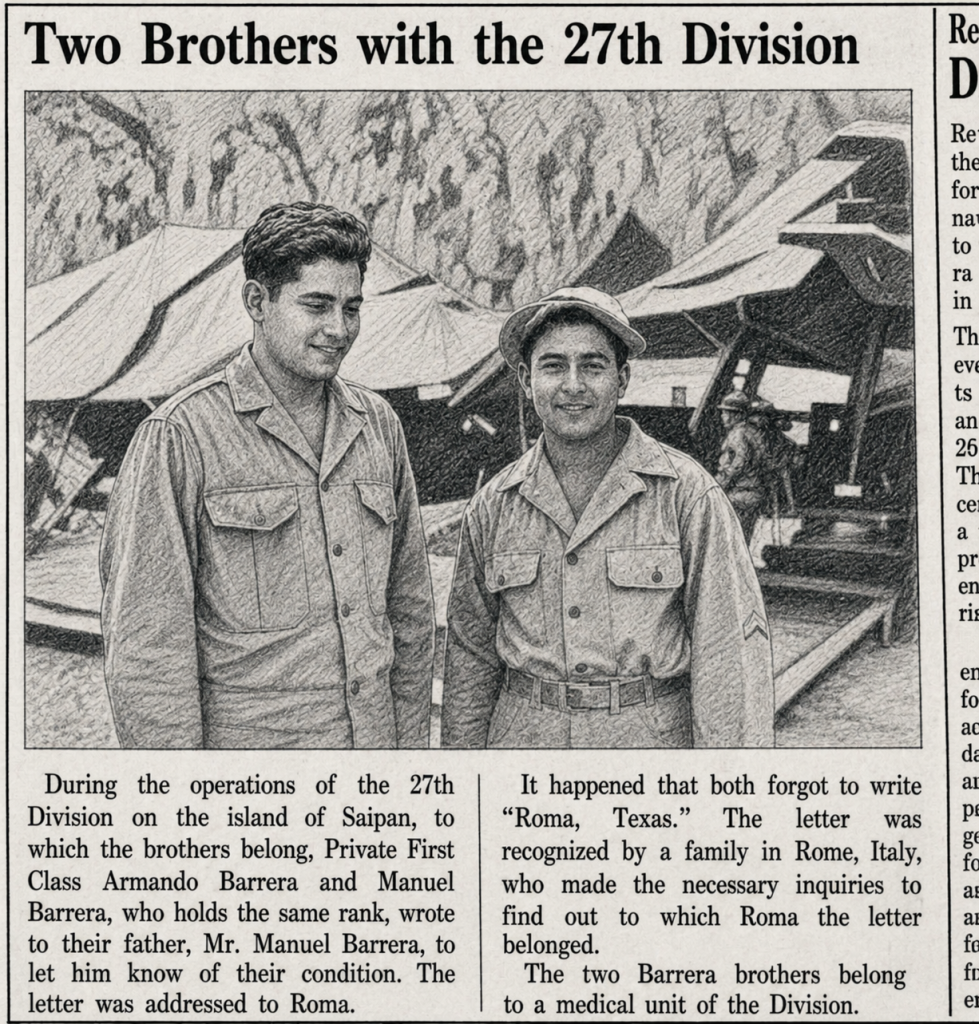
The history eventually comes out of the old records and enters the lives I knew. My mother’s family worked in the fields. My father served in the Pacific during the Second World War, returned, and worked for more than forty years at the Naval Air Station in Corpus Christi. They married in Roma in 1948 and became the parents of eight children.
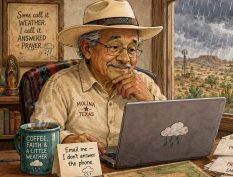
I was the oldest. I worked in cotton fields as a boy, lived in Molina, worked in construction to help pay for college, and eventually became an attorney. The older generations had their journeys; I had mine.
When I think of inheritance, I think of my mother remembering that dirt-floor home with affection. I think of my father coming home from war and spending decades providing for his family. I think of a stranger at the border hearing two names and recognizing kinship.
I remember my childhood being happy; I was so happy that I was in the ninth grade before I realized the beauty of girls. In the 5th grade, I was punished because I refused to dance La Raspa with a girl. I even remember it: I was sitting there when this girl walked into the room, bringing a message to the teacher. My heart fluttered, and I was never the same again.
These are the places where the past becomes personal. An ancestry estimate offers clues; a family story gives those clues faces, work, affection, and consequence.
I like the thought of a map of survival. On my map, the Río Grande runs through the middle, and my parents’ names stand closest to me. Behind them are the people I am finding, and farther back are others whose names may remain beyond my reach.
My mother called her childhood happy. After all these years of searching, that still tells me something a percentage never could: somewhere along that long journey, people made a home, loved their children, and gave them enough to carry forward.
The river Bravo runs through us. So does that love of family.
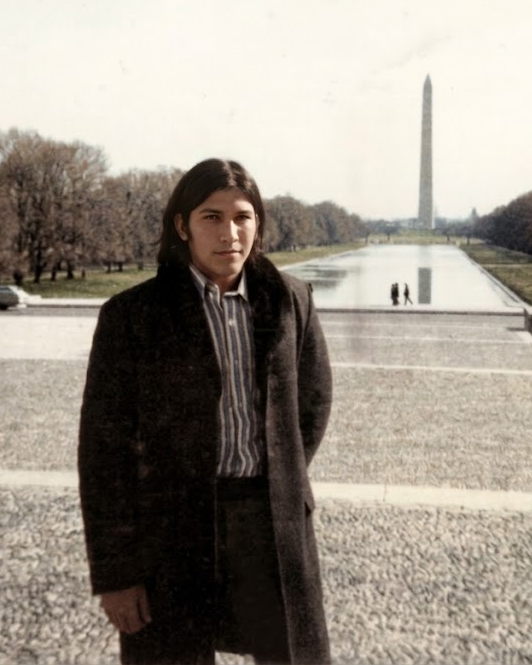
The photo is from 1970 or 1971.