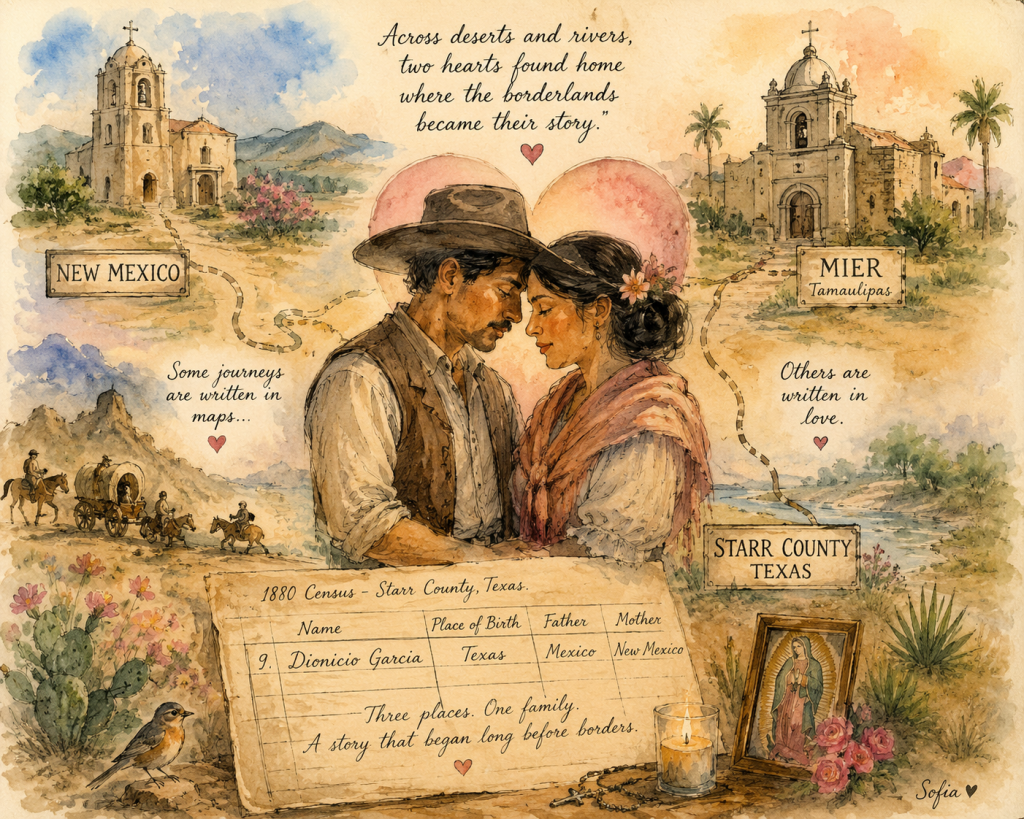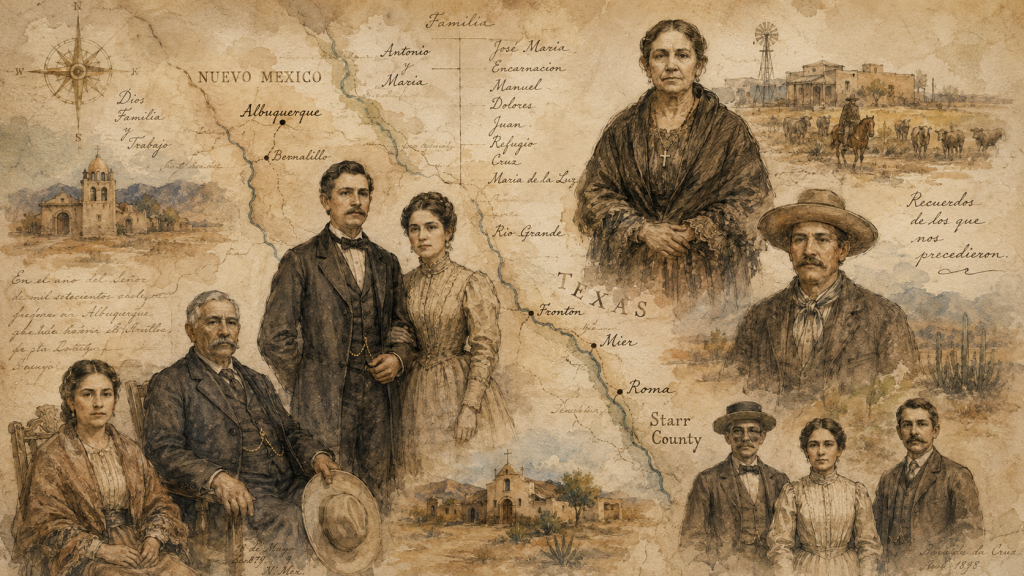
My ninth-great-grandfather, Capitán Miguel de la Garza Falcón, died a Catholic in Monterrey on October 28, 1697. His church burial record says he had confessed and received the Eucharist. Yet his family is among those examined by researchers tracing possible Sephardic Jewish ancestry in northern Mexico.
When Luis de Carvajal y de la Cueva founded the Kingdom of Nuevo León in 1579, King Philip II granted him a unique charter: Carvajal did not have to prove limpieza de sangre (“purity of blood,” or lack of Jewish/Moorish ancestry) for the colonists he brought.
As a result, northeastern Mexico became a known destination for conversos and Crypto-Jews (those practicing Judaism in secret) who wanted to put distance between themselves and the Inquisition tribunals in Mexico City and Spain.
That makes him a possible connection to the Jewish ancestry reported in my DNA results. I cannot assign a particular portion of that DNA to him, but I can investigate the family through which it might have passed.
Miguel’s surviving will summary identifies his parents as Capitán Blas de la Garza and Beatriz González. It names his wife, Gertrudis de Rentería, and describes property, livestock, children, debts, and provisions for his burial. His inventory included 1,100 goats, 50 cows, horses, mules, and a share in the Hacienda de San Francisco. His burial entry also identifies him as a former regidor, a member of the city’s municipal government. He was an established landowner whose family and affairs left a substantial paper trail.
The paternal family leads back to Marcos Alonso de la Garza y del Arcón and Juana de Treviño. Published Garza genealogies identify Marcos Alonso as a native of Lepe, Spain. The book Los Garza y la memoria que poseemos, by Yuritzi Isabel Parra Saldívar, examines the proposed connection between this family and Garzas from Lepe who appeared in Canary Islands Inquisition records.
That connection deserves careful wording. Sharing a surname and a town of origin with people prosecuted for Jewish practices is a reason to investigate a relationship. Establishing the relationship requires records connecting the generations. The existence of a Jewish Garza family in Lepe does not, by itself, establish every claimed connection to it.
The Garza connection also appears in the Society for Crypto-Judaic Studies’ biographies. Several members identify Marcos Alonso among their ancestors, placing the family within a continuing discussion of Sephardic and converso heritage. Those accounts show that other descendants are pursuing the same history; they do not replace the documents needed for each family line.
The larger history is well documented. Sephardic Jews came from the Jewish communities of the Iberian Peninsula. Many became Christians under pressure, and their descendants were known as conversos. Some continued Jewish religious practices secretly. The autobiographical writings of Luis de Carvajal the Younger provide direct evidence of that hidden religious life in colonial Mexico and the persecution it brought.
Jewish ancestry and religious practice are separate questions. A descendant of Jewish converts could sincerely practice Catholicism. Others maintained Jewish observances despite the danger. Miguel’s Catholic burial tells us what the church recorded about his death; it does not establish what every earlier generation believed. I have not found evidence that Miguel himself secretly practiced Judaism.
DNA adds another question. Being someone’s descendant does not guarantee that we still carry identifiable DNA from that person. As 23andMe explains, after enough generations, some genealogical ancestors contribute no inherited DNA to a particular descendant. A family connection can therefore be real even when a genetic contribution cannot be demonstrated.
For now, Miguel and the Garza family provide a possible route worth following. The next task is to connect the documented family line to the evidence for Sephardic ancestry, generation by generation. I would rather leave that question open than give my ancestors a history the records cannot support.
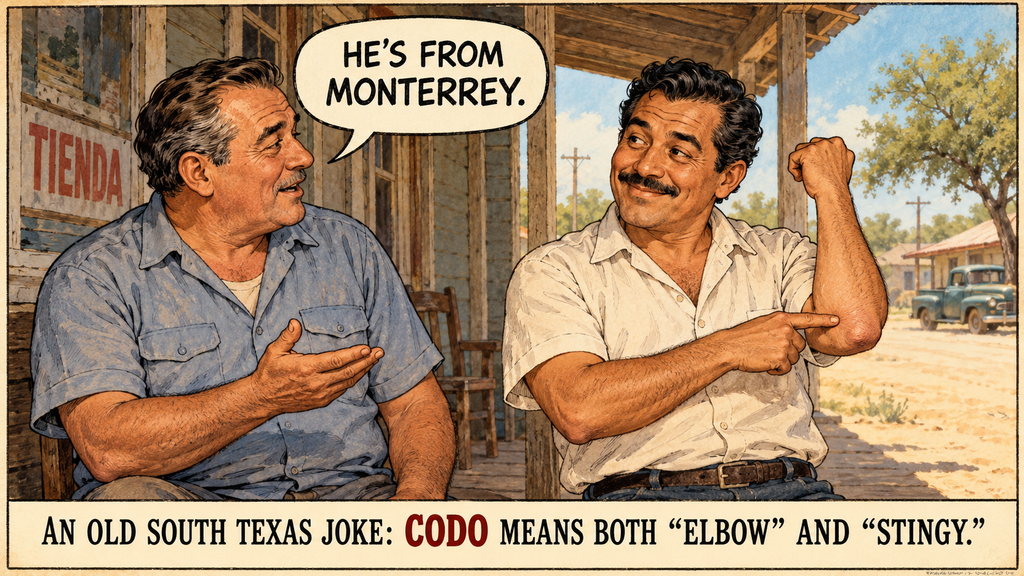
Old South Texas gesture for someone from Monterrey, “Es muy Codo.”