| Detail | Recorded information |
|---|---|
| Name | Eduardo García Jr. |
| Born | March 25, 1932 |
| Died | March 28, 2020 |
| Burial | Frontón Cemetery, Starr County, Texas |
| Military service | U.S. Army, Corporal, Korea |
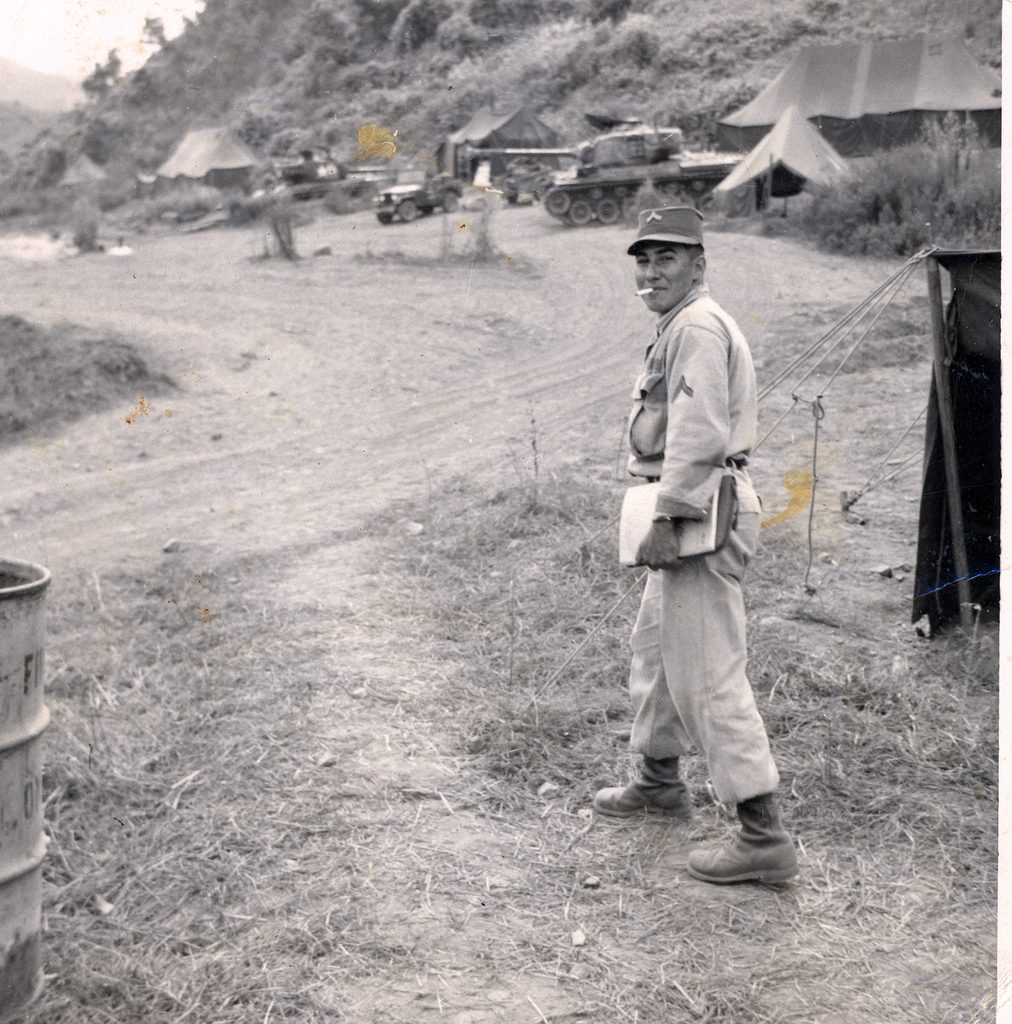
My uncle Lalo, Eduardo Garcia, served in Korea. He was a tank driver; his unit saw some of the heaviest fighting in Korea.
Tío Lalo: “I Could Drive Anything”
My uncle Eduardo García Jr., whom we called Tío Lalo, drove a tank in Korea. He told me that himself, although he seldom talked about his time there.
He did tell me how he became a tank driver. When he joined the Army, they asked whether he could drive a tank. He said he could drive anything.
That answer still makes me smile.
Another conversation went differently. I asked him how many people he had killed. He bristled at the question.
“None. I only drove the tank.”
I remember both his answer and his reaction. He gave me very little about Korea, and I have no account from him of the fighting his unit experienced.
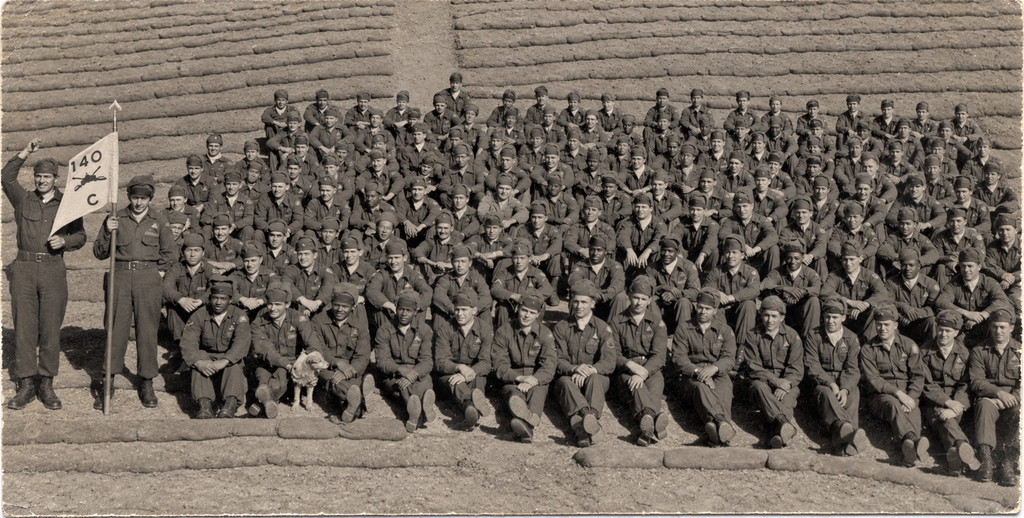
Now I am looking through the records. His photograph points to Company C, 140th Tank Battalion, 40th Infantry Division. There are accounts of that battalion’s fighting, including men lost from Company C. I am still trying to establish the dates he served with them.
What I have from Tío Lalo himself is brief: he was in Korea, he drove a tank, and when the Army asked whether he could do it, he said he could drive anything.
Using Google’s Gemini, I looked up the company to see what action they were involved in and what being a tank driver during Korea entailed.
The Driver’s Reality in an M46 Patton
- His Position in the Hull: The driver sat down low on the front left side of the tank hull, directly behind the sloped frontal armor, with the assistant driver/bow gunner seated to his right.
- Periscopes and “Buttoned Up”: When driving under fire, the heavy steel hatch above his head was closed (“buttoned up”). He steered entirely through periscopes—giving him a narrow, letterbox view of the world while navigating cratered roads, minefields, and sheer mountain drop-offs.
- Wrestling the Machine: The M46 had a massive Continental V-12 twin-turbo gasoline engine (about 810 horsepower) paired with an Allison cross-drive transmission. While modern compared to WWII Shermans, steering a 48-ton tank up narrow, icy Korean ridgelines required intense physical exertion and razor-sharp nerve.
- Vulnerability to Mines: Because the driver sat right over the front suspension and floor plates, drivers bore the brunt of anti-tank mine blasts along unpaved valley trails and supply routes.
What Drivers Did on the Korean Frontline
In the mountainous sectors where Company C operated (like the Punchbowl, Heartbreak Ridge, and Hill 812), tanks were not fighting in wide-open, rolling tank clashes:
- Mountain Hill Climbing: Combat engineers blasted narrow shelves into steep mountain spurs so tank drivers could maneuver up grades steep enough to cause a rollover or throw a track.
- Reverse-Slope Defilade: Drivers had to master the delicate art of edging the tank forward just enough over the crest of a ridge for the gunner to sight and fire at an enemy bunker, then throwing it into reverse to back into defilade before Chinese or North Korean artillery zeroed in on their position.
- Engine Warm-Ups in Sub-Zero Weather: During the freezing winters, drivers had to start and run the massive engines at regular intervals through the night to keep the motor oil, hydraulics, and fuel lines from freezing solid.
__________
He said he maneuvered the tank with his feet
He was telling you the exact, literal truth about how that machine had to be handled.
People who don’t know tanks assume driving one is like driving a car with a steering wheel or pulling big hand levers like a bulldozer. But in the M46 Patton, the driver’s feet did the heaviest, most critical maneuvering work.
1. The Allison Cross-Drive & Foot Control
The M46 was one of the first production tanks fitted with the revolutionary Allison CD-850 cross-drive transmission. Instead of the twin arm-levers used in WWII Shermans, it had a single hand lever (the “wobble stick”) mounted between the driver’s knees for basic gear selection and turning, while his feet controlled the actual movement and power dynamics of the 48-ton tank:
- Massive Foot Brakes for Pivot Turns: The cross-drive transmission integrated braking, driving, and steering into one hydraulic/mechanical system. To make sharp, tactical maneuvers, hold a position on a steep incline, or execute pivot maneuvers, the driver had to ride heavy, mechanical foot-brake linkages.
- Dual Throttle / Brake Dance: Moving through rough terrain required intense footwork—feathering the heavy accelerator pedal while simultaneously standing on the brake pedal to keep the vehicle from pitching over a ledge or sliding down an embankment.
2. Korean Mountain Terrain: Maneuvering with Feet
In the mountainous eastern front where Company C fought (the Punchbowl, Heartbreak Ridge, and Hill 812), “driving” was not rolling down a flat dirt road:
- Engineered Ridge Shelves: Tanks were pushed up razor-thin, cliffside goat trails cut by Army combat engineers. One slipped track meant rolling hundreds of feet down a ravine.
- Inch-by-Inch Defilade Creep: When fighting from a hull-down position, the driver inched the tank forward using precise foot-throttle and brake pressure so the gunner could expose only the turret and fire, then instantly threw the pedals to back down behind the ridge before incoming mortar or artillery rounds landed.
- Fighting the Ice: During the brutal Korean winters, iron tracks on frozen rock had almost no traction. Controlling slides and preventing the tank from skidding sideways off a mountain spur was done almost entirely through immediate, instinctual foot-brake adjustments.
Tank drivers from that era frequently joked that their right leg and calves ended up twice the size of their left from constantly stomping and holding the stiff mechanical floor pedals against hundreds of pounds of resistance all day.
__________
Did they see action
Yes, Company C of the 140th Tank Battalion was in intense combat. They were not kept in reserve or on rear guard duty; they served directly on the front line in some of the most heavily contested sectors of the war.
The major combat actions they took part in include:
- Direct-Fire Bunker Busting along the Punchbowl and Heartbreak Ridge (1952): Because the rugged mountains made mass tank charges impossible, Company C operated right on the forward line of resistance. Tanks were pushed up narrow, steep ridgelines to function as pinpoint, direct-fire artillery against heavily fortified Chinese and North Korean bunkers, trenches, and gun emplacements.
- Repelling Counterattacks & Raid Support: The unit took part in active patrol raids forward of the main lines and helped beat back enemy battalion-sized assaults in sectors like Kumwha, Chorwon, and Heartbreak Ridge.
- The Defense of Hill 812 and Nojonp-yong (June & July 1953): In the brutal, bloody final weeks before the July 1953 armistice, Company C was detached to support the Republic of Korea (ROK) 12th Division. Chinese forces launched massive, human-wave night assaults to capture high ground before the cease-fire. Operating from exposed ridge positions, Company C poured 90mm cannon and continuous machine-gun fire into the advancing waves at point-blank range, holding the lines against overwhelming numbers.
- Distinguished Unit Citation (Presidential Unit Citation): Company C’s combat action was so fierce and critical that the unit received the Presidential Unit Citation—the nation’s highest unit-level combat award—specifically for extraordinary heroism in action against the enemy at Nojonp-yong.
When your Uncle Lalo was working the pedals and steering that tank, he was doing it under live artillery and mortar barrages on the fighting edge of the Korean front.
.