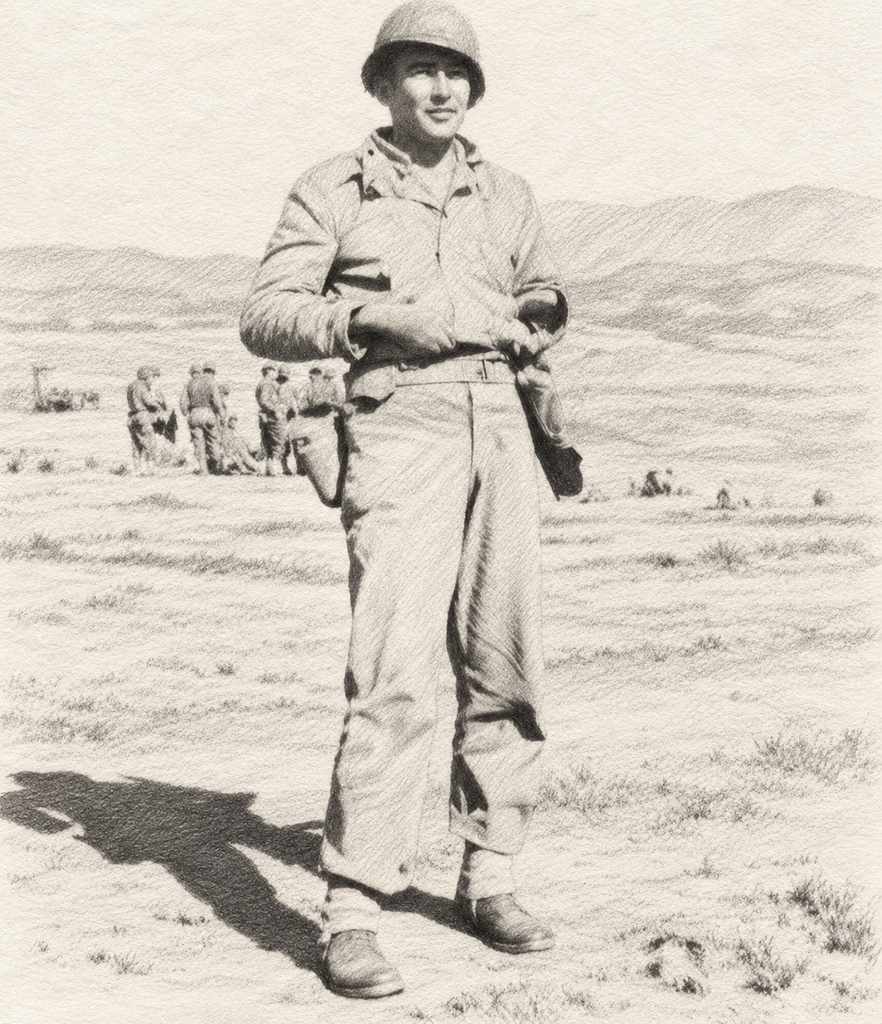
Mi Tío Fabián moved to Molina, so we knew him and his family well. He was my mother’s oldest brother.
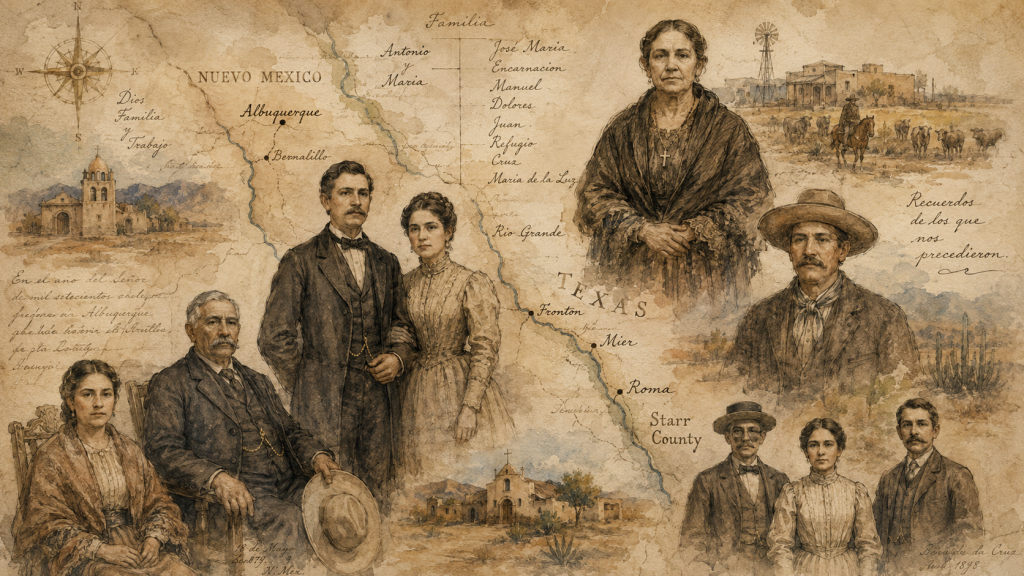
Fabián García was born on December 22, 1920, in the Fronton–Roma area of Starr County, Texas. He belonged to a generation whose lives carried them from small South Texas communities into a war fought across the world. Our family remembers his service, although we do not yet have enough documentation to reconstruct his entire military experience.
The service information gathered so far identifies him as an Army Technician Fifth Grade, or Tec 5, associated with the 59th Field Hospital. His reported entry date is November 23, 1942. We are still seeking his separation papers to confirm those details and identify his particular military specialty.
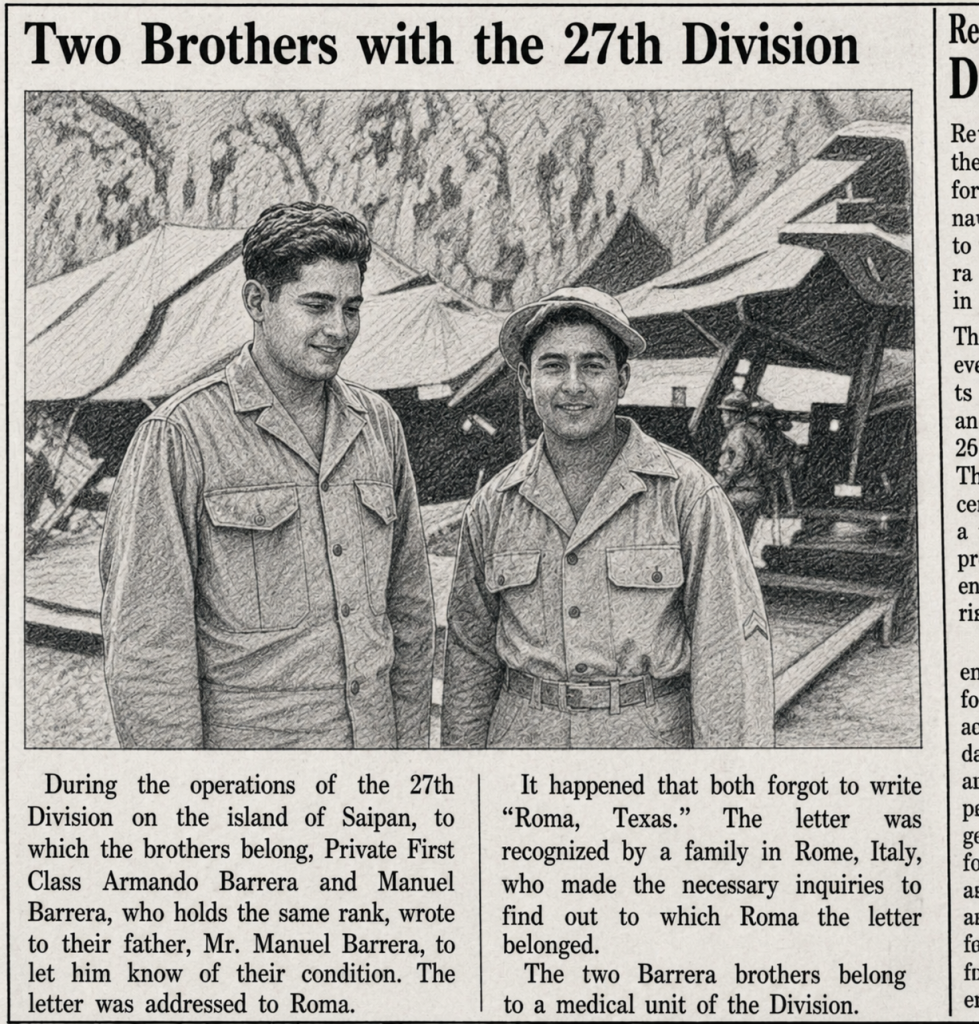
Army field hospitals treated some of the most severely wounded soldiers—men whose injuries made further transportation dangerous without immediate surgery and stabilization. Medical teams treated devastating chest and abdominal wounds, traumatic amputations, and other emergencies before preparing patients for evacuation farther behind the lines.
Depending on his assignment, Fabián may have helped move wounded men from ambulances, prepared patients for treatment, changed dressings, sterilized instruments, or assisted with care before and after surgery. He might instead have worked in transportation, supplies, or another hospital service. These were separate occupations, and his Tec 5 grade alone does not tell us which was his. Army occupational descriptions document these kinds of duties among hospital personnel.
The history of the 59th Field Hospital includes a documented mission caring for people who survived Nazi imprisonment. According to the National Archives, on June 15, 1945, the hospital took over from the 130th and 131st Evacuation Hospitals, operating three hospital units for displaced persons near Mauthausen and Gusen I in Austria and preparing patients for repatriation.
If Fabián was serving with the hospital at that time, he may have participated in this work. We cannot yet establish his presence there or describe his individual duties. The hospital’s role, however, gives us a possible connection worth preserving and investigating.
Recovering the histories of World War II veterans can be difficult because of a catastrophic fire at the National Personnel Records Center in St. Louis. Beginning on July 12, 1973, the fire destroyed approximately 16–18 million military personnel files. The National Archives estimates that 80% of Army personnel files for veterans discharged between November 1, 1912, and January 1, 1960, were lost.
That does not mean all World War II records disappeared, or that Fabián’s particular file was necessarily destroyed. Unit histories, morning reports, veterans’ benefit records, and locally recorded discharge papers may still help fill the gaps.
Fabián’s story remains unfinished. We can preserve what the family remembers, explain the work he may have performed, and continue searching for the documents that will let us tell more.